.png)
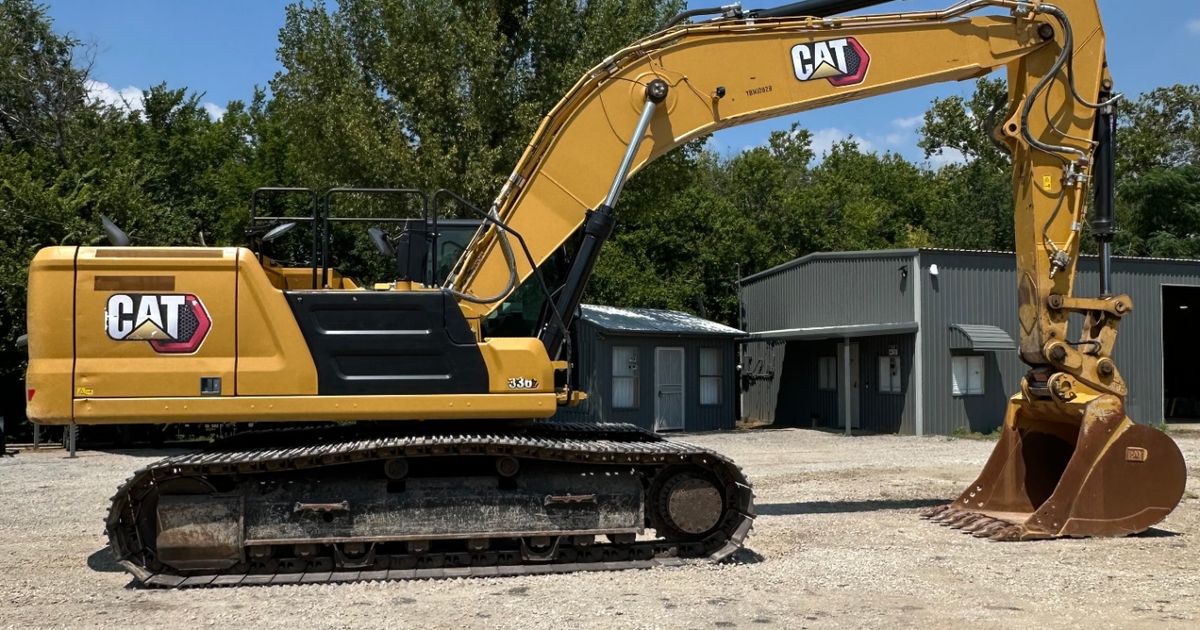
Stormwater management is one of the fastest-growing segments of civil construction across North Texas. Between the explosive residential growth in communities like Celina, Prosper, Aubrey, and Van Alstyne, and the new EPA NPDES stormwater permit requirements tightening for construction sites over one acre, contractors are building more retention ponds, detention basins, and drainage corridors than at any point in recent memory. We rent equipment for these projects every week out of our Denton location, and we've learned a lot about what works — and what causes expensive delays — on North Texas stormwater jobs.
Key Takeaways
- CAT 320 and 336 excavators handle the majority of retention pond excavation in DFW-area soils, with the 336 preferred when caliche rock is confirmed below 4 feet
- North Texas black gumbo clay requires compaction equipment capable of achieving 95% Proctor density on embankments — standard plate compactors won't cut it on 12-inch lifts
- Motor graders are essential for final drainage channel slope work, with a 1-2% minimum grade required by most municipal stormwater ordinances in Denton County and surrounding jurisdictions
- Proper stormwater infrastructure can reduce peak runoff flow rates by 20-40% according to EPA detention basin design guidelines, making this work both regulatory and financially critical for developers
- Summer heat above 100°F in North Texas reduces hydraulic fluid efficiency — plan for increased cycle times and schedule heavy excavation phases in morning hours when possible
What Equipment Do You Need to Excavate a Retention Pond in North Texas?
The CAT 320 excavator is the workhorse for most retention pond excavation projects under two acres, and it's the machine we deploy most frequently for stormwater work across Denton, Argyle, Trophy Club, and Little Elm. With a 138 horsepower engine and 20-metric-ton operating weight, the 320 moves material efficiently through the upper layers of sandy loam and clay that cover most North Texas construction sites.
When your geotech report shows caliche at depth — and in the DFW corridor, you should assume it until proven otherwise — the CAT 336 becomes the right tool. We've had customers call us after renting a smaller machine in Prosper and Celina only to hit a caliche shelf at five feet that stopped production entirely. The 336's 270 horsepower engine and 36-metric-ton operating weight give it the breakout force to work through caliche formations without constant downtime. For the hardest caliche layers, pairing the 336 with a hydraulic rock breaker attachment is far more productive than trying to rip through it with bucket teeth alone.
Retention pond excavation in North Texas black gumbo clay presents its own challenge: the material sticks to buckets aggressively, especially during wet conditions. Our customers have had real success specifying a heavy-duty bucket with weld-on side cutters and a bucket tooth configuration designed for cohesive soils. The CAT 320 Next Generation models in our fleet also include Cat Grade with 2D, which helps operators maintain consistent pond bottom grades without constant surveying — a meaningful time saver on larger basins.
How Do You Grade Drainage Channels and Swales Properly?
Drainage channels fail for one reason more than any other: inadequate slope. Most North Texas municipalities, including those in Denton County and the cities of Frisco, McKinney, and Sherman, require a minimum 1% grade on drainage channels to prevent standing water and mosquito breeding issues. Getting that grade right across hundreds of feet of channel requires a motor grader — no other machine delivers the precision finish grading that channel work demands.
The CAT 140 motor grader is our most-requested machine for drainage and stormwater channel work. Its 14-foot moldboard and circle drive system let an experienced operator cut a consistent V-ditch or trapezoidal channel cross-section in a single pass on most soils. For the wider drainage corridors common in newer Prosper, Gunter, and Celina developments — where channels may need to carry significant volume from multi-acre residential sections — the CAT 160 motor grader's 16-foot blade provides better production on wide, shallow swale profiles.
One operational note we pass along to every contractor: motor graders struggle in saturated black clay. If you're working drainage channels after a significant rain event, give the soil 24-48 hours to firm up before final grading. Trying to cut grade in soupy clay results in blade drift and inconsistent slopes that won't pass inspection. We've seen contractors lose two days of work trying to correct grades that were established in wet conditions — patience on soil condition saves real money.
What Compaction Equipment Is Required for Retention Pond Embankments?
Embankment compaction is where stormwater projects either hold water long-term or develop seepage problems within five years. FEMA embankment dam guidelines and most municipal stormwater standards require embankment soils to reach 95% Standard Proctor density, which means you need equipment with enough compactive effort to achieve that benchmark in 6-12 inch lifts — especially in North Texas clay.
The CAT CS56B vibratory smooth drum compactor is what we specify for pond embankment work. At 56-inches wide with a 26,000-pound operating weight and variable amplitude/frequency controls, it achieves the deep compaction that clay embankments require. Plate compactors and jumping jacks are appropriate for trench backfill and small areas, but they simply don't have enough influence depth to properly compact a 12-inch lift of black gumbo clay on an 8-foot embankment structure.
Sheepsfoot rollers deserve mention for initial compaction lifts in high-plasticity clay. The protruding feet penetrate the surface crust that forms on dry clay in Texas summers, working the interior of the lift rather than just the surface. We've rented combination drum/padfoot compactors to contractors in Wichita Falls and Weatherford who were building ranch ponds and small agricultural detention structures — the padfoot configuration is particularly effective when clay moisture content is on the drier side of optimum.
How Does North Texas Clay and Caliche Affect Stormwater Project Planning?
According to the USDA Web Soil Survey, Denton and Collin Counties contain significant areas of Houston Black clay — a high-plasticity Vertisol that swells dramatically when wet and shrinks and cracks when dry. This shrink-swell behavior, with potential volume changes exceeding 15% between dry and saturated states, has direct implications for retention pond construction. Pond embankments built with this material must be compacted at or slightly above optimum moisture content; compacting dry material that later wets up can cause differential settlement and cracking.
Caliche is the other North Texas factor that surprises contractors who've primarily worked in other regions. This calcium carbonate hardpan typically appears at 3-8 feet depth across much of the DFW and North Texas corridor. We've had customers bidding pond excavation in Decatur and Bowie who assumed sandy or loamy soils based on surface conditions, only to hit a solid caliche layer at four feet that required a rock hammer attachment and added two days to the excavation phase. Our standard advice: if you're bidding a stormwater pond anywhere from Fort Worth north through Gainesville and west to Weatherford, budget for at least some caliche work unless you have a geotech report confirming otherwise.
Summer heat is the third North Texas variable. When ambient temperatures exceed 100°F — which happens routinely from June through September — hydraulic systems work harder, fluid temperatures rise, and productive hours per day shrink. We recommend starting heavy excavation phases before 7 AM and planning for reduced afternoon production on large pond jobs during summer months. Our rental equipment undergoes fluid checks and cooling system inspections before every deployment, but the physics of operating a 36-ton excavator in 105°F heat are what they are.
What Equipment Is Best for Installing Stormwater Infrastructure Like Riser Pipes and Outlet Structures?
Once the basin is excavated and the embankment is built, installing outlet control structures, riser pipes, and principal spillway systems requires precise placement work that large excavators can't always deliver cleanly. This is where smaller machines earn their place on the job site.
The CAT 308 or 310 compact excavator handles outlet structure work exceptionally well. With a 9-10 foot dig depth and tight tail swing radius, these machines can work inside a finished pond basin without damaging the embankment slopes. We regularly rent these to contractors in the McKinney, Frisco, and Carrollton areas for final structure installation after the primary earthwork is complete with a larger machine. The reduced ground pressure of compact excavators also matters when you're working on a freshly compacted clay embankment — you don't want a 36-ton machine undoing compaction work near a finished spillway structure.
Telescoping forklifts and rough terrain forklifts are also frequently needed for setting precast concrete outlet structures. Many municipalities in this region now require precast concrete headwalls and junction boxes rather than cast-in-place — these components can weigh 2,000-6,000 pounds and require precise placement. A telehandler with a jib attachment gives contractors the reach and positioning control to set these structures accurately on the first attempt.
How Do You Manage Erosion Control During Active Stormwater Construction?
The Texas Commission on Environmental Quality (TCEQ) Construction General Permit TXR150000 requires active erosion and sediment controls throughout construction on sites over one acre. This isn't just regulatory box-checking — uncontrolled sediment loss on a retention pond project can fill the basin before it's even functional, requiring costly cleanout work.
Track dozers are the right tool for initial site clearing and rough grading that minimizes bare soil exposure time. The CAT D6 dozer's low ground pressure tracks disturb less soil structure than wheeled equipment, and experienced dozer operators can phase clearing and grading to keep exposed areas small and manageable. On larger sites in the Celina, Gunter, and Sherman growth corridor where we're seeing 50-200 acre stormwater management projects for new subdivisions, sequenced clearing with a dozer is significantly more defensible to TCEQ inspectors than open-clearing the entire site at once.
According to EPA stormwater BMP guidelines, properly installed and maintained sediment basins retain 70-80% of sediment from active construction sites compared to silt fence alone. Building a temporary sediment trap early in the construction sequence — using the same excavation equipment you'll use for the final basin — is one of the most cost-effective compliance strategies we see contractors use on North Texas stormwater projects.
If you're planning a stormwater retention pond, drainage channel, or detention basin project anywhere from Denton down through Irving, Mansfield, and Crowley, or east through Mesquite and out to Sherman and Denison, our team can help you match the right equipment to your soil conditions and project phases. Give us a call at (817) 403-4334 — we're in Denton and we know North Texas ground conditions. We'd rather spend 15 minutes helping you spec the right machine than have you return equipment that wasn't right for the job.
Frequently Asked Questions
What size excavator do I need to build a retention pond?
For most retention ponds under two acres, a CAT 320 (20-metric-ton class) excavator provides the right balance of reach, breakout force, and fuel efficiency. When caliche rock formations are present below 4 feet — common across DFW and North Texas — upgrade to a CAT 336 (36-metric-ton class) to maintain production. Pond basins requiring excavation depths over 15 feet should always be spec'd with a 336 or larger due to reach and stability requirements.
How deep do you need to excavate for a stormwater retention pond?
Most municipal stormwater retention ponds in North Texas are designed to a depth of 6-12 feet, with permanent pool depth typically set at 3-4 feet minimum to reduce evaporation and maintain water quality. Detention basins designed for temporary storage only are often shallower at 4-8 feet. Your civil engineer's grading plan will specify exact depths — always confirm caliche depth with a geotech report before bidding excavation, as caliche encountered at 5-6 feet can add 30-50% to excavation costs and time.
What compaction standard is required for retention pond embankments?
Retention pond and detention basin embankments typically require 95% Standard Proctor density per ASTM D698, as referenced in FEMA embankment dam guidelines and most Texas municipal stormwater construction standards. In high-plasticity North Texas clay soils, achieving this standard requires a vibratory smooth drum or padfoot compactor working in 6-12 inch lifts at optimum moisture content. Plate compactors and jumping jacks are insufficient for embankment work — they lack the influence depth to properly compact clay at these lift thicknesses.
Do I need a permit to build a retention pond in Texas?
Yes. Construction sites over one acre in Texas require a TCEQ Construction General Permit (TXR150000) under the NPDES stormwater program, which governs earth disturbance and requires an active SWPPP (Stormwater Pollution Prevention Plan). Depending on pond size and downstream water bodies, additional TCEQ or Army Corps of Engineers Section 404 permits may be required. Most municipalities in the DFW and North Texas corridor also require site plan approval with engineered stormwater detention calculations before issuing grading permits.
How long does it take to excavate a retention pond?
A typical residential subdivision retention pond of 0.5-1.5 acres can be excavated in 3-7 working days with a CAT 336 excavator under good conditions. North Texas variables like caliche rock, saturated black clay after rain events, and summer heat exceeding 100°F can extend that timeline by 30-50%. Embankment construction, compaction, and outlet structure installation add additional time — most contractors budget 2-4 weeks total for a complete retention pond from rough excavation to final grading and seeding.