.png)
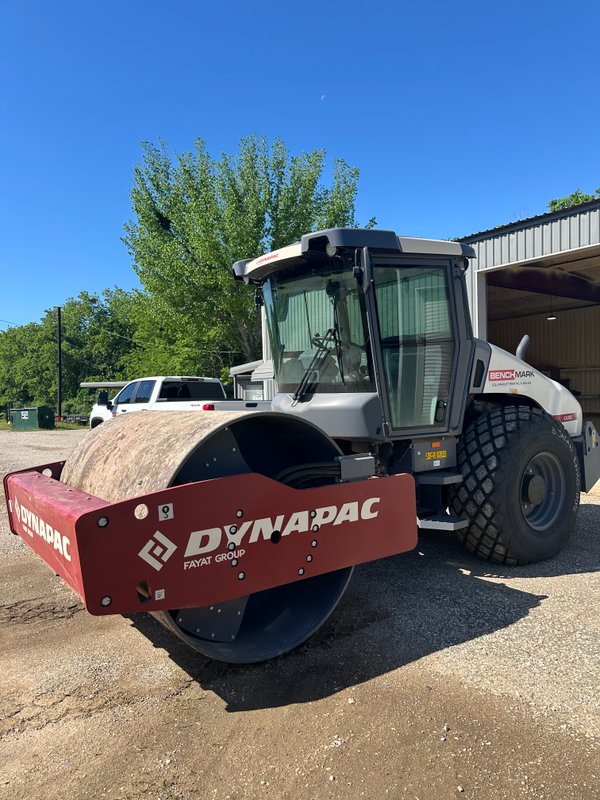
If you've spent any time building in North Texas — whether you're grading a subdivision in Celina, installing utilities in Prosper, or laying a commercial parking lot in Denton — you already know the soil doesn't cooperate the way it does in other parts of the country. The black gumbo clay that dominates this region is notorious for behaving completely differently depending on whether it rained last Tuesday or whether we've been in a six-week drought. Compaction testing isn't a bureaucratic checkbox here. It's the difference between a project that holds up for decades and one that starts failing before the ribbon-cutting.
We work alongside contractors across the DFW Metroplex and North Texas every season, and we see the consequences of both good and poor compaction practices. The customers who call us frustrated about failed inspections or re-work almost always trace the problem back to one of two issues: wrong equipment for the soil type, or testing that didn't account for North Texas-specific conditions. This guide covers what you actually need to know to get compaction right in this region.
Key Takeaways
- North Texas black gumbo clay expands up to 10% in volume when wet and shrinks dramatically when dry, making lift thickness and moisture control during compaction non-negotiable
- Caliche rock layers typically found 4–8 feet deep across DFW require breaking and re-compacting rather than treating as a stable base — assuming it's solid is a common and expensive mistake
- Most municipal and TxDOT specifications in the region require 95% Standard Proctor (ASTM D698) for subgrade and 98% for base course — failing an inspection means re-work at your cost
- Summer temperatures above 100°F accelerate moisture loss from compaction lifts, meaning test windows are shorter and re-testing after afternoon heat is often necessary
- Compaction equipment selection — plate compactor vs. jumping jack vs. vibratory roller — directly affects test results on different North Texas soil profiles
Why Is Soil Compaction So Difficult in North Texas Compared to Other Regions?
The soil profile under most of North Texas is genuinely one of the more challenging environments for earthwork in the United States. The region sits on what geologists classify as Blackland Prairie — a band of expansive clay soil stretching from the Red River south through the DFW Metroplex and beyond. This black gumbo clay, technically a montmorillonite clay, has a shrink-swell index that ranges from moderate to very high, meaning it absorbs water and expands, then loses moisture and contracts. USDA Natural Resources Conservation Service data shows these soils can experience volumetric changes of 8–12%, which creates differential movement under any structure built on inadequately compacted fill.
Below that clay layer, many sites in Denton, McKinney, Frisco, Allen, and across Collin and Denton counties hit caliche — a calcium carbonate hardpan that forms naturally between 4 and 8 feet down. Contractors who haven't worked this area before sometimes see caliche and assume they've hit a stable base. In reality, caliche can be fractured, vuggy (full of small cavities), or layered with softer material beneath it. A compaction test on top of an unbroken caliche layer will read beautifully and tell you nothing about what happens when that layer cracks under sustained load.
The combination of these two soil profiles — highly expansive near the surface and potentially unreliable hardpan below — is exactly why geotechnical reports and compaction testing protocols from other states don't translate directly to North Texas work. You need testing procedures and equipment calibrated to what's actually in the ground here.
What Compaction Standards Apply to North Texas Construction Projects?
The benchmark for most North Texas projects is ASTM D698 (Standard Proctor) or ASTM D1557 (Modified Proctor), with which method applies depending on the project type and the governing specification. TxDOT projects — including any work near or connecting to state highways — typically require 95% of Modified Proctor density for embankment and 98% for base course material. Municipal projects in cities like Denton, Prosper, Celina, and McKinney generally follow similar standards, though you should always pull the specific city specification because they do vary.
For commercial foundations and building pads, most geotechnical engineers in this region specify 95% Standard Proctor for structural fill, verified at maximum lift thicknesses of 6–8 inches of loose material. This is where we see a lot of contractors get into trouble — compacting in lifts that are too thick because it moves work faster, then being surprised when the nuclear gauge fails at depth. Physics doesn't negotiate: you can't compact the bottom of a 12-inch lift from the surface, regardless of how many passes you make.
A critical and often-overlooked standard on North Texas projects is moisture content during compaction. The optimal moisture content for DFW-area clays typically runs 2–4% above the optimum determined in the Proctor test, because slightly wet-of-optimum compaction on expansive clay produces a more stable, less shrink-prone fill. Compacting dry-of-optimum on black gumbo clay can actually create a condition where the fill absorbs water post-construction and heaves — exactly the scenario that drives slab foundation repairs across Frisco, Little Elm, and Trophy Club neighborhoods.
How Do You Test Soil Compaction Properly on a DFW Area Job Site?
The two methods you'll encounter on most North Texas commercial and municipal sites are the nuclear density gauge and the sand cone test. Each has its place, and understanding which one applies to your project matters before you schedule an inspection.
Nuclear density gauges — the Troxler and Humboldt units are common in this market — give you immediate results on both density and moisture content. A properly calibrated nuclear gauge operated by a certified technician will tell you within minutes whether a lift has achieved the required compaction percentage. OSHA 1926.550 and applicable NRC regulations govern nuclear gauge use, and any technician operating one on your site needs current certification and their gauge needs a current calibration certificate. We've seen projects delayed because an inspector showed up with an out-of-calibration device — it's worth verifying before the crew mobilizes.
Sand cone testing per ASTM D1556 is slower but is still specified on some TxDOT and heavy civil projects as the baseline verification method. It involves excavating a small hole in the compacted surface, measuring the excavated material, and calculating density directly. In rocky or cobbly fill conditions — which you'll encounter any time you're re-compacting broken caliche — sand cone tests are actually more reliable than nuclear gauges, which can give erratic readings in highly variable material.
For large site work across the expanse of growth happening in Gunter, Van Alstyne, Aubrey, and Decatur right now, a practical testing frequency for residential subdivision subgrade is one test per 2,500 square feet per lift, minimum. For structural areas under buildings or pavement, that frequency should increase. These aren't just good practices — most quality assurance programs written into contracts specify test frequencies, and failing to meet them can create contract compliance issues beyond just the compaction question itself.
What Compaction Equipment Works Best for North Texas Clay Soils?
Equipment selection is where the operational experience really matters. The answer is never one-size-fits-all, and the North Texas soil profile demands that you match the machine to the material.
For cohesive clay soils — the black gumbo you're working with on most sites across Denton, Carrollton, Irving, Fort Worth, and Mansfield — sheepsfoot and padfoot rollers are the correct primary compaction tool. The feet penetrate and knead the clay from the inside out, creating the interlocking particle structure that achieves high density in cohesive material. A smooth drum vibratory roller on wet clay doesn't compact it — it smears and pumps the material, and you'll fail a nuclear gauge test every time. We've had customers call us after putting a smooth drum roller on a clay subgrade for an entire day and wondering why the inspector is rejecting every test. The machine just isn't matched to the soil.
For granular fill, base course, or crushed caliche material being re-used as fill, a vibratory smooth drum roller is exactly right. The vibration works through granular material effectively, and the equipment is highly productive on large open areas. CAT CB series rollers in our fleet are well-suited for base course work on the larger commercial sites we serve across Collin and Denton counties.
In trenches — utility lines, storm drains, the constant water and sewer work happening in growing communities like Celina and Prosper — jumping jack compactors (rammers) are the correct tool for cohesive clay, and plate compactors work for granular bedding material. Trench compaction is also where we see the most failed inspections, because workers compact the accessible center of the trench and leave the haunches (the areas beside the pipe) loose. Getting compaction test locations at the haunch level is non-negotiable on engineered utility work.
How Does North Texas Summer Heat Affect Compaction Testing and Results?
From June through September across the DFW Metroplex, ambient temperatures regularly exceed 100°F, and ground surface temperatures on exposed clay can hit 130–140°F. This creates a compaction window problem that contractors working in milder climates never have to think about.
Clay fill that's been moisture-conditioned to the right compaction window in the morning will lose that moisture faster than you can cover ground on a July afternoon in Wichita Falls or Sherman. We've watched customers pass compaction tests in the morning, continue placing and compacting the same lift through the afternoon, and then fail re-verification tests late in the day on material that was too dry. The solution is aggressive moisture management — either adding moisture back to material before it dries out below optimum, or restricting compaction operations to morning hours during extreme heat.
Equipment also runs harder in extreme heat. Hydraulic systems on rollers and compactors are designed with operating temperature ranges, and sustained 100°+ ambient temperatures push fluid temps higher. Keeping hydraulic fluid levels correct, checking system temperatures, and not running equipment through extended lunch breaks without allowing cool-down helps prevent the kind of mid-afternoon breakdowns that kill your compaction schedule. Our service team fields more calls about overheated compaction equipment in July and August than any other time of year.
On the opposite end, North Texas does see freeze events — typically short-duration but occasionally significant. Frozen ground cannot be compacted, and frozen clay fill will test acceptably while frozen and then fail completely once it thaws. If you're working through a cold snap in the Gainesville or Bowie area and putting lift over soil that frosted overnight, your test results until that material fully thaws are not representative. FHWA geotechnical guidance addresses frozen soil compaction restrictions, and most state and municipal specs include similar language — know what yours says before the inspector shows up in February.
What Happens When Compaction Fails — and What Does It Actually Cost?
The downstream cost of poor compaction in North Texas is well-documented in the region's repair bills. A 2019 study by the American Society of Civil Engineers estimated that infrastructure deterioration driven by poor subgrade compaction costs U.S. taxpayers and property owners over $400 billion annually in repair and maintenance costs. At the local level, we see this in concrete pavement failures along commercial drives in Mesquite and Fort Worth, foundation movement on residential slabs throughout the Metroplex, and utility trench settlements that open sinkholes in newly paved streets.
The re-work cost calculation is straightforward and painful. Remove the failed pavement or structure, over-excavate to remove and replace the poorly compacted material, re-compact in proper lifts with verified testing, and rebuild the finished surface. On a commercial parking lot, that sequence can easily reach $15–25 per square foot in re-work cost. On a residential foundation, engineered slab repairs in North Texas run $8,000–$30,000 depending on severity. The compaction testing that would have prevented those outcomes costs a fraction of that — typically $500–$1,500 for a day of testing on a mid-size project.
If you're working on a project in Denton County, Collin County, or anywhere in our North Texas service area and you need to make sure your compaction equipment matches the soil conditions you're actually dealing with, give us a call at (817) 403-4334. We'll help you spec the right roller, rammer, or plate compactor for your specific application — and we've seen enough local soil conditions to give you advice that goes beyond what's in the spec book.
Frequently Asked Questions
What compaction percentage is required for subgrade in North Texas?
Most North Texas municipal and TxDOT projects require 95% of Modified Proctor density (ASTM D1557) for subgrade and embankment, and 98% for base course material. Commercial building pad specifications often call for 95% Standard Proctor (ASTM D698) for structural fill. Always verify the specific city or project specification, as requirements vary between municipalities like Denton, McKinney, and Frisco.
Why is black gumbo clay so hard to compact in the DFW area?
Black gumbo clay in North Texas is a montmorillonite clay with a shrink-swell index that can cause 8–12% volumetric change depending on moisture content. This means the optimal compaction window — the correct moisture range — is narrow and changes rapidly in hot weather. Compacting this soil too dry creates a fill that will absorb water post-construction and heave, while compacting too wet produces pumping and unstable material. Padfoot or sheepsfoot rollers are required for proper compaction of cohesive clay; smooth drum vibratory rollers will not achieve adequate density.
How does caliche affect soil compaction testing in North Texas?
Caliche formations, typically found 4–8 feet deep across the DFW Metroplex, can produce misleadingly high compaction test readings because the hardpan appears dense. However, caliche can be fractured or underlain by softer material, creating a false sense of stability. When caliche is broken and re-used as fill, it behaves as granular material and requires vibratory roller compaction in controlled lifts — not treatment as an undisturbed base. Geotechnical engineers familiar with North Texas profiles should evaluate caliche layers before making compaction decisions.
Can you compact soil during extreme heat in Texas summer?
You can compact soil in Texas summer heat, but moisture management becomes critical when temperatures exceed 100°F. Clay fill conditioned to the proper moisture content for compaction can lose that moisture window within hours on a hot afternoon, causing compaction test failures on material that passed earlier in the day. Best practice is to restrict clay compaction operations to early morning hours during peak summer heat, add moisture back to drying material before it drops below optimum, and verify test results are taken while material is still within the moisture window — not after afternoon desiccation.
What is the difference between a nuclear density gauge test and a sand cone test for compaction?
A nuclear density gauge (tested per ASTM D6938) gives immediate results for both soil density and moisture content, making it the standard for most commercial and residential projects. Sand cone testing (ASTM D1556) is slower and more labor-intensive but is still specified on some TxDOT and heavy civil projects as a direct verification method. In rocky or highly variable fill conditions — such as broken caliche — sand cone tests are often more reliable because nuclear gauges can give inconsistent readings in non-uniform material. Both methods require calibration and trained technicians; nuclear gauge operators also need current NRC certification.