.png)
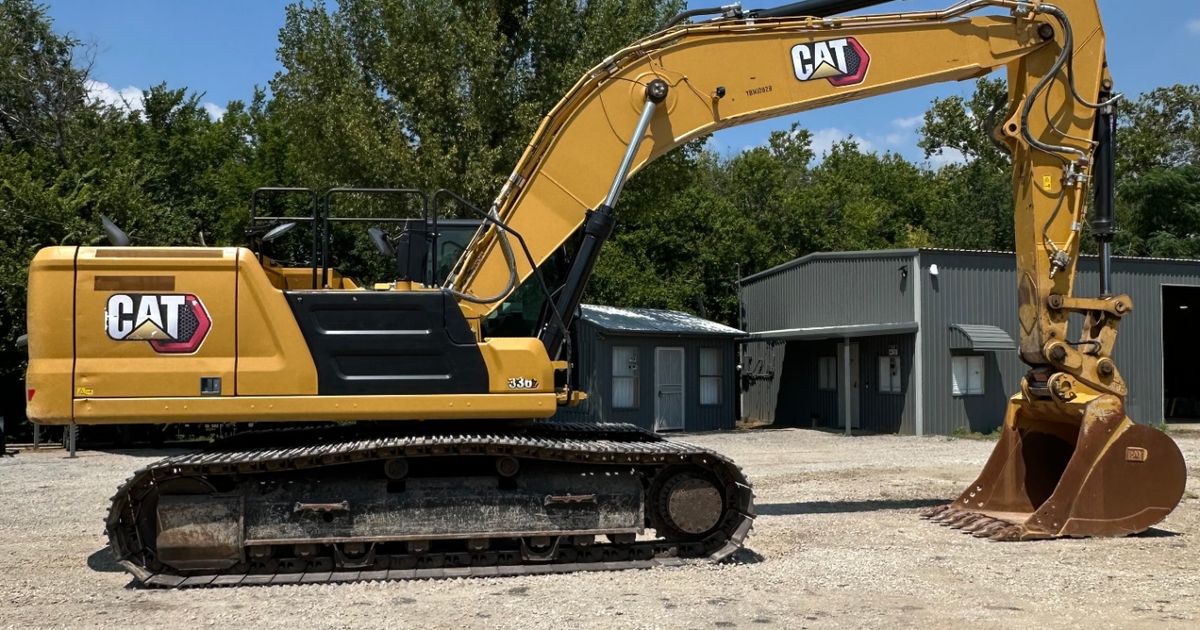
Every contractor eventually faces the same question: does it make more financial sense to rent or buy? We hear it constantly from customers across our North Texas service area, from residential builders in Celina and Prosper to utility contractors running jobs through McKinney, Sherman, and down into the Fort Worth metro. The honest answer isn't a slogan—it's a math problem, and the variables matter more than any blanket advice you'll get from a salesperson trying to move iron.
We've watched contractors make both decisions well and poorly. What separates good decisions from expensive ones is usually the same thing: an honest accounting of the full cost picture, not just the monthly payment on a purchase or the day rate on a rental.
Key Takeaways
- Equipment that runs below 60% annual utilization almost always costs less to rent than own when you factor in true total cost of ownership (TCO)
- CAT equipment depreciates 20-30% in the first year alone—a $250,000 CAT 336 excavator loses $50,000–$75,000 in value before it turns a single billable hour for year two
- North Texas caliche and expansive clay conditions accelerate wear on undercarriage, hydraulics, and ground engagement tools—increasing ownership maintenance costs significantly versus more forgiving soils
- Section 179 and bonus depreciation rules can make purchasing more attractive for high-utilization equipment, but these tax advantages are often overstated compared to the flexibility value of renting
- Renting gives contractors immediate access to the right machine for the job without carrying idle iron on the books
What Is the True Total Cost of Owning Heavy Equipment?
The purchase price is the beginning of the cost conversation, not the end. When contractors think about buying a piece of equipment—say a CAT 320 excavator at roughly $200,000—they're usually focused on the financing payment. What often gets underestimated is everything that stacks on top of that payment every single month the machine is in the fleet.
According to the Associated General Contractors of America, total annual ownership costs for construction equipment typically run 25-40% of the original purchase price when you account for all factors. On a $200,000 machine, that's $40,000–$80,000 per year in real costs beyond financing. Here's how that breaks down in practice:
Depreciation hits hardest in year one. CAT equipment—as well-built as it is—still depreciates 20-30% in the first twelve months. That $200,000 excavator is worth $140,000–$160,000 by the time it's turned one. That $40,000–$60,000 loss isn't a paper entry—it's real money you won't recover at resale.
Maintenance and repair costs average 2-5% of the purchase price annually during the warranty period and climb considerably as the machine ages past 3,000–5,000 hours. For contractors working in North Texas, this number trends higher. Our expansive black gumbo clay soils cause severe undercarriage wear on excavators and dozers—the constant suction and release of wet clay on track links and rollers accelerates wear in ways that contractors moving from other regions consistently underestimate. Add in the caliche rock formations that appear at 4-8 feet below grade across much of the DFW and Denton County corridor, and ground engagement tool replacement costs become a recurring budget line that surprises owners.
Insurance, licensing, and storage add another 1-3% annually. For contractors without a permanent yard, storage costs for idle equipment are a hidden drain that renting completely eliminates.
How Does Equipment Utilization Rate Determine Whether Renting or Buying Wins?
Utilization rate is the single most important variable in the rent-vs-buy calculation. Industry data from the Association of Equipment Manufacturers consistently shows that the financial crossover point—where ownership becomes cheaper than renting—occurs between 60-70% annual utilization for most equipment classes.
Put simply: if a machine is running billable hours more than 60% of available working days, ownership typically pencils out. Below that threshold, renting wins on pure economics. The reason is straightforward. Rental costs are variable—you only pay when you need the machine. Ownership costs are largely fixed—depreciation, insurance, and financing run whether the machine is on a job or sitting on your yard in Argyle or Weatherford.
We see this play out most clearly with specialty attachments and larger equipment. A CAT 374 large excavator might be exactly right for a commercial site excavation project in Fort Worth, but most mid-size contractors don't have consistent demand for that class of machine. Owning it at 30-40% utilization is an expensive proposition. Renting it for the projects that need it keeps the cost tied directly to revenue-generating work.
On the other end, a contractor doing continuous residential and light commercial work across Denton County—running a CAT 308 mini excavator on five days out of every six—is likely a strong ownership candidate if their volume supports it. The math changes completely at high utilization.
What Are the Real Tax Advantages of Buying Equipment—And Are They Overstated?
Tax benefits are frequently the first argument equipment dealers make for purchasing, and they're real—but they deserve a clearer explanation than they typically get. IRS Section 179 allows businesses to deduct the full purchase price of qualifying equipment in the year it's placed in service, up to $1,160,000 for 2023. Bonus depreciation rules have allowed 100% first-year write-offs in recent years, though that percentage has been stepping down.
These provisions genuinely benefit profitable contractors in high-utilization situations. If you're buying a $150,000 CAT 299D3 compact track loader that you'll run 70%+ of the year, the Section 179 deduction against taxable income is meaningful. We'd always encourage contractors to work through these numbers with their CPA before making a decision.
The overstated part is using tax benefits to justify purchasing underutilized equipment. A deduction saves you money on taxes owed—it doesn't make the maintenance costs, depreciation, and storage costs disappear. We've seen contractors talk themselves into six-figure purchases based on the tax story, then watch the machine sit idle half the year generating costs with no offsetting revenue. The deduction helped reduce their tax bill; it didn't fix the utilization problem.
Rental expenses, for their part, are fully deductible as ordinary business expenses under IRS Publication 535—a fact that often gets buried in the ownership-versus-rental conversation.
How Does Renting Protect Contractors from Equipment Downtime Risk?
Equipment downtime on a job site isn't just a maintenance cost—it's a revenue interruption, a schedule risk, and potentially a contractual liability. A machine that's down for three days while a part is sourced can cost far more in delays than the repair bill itself.
One scenario we encounter regularly: a contractor running their own aging CAT D6 dozer on a site prep job in Aubrey hits a dense caliche shelf at six feet—harder than expected—and throws a track. If that machine is owned and out of warranty, they're on the hook for the repair timeline and every day of lost production. When that same contractor rents from our fleet, a mechanical issue means we bring a replacement. The job keeps moving.
North Texas summer conditions add another layer to this equation. Operating heavy equipment through July and August in 100°F+ temperatures puts real stress on hydraulic systems, cooling systems, and DEF systems on Tier 4 Final machines. Contractors who own aging equipment often find themselves managing summer heat-related failures during the exact period when construction demand peaks. Renting newer fleet equipment means those performance and reliability standards are maintained by the rental company, not the contractor.
When Does Buying Heavy Equipment Make More Financial Sense Than Renting?
Ownership genuinely is the right financial choice under the right conditions, and we're not in the business of steering customers toward rentals when buying would serve them better. Here's where purchasing typically wins:
When equipment will run at 65%+ utilization consistently, ownership economics improve significantly. A grading contractor doing continuous residential development work across Celina, Gunter, and Van Alstyne—running a CAT 140 motor grader nearly every working day—should strongly consider ownership. At those hours, the per-unit economics of ownership beat rental rates, and the operator familiarity with a specific machine also has production value.
When a contractor's work is highly specialized and requires specific machine configurations, ownership also makes sense. Custom attachments, specific counterweight configurations, and specialized setups that don't match standard rental fleet specs are legitimate reasons to own equipment.
Long-term infrastructure or maintenance contracts—where a contractor has multi-year commitments with known equipment requirements—shift the calculus toward ownership. When revenue certainty matches asset commitment, ownership risk is manageable.
According to EquipmentWatch industry data, contractors who purchase equipment with a clear three-to-five year utilization plan and exit strategy—accounting for residual value at planned resale—achieve better financial outcomes than those who buy without modeling the full ownership lifecycle.
What Are the Cash Flow and Balance Sheet Implications of Each Option?
Beyond the pure cost math, the capital structure question matters for growing contractors. Purchasing heavy equipment—particularly financing it—ties up credit capacity that could otherwise fund project bonds, working capital, or business growth. For contractors in expansion mode across the rapidly growing I-35 corridor from Denton through Prosper and Frisco, keeping the balance sheet flexible has real strategic value.
The U.S. Small Business Administration consistently identifies equipment financing as one of the primary constraints on small contractor growth—not because equipment costs too much, but because large asset purchases consume lending capacity that limits flexibility during project opportunities.
Renting converts a capital expenditure to an operating expense. For contractors managing project-based cash flows—where revenue comes in waves tied to project milestones—the ability to scale equipment costs up and down with actual work is a meaningful operational advantage.
We've worked with contractors in the Wichita Falls, Decatur, and Gainesville markets who've grown their project capacity significantly by keeping their capital available rather than locked into owned equipment. They rent for each project at a predictable per-day cost, pass those costs through to project budgets, and maintain the financial flexibility to take on larger bonded contracts.
How Should Contractors Calculate the Break-Even Point Between Renting and Buying?
The practical break-even calculation isn't complicated, but it requires honest inputs. Start with the annual ownership cost: financing payment (or depreciation if purchasing outright) + estimated maintenance (2-5% of purchase price annually) + insurance + storage. Divide that by the number of revenue-generating days you realistically expect to run the machine. That's your effective ownership cost per operating day.
Compare that number to the rental day rate for equivalent equipment. If your ownership cost per operating day is lower, buying makes financial sense at your projected utilization. If it's higher—which it frequently is when contractors model this honestly for the first time—renting delivers better economics.
The calculation the American Society of Civil Engineers recommends also factors in the opportunity cost of capital: what could those purchase funds generate if deployed elsewhere in the business? For most growing contractors, that opportunity cost is significant and consistently underweighted in the ownership argument.
If you're working through this calculation for specific equipment and want a realistic comparison against our current rental rates, our team at Benchmark Equipment in Denton can walk through the numbers with you. We'd rather help you make the right decision than push you toward either option. Give us a call at (817) 403-4334 and we can compare what ownership would actually cost against what a rental program would look like for your specific job volume and machine class.
Frequently Asked Questions
At what utilization rate does buying heavy equipment become cheaper than renting?
The financial crossover point typically occurs at 60-70% annual utilization for most equipment classes. Below 60% utilization, renting is generally cheaper when total ownership costs—depreciation (20-30% in year one alone), maintenance (2-5% of purchase price annually), insurance, and storage—are factored in. Above 65-70% consistent utilization, ownership economics typically improve enough to justify purchase.
What are the total annual costs of owning heavy construction equipment?
According to the Associated General Contractors of America, total annual ownership costs for construction equipment typically run 25-40% of the original purchase price. For a $200,000 excavator, that means $40,000–$80,000 per year in real costs beyond financing, including depreciation, maintenance and repair, insurance, and storage. These costs are largely fixed regardless of whether the machine is generating revenue.
Can I deduct heavy equipment rental costs on my business taxes?
Yes. Equipment rental expenses are fully deductible as ordinary and necessary business expenses under IRS Publication 535. This is often overlooked in the rent-vs-buy debate, which tends to focus on Section 179 and bonus depreciation benefits for purchases. Both options provide tax deductibility—the difference is in timing, structure, and how each affects your balance sheet and cash flow.
How does renting heavy equipment protect against downtime on a job site?
When you rent from a reputable equipment provider, mechanical failures are the rental company's problem—not yours. A reputable rental company will provide a replacement machine to keep your job moving rather than leaving you waiting on parts and repairs. This is particularly valuable during peak summer construction season in North Texas, when 100°F+ temperatures put additional stress on hydraulic and cooling systems in older owned equipment.
How does buying equipment affect a contractor's ability to get bonded and take on larger projects?
Purchasing heavy equipment through financing ties up credit capacity that surety companies evaluate when issuing payment and performance bonds. For growing contractors, large equipment loans can reduce bonding capacity and limit the size of projects they can take on. Renting converts capital expenditures to operating expenses, preserving balance sheet flexibility and lending capacity—a meaningful strategic advantage for contractors pursuing larger bonded contracts.