.png)
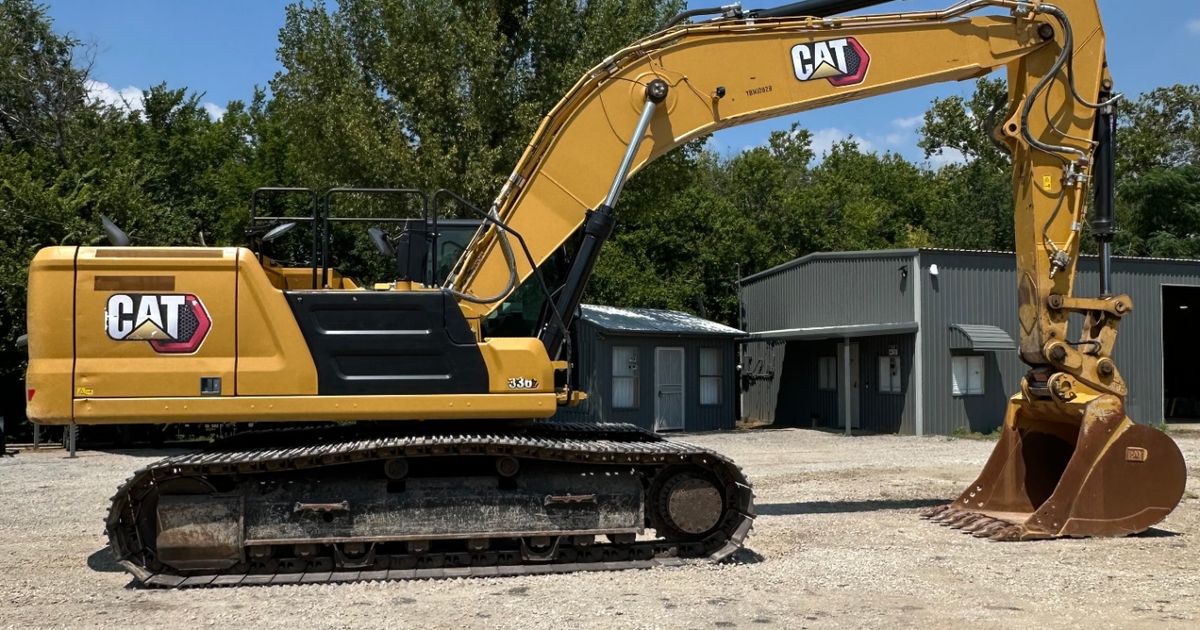
Running pipeline and utility projects in North Texas is not the same as running them anywhere else in the country. We say that not as a point of regional pride but as an operational reality we see play out across our rental fleet every week. The contractors calling us from Celina, Aubrey, Prosper, and the other fast-growing communities north of Dallas aren't dealing with generic dirt—they're dealing with some of the most equipment-punishing ground conditions in Texas. Heavy black gumbo clay that grabs buckets, caliche hardpan that dulls teeth in a single shift, and summer temperatures that stress hydraulic systems well beyond their design comfort zone. Getting the equipment package right before you mobilize is the difference between a profitable job and one that quietly bleeds margin from day one.
Key Takeaways
- North Texas caliche rock typically begins at 4–8 feet below grade, requiring excavators with 18,000–25,000 lb breakout force for efficient penetration without rock hammers on shallower cuts
- CAT 320 and CAT 323 excavators handle the majority of 6–12 inch water and sewer line installations across DFW's suburban expansion corridor
- Expansive clay soils in Denton, Fort Worth, and surrounding areas can shift trench walls significantly after rain events, making shoring equipment selection as critical as excavator choice
- Summer heat above 100°F requires verifying hydraulic fluid ratings—ISO 46 oil degrades faster above 180°F operating temperature, a threshold North Texas equipment routinely approaches in July and August
- Directional boring is increasingly preferred in urbanized corridors where open-cut permitting has grown more restrictive in cities like Frisco, McKinney, and Carrollton
What Excavator Size Do Utility Contractors Actually Need for North Texas Trenching?
The honest answer depends on pipe diameter, depth, and the specific soil profile at your site—but we can give you a reliable starting framework based on what we see working (and not working) across our fleet. For residential service line work, 2–4 inch water and gas laterals, a CAT 308 CR or CAT 308E2 mini-excavator handles the job efficiently with a 12–18 inch bucket and minimal surface disruption. These machines are particularly useful in the established neighborhoods of Denton, Trophy Club, and Argyle where street and yard access is tight and pavement restoration costs add up fast.
Step up to 6–12 inch water and sewer main installations, and the CAT 320 or CAT 323 becomes the workhorse machine. These mid-size excavators produce 26,000–28,000 lb of bucket breakout force—important when you hit caliche at 5 feet, which happens regularly on projects running through the Celina, Gunter, and Van Alstyne corridor. The CAT 320's 20-ton operating weight also provides the stability you need when you're working at 10–12 foot trench depths without overcutting your walls.
For 16-inch and larger transmission mains, force mains, and large-diameter storm sewer work, the CAT 336 is the right tool. We've had customers attempt transmission pipeline work with 320-class machines to save rental cost and end up calling us mid-project because production rates collapsed when they hit caliche. The CAT 336's 60,000+ lb operating weight and extended digging depth capability handles deep utility work in a single pass in conditions where lighter machines require multiple repositions. According to Caterpillar's published specifications, the CAT 336 GC achieves up to 15% better fuel efficiency than comparable prior-generation models—meaningful on a 3-month pipeline project.
How Does North Texas Soil—Clay and Caliche—Affect Equipment Selection?
North Texas sits on some of the most geologically challenging construction ground in the southern United States. The USDA Natural Resources Conservation Service Web Soil Survey classifies much of the DFW metroplex as Vertisol soils—the technical term for the expansive black clay locally called black gumbo. These soils have a shrink-swell coefficient that causes active movement with moisture changes, which matters for utility contractors in two ways: trench wall stability and backfill compaction.
We regularly hear from contractors new to the region who underestimate how much clay trench walls can move after a rain event. A trench that looked stable at 3:00 PM can be noticeably different by 7:00 AM the next morning, especially in Denton County and areas north toward Gainesville and Bowie where the Vertisol layer runs particularly deep. This isn't a scare tactic—it's why OSHA 1926 Subpart P trench safety compliance is non-negotiable and why we always recommend customers renting excavators also talk to us about trench box and shoring equipment.
Below the clay, caliche is the other defining challenge. This calcium carbonate hardpan layer typically appears between 4 and 8 feet below grade across much of DFW, though it varies by location. In Weatherford, Decatur, and areas west of Fort Worth, caliche can be dense enough to require hydraulic hammer attachments. On most urban and suburban DFW utility jobs, a CAT 320 or 323 with a heavy-duty bucket and carbide-tipped teeth will penetrate moderate caliche without a hammer—but you need to spec the right bucket. Standard dirt buckets lose teeth fast in caliche. We stock and rent heavy-duty rock buckets with Hensley or GET-style adapters specifically because of this.
What Equipment Do You Need for Directional Boring and Trenchless Utility Work in DFW?
Trenchless installation has grown substantially across the more urbanized parts of our service area over the past several years, and it's driven by permitting reality more than anything else. Cities like Frisco, McKinney, Carrollton, and Irving have progressively tightened open-cut requirements on major corridors, and right-of-way restoration costs in established commercial areas can make HDD (horizontal directional drilling) the more economical choice even when the upfront equipment cost is higher. The North American Society for Trenchless Technology estimates that HDD installations now account for roughly 30% of new utility crossings in urbanized U.S. markets.
For the support side of HDD operations—which is where our rental fleet fits in—contractors consistently need excavators for pit work at entry and exit points, vacuum excavators or hydrovac equipment for potholing and locating existing utilities, and skid steer loaders with auger attachments for small bore pilot work. The CAT 299D3 XE compact track loader paired with an auger drive handles preliminary boring setup work on residential HDD projects efficiently, particularly in the narrow access conditions common in Argyle, Little Elm, and Prosper's master-planned communities.
Support equipment for spoil management matters too. HDD generates significant drill cuttings mixed with bentonite slurry, and managing that material on active job sites—particularly in municipalities with strict runoff requirements—requires thinking through your equipment package beyond just the boring unit itself.
How Does North Texas Summer Heat Impact Utility Equipment Performance?
Operating heavy equipment through a North Texas summer is a genuine operational challenge, not just a comfort issue. When ambient temperatures run 100°F to 108°F through July and August—as they did consistently during the summer of 2023—hydraulic systems work significantly harder. Standard ISO 46 hydraulic oil has an optimal operating range that tops out around 160–180°F. In peak North Texas summer conditions, machines running hard in deep trench work can push beyond that threshold, leading to reduced hydraulic efficiency, accelerated seal wear, and in worst-case scenarios, system damage.
CAT machines from the 300 series excavators forward have integrated hydraulic oil coolers and electronic system monitoring that help manage this, but operator habits still matter. We advise customers running extended shifts in summer to schedule high-intensity work—rock breaking, sustained digging in tight conditions—earlier in the day, and to check hydraulic oil temperatures during mid-day operation. Some of our customers running pipeline projects in the Wichita Falls and Sherman-Denison areas during summer add supplemental cooling to their equipment setups when they know they'll be running consecutive 10-hour days.
Fuel consumption also increases in extreme heat. According to data from the U.S. Energy Information Administration, diesel-powered construction equipment can see fuel consumption increase 8–12% in sustained high-heat operating conditions compared to moderate-temperature baselines. On a 3-month pipeline project, that's a budget line worth planning for.
What Compaction Equipment Do Pipeline Contractors Need for North Texas Backfill?
Backfill compaction on utility projects is where a lot of North Texas contractors either win or lose their warranty and inspection approvals. Municipal inspectors in Denton, Fort Worth, Mansfield, and Crowley are experienced with the clay soil behavior in their areas and apply compaction density standards accordingly. Most municipal utility specifications require 95% Standard Proctor density per ASTM D698, and achieving that in black gumbo clay requires matching the right compactor to the lift thickness and moisture conditions.
For trench backfill in clay soils, we consistently recommend vibratory plate compactors for lifts under 8 inches and jumping jack (rammer) compactors for deeper lifts in confined trenches. The CAT-compatible plate compactors in our fleet work well on the granular bedding and initial cover material around pipe, while jumping jack compactors are the right tool once you're working in the native clay. Trying to use a plate compactor in saturated black gumbo is one of the most common mistakes we see on DFW utility jobs—you'll get surface density readings that don't reflect what's happening 6 inches down.
For wider trench restoration and road base compaction above utility lines, a vibratory smooth drum roller in the 1–3 ton range handles most residential and light commercial applications. On major road crossings and larger diameter main installations, a CAT CS series or CP series soil compactor with pad foot drum is the right tool for achieving specified density in multiple clay lift passes.
How Do You Build the Right Equipment Package for a North Texas Utility Project?
The most productive North Texas utility contractors we work with think about equipment packages, not individual machines. A well-configured package for a typical water main extension project in a developing suburb like Aubrey or Celina includes a primary excavator (CAT 320 or 323), a mini-excavator or skid steer for spoil management and backfill work, compaction equipment matched to the soil type, and a pipe laser or grade laser to maintain slope during installation. Forgetting one piece of that puzzle typically means borrowing or renting emergency equipment at inconvenient times.
On large transmission pipeline jobs—the kind running through Collin and Denton counties as water infrastructure keeps pace with explosive residential growth—the equipment package conversation becomes more complex. We've helped customers configure multi-machine packages for projects that include CAT 336 excavators for primary cut, CAT 320s for cleanup and lateral work, track-mounted pipe layers, and support equipment for environmental compliance (silt fencing installation, trench dewatering pumps).
If you're planning a pipeline or utility project anywhere in our service area—from Waco north through Denton to Gainesville, or from Weatherford east to Mesquite and Rowlett—give us a call at (817) 403-4334. We'll talk through your soil conditions, project scope, and timeline to help you build the right rental package from the start, not after your production schedule has already taken a hit.
The Associated General Contractors of America consistently identifies equipment selection and utilization as one of the top factors in utility contractor profitability. In our experience across the North Texas market, the contractors who call us before mobilization—not after the first problem—are the ones who finish on schedule.
Frequently Asked Questions
What size excavator do I need for water main installation in North Texas?
For 6–12 inch water main installations in North Texas, a CAT 320 or CAT 323 excavator is the most common and productive choice, providing 26,000–28,000 lb of bucket breakout force needed to penetrate caliche rock formations that typically appear 4–8 feet below grade across DFW. Smaller residential service line work (2–4 inch laterals) can be handled with a CAT 308 mini-excavator, while large-diameter transmission mains (16 inch and above) warrant a CAT 336 to maintain production rates in deep trench conditions.
How does black gumbo clay in DFW affect utility trenching and equipment selection?
Black gumbo clay—classified as Vertisol soil by the USDA—has significant shrink-swell characteristics that cause active trench wall movement with moisture changes, making OSHA 1926 Subpart P trench shoring compliance especially critical in North Texas utility work. This soil type also requires jumping jack rammer compactors rather than plate compactors for backfill lifts in native clay, as plate compactors produce misleading surface density readings without achieving required depth. Most North Texas municipalities require 95% Standard Proctor density per ASTM D698 on utility backfill, and matching compaction equipment to clay conditions is essential to pass inspection.
When does directional boring make more sense than open-cut trenching for utility work in DFW?
Directional boring (HDD) is increasingly required or preferred in urbanized DFW corridors—particularly in Frisco, McKinney, Carrollton, and Irving—where open-cut permitting on major roads has become more restrictive and pavement restoration costs are high. The North American Society for Trenchless Technology estimates HDD accounts for roughly 30% of new utility crossings in urbanized U.S. markets. For utility contractors, the break-even analysis typically favors HDD when open-cut permitting costs, traffic control, and pavement restoration would exceed the HDD equipment premium.
How does extreme heat affect heavy equipment on North Texas utility projects?
North Texas summer temperatures of 100–108°F push hydraulic systems beyond their optimal operating range, with standard ISO 46 hydraulic oil degrading in performance above 180°F—a temperature CAT excavators can approach during sustained high-intensity work in peak summer heat. Diesel equipment fuel consumption can increase 8–12% in sustained high-heat conditions compared to moderate-temperature baselines according to U.S. Energy Information Administration data, meaningfully impacting project fuel budgets. Scheduling high-intensity operations earlier in the day and verifying hydraulic oil temperatures during mid-day operation are key practices for protecting equipment and maintaining production through July and August.
What compaction equipment do I need for pipeline backfill in North Texas clay soil?
Pipeline backfill in North Texas black gumbo clay requires jumping jack (rammer) compactors for work in confined trenches and native clay lifts, as plate compactors do not achieve adequate density at depth in cohesive soils. Vibratory plate compactors are appropriate for granular bedding and initial cover material around pipe, while larger trench restoration above the pipe zone typically calls for a 1–3 ton vibratory smooth drum roller for road base and a pad foot CAT CS or CP series compactor on major road crossings requiring multiple clay lift passes. Most North Texas municipal utility specs require 95% Standard Proctor density per ASTM D698, and using the wrong compactor type is the most common reason for failed density testing on DFW utility projects.