.png)
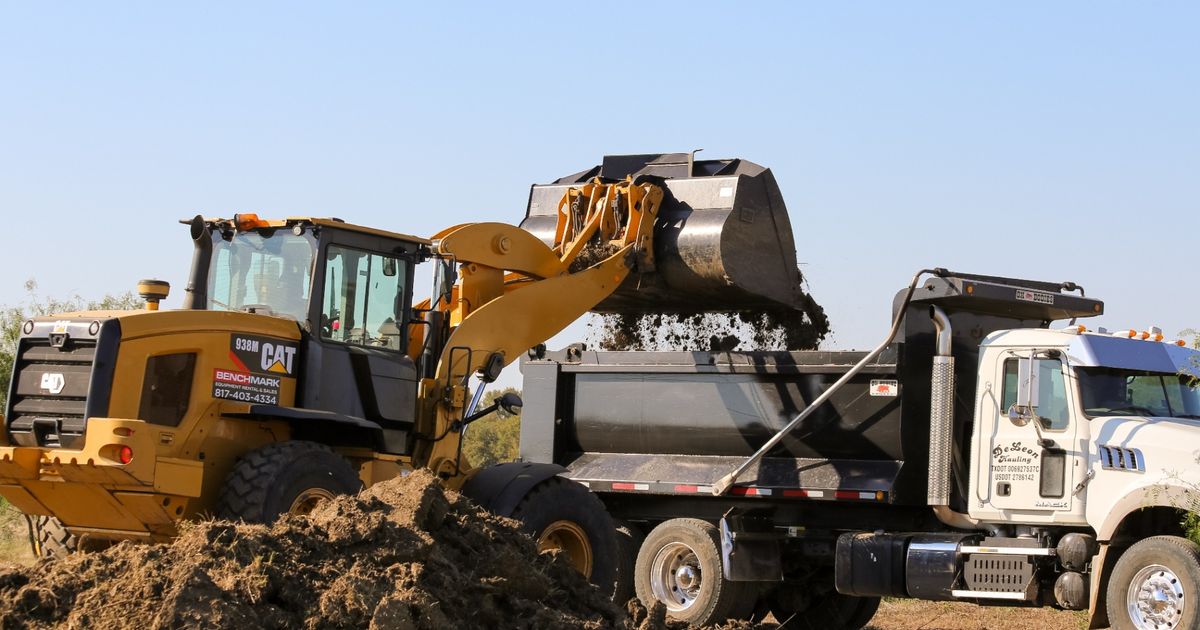
We get this question at least a dozen times a week from contractors across the Denton area and throughout the DFW corridor: "Should I rent by the week or lock in a monthly rate?" Most of the time, the person asking already has a gut feeling—they're just looking for someone to confirm the math. What we've learned from running a rental fleet in North Texas is that the math rarely lies, but job sites frequently do. Weather delays, caliche rock, and subcontractor scheduling gaps have a way of stretching two-week jobs into four-week projects, and that changes the calculation entirely.
Key Takeaways
- Monthly rental rates average 2.5-3x the weekly rate, meaning you break even around 15-18 working days of utilization
- North Texas clay soil and caliche conditions frequently extend project timelines 20-30%, making monthly rates more attractive than initial estimates suggest
- Equipment sitting idle on a monthly contract still costs money—track utilization daily to avoid paying for unused days
- CAT excavators, skid steers, and compactors each have different break-even thresholds based on their weekly-to-monthly rate ratios
- Seasonal demand in the DFW corridor locks up available equipment fast—monthly contracts during spring utility season protect both your budget and your access to the machines you need
How Do You Calculate the Break-Even Point Between Weekly and Monthly Rental?
The break-even calculation is simpler than most contractors expect. If a CAT 308 mini excavator rents for $1,200 per week and $3,200 per month, you break even at roughly 2.67 weeks—or about 18-19 working days assuming a standard five-day schedule. Rent it for 20 days on a monthly contract and you've saved money. Rent it for 12 days on two back-to-back weekly contracts and you've paid $2,400 instead of $3,200—weekly wins by a wide margin.
The formula is straightforward: divide the monthly rate by the weekly rate to find your break-even in weeks. Anything beyond that threshold, and the monthly contract puts money back in your pocket. According to the American Rental Association, the national average monthly-to-weekly rate ratio across equipment categories sits between 2.5x and 3.2x, which translates to break-even points ranging from 15 to 19 working days depending on equipment class.
What complicates the clean math is utilization. A monthly contract assumes you're running that machine most working days. We've seen contractors lock in a month on a CAT 312 excavator, hit unexpected caliche rock at the six-foot mark on a Prosper subdivision job, and spend four days waiting on rock-specific tooling. Those are four days of rental cost with zero production. That doesn't mean the monthly rate was wrong—it means utilization planning has to account for North Texas site conditions, not just the project schedule hanging on your trailer door.
When Does Weekly Rental Make More Financial Sense?
Weekly rental wins clearly on short, well-defined scopes. Concrete demo, single-structure foundation excavation, drainage corrections on residential lots in Argyle or Trophy Club—jobs where you know the scope, you've dug similar ground before, and your crew can complete the work in five to ten days. In those situations, paying weekly keeps you from carrying rental cost after the work is done.
Weekly rates also protect you when subcontractor sequencing is uncertain. If your excavation is done but the utility crew won't be on site for another ten days, a monthly contract means you're paying to park equipment. The smarter move is to return the machine after your scope and re-rent when the next phase starts—assuming availability isn't a concern. During peak construction seasons in the DFW area, that assumption can get you into trouble, which is a reason some contractors lock in monthly rates even on shorter jobs just to guarantee access.
One pattern we see regularly: contractors in fast-growing corridors like Celina, Gunter, and Van Alstyne who are working multiple smaller residential lots simultaneously. They'll run a skid steer on two or three lots in a week—never more than two or three days on any single property—but the machine is genuinely in use the entire time. Weekly rental fits that model well because the utilization is high and the total duration rarely stretches past ten days.
What Equipment Types Have the Best Monthly Rate Value?
Not all equipment categories offer the same monthly savings percentage, and understanding which machines carry the most favorable monthly-to-weekly ratios helps you prioritize where to negotiate. In our fleet, excavators and large compaction equipment tend to offer the steepest monthly discounts relative to weekly rates—often 35-40% savings for true monthly utilization. Smaller tools like plate compactors and light towers have flatter rate structures, so the monthly savings are proportionally less compelling.
CAT 320 and CAT 323 excavators are among the machines where monthly contracts most consistently deliver value on North Texas projects. These mid-size excavators are the workhorses of commercial site development in places like Frisco, McKinney, and Waco, and projects at that scale—utility installation, detention pond construction, commercial pad prep—routinely run four to six weeks. A contractor running a CAT 323 for five weeks on a monthly contract versus weekly renewals saves, on average, $2,800-$4,000 depending on current market rates. That's real margin on a project where every dollar counts.
Skid steers and track loaders sit in an interesting middle position. Because they're versatile and move between tasks constantly, utilization tends to be high—which favors monthly contracts. But they're also easy to mobilize and demobilize, so contractors feel comfortable returning them between phases. Our recommendation: if you can honestly say a skid steer will be on your site five days a week for three or more weeks, the monthly rate is almost always the right call.
How Do North Texas Soil Conditions Affect Rental Duration Planning?
This is where local operational knowledge matters more than any generic rental calculator. North Texas expansive clay—what old-timers call black gumbo—behaves unpredictably with moisture fluctuations. After a wet spring, that clay swells and becomes difficult to work efficiently, slowing excavation rates by 25-35% compared to dry conditions. After a dry summer, the same soil shrinks and cracks, creating conditions that look manageable but can cause trench wall instability that forces work stoppages under OSHA 1926 Subpart P trenching and excavation standards.
Caliche rock is the other variable that consistently catches contractors off guard on rental duration estimates. Caliche formations in the DFW area typically appear between four and eight feet of depth, but in areas like Weatherford, Decatur, and parts of Wichita Falls, you can hit dense caliche at two to three feet. When you encounter caliche unexpectedly, work stops until you have the right tooling—hydraulic hammers, rock augers, or in severe cases, blasting permits. We've had customers in Mansfield and Crowley call us mid-week asking to switch from a standard bucket to a hydraulic hammer attachment, adding days to jobs they'd originally planned as weekly rentals.
The practical takeaway: when bidding North Texas projects that involve any excavation below three feet, build a 20-25% schedule buffer into your rental duration planning. That buffer transforms many "weekly" jobs into candidates for monthly contracts once you account for realistic site conditions. The Texas Department of Transportation and local municipalities in Denton County maintain geotechnical data that can help you anticipate subsurface conditions before committing to a rental term.
Can You Negotiate Better Rates for Extended Rentals?
The standard monthly rate is a starting point, not a fixed number—especially for repeat customers and multi-machine rentals. Contractors who rent two or more pieces of equipment simultaneously for 30+ days are in a strong negotiating position. Bundling a CAT 320 excavator with a soil compactor and a skid steer on a single monthly contract gives both parties efficiency: you simplify your billing, we optimize fleet utilization, and the rate reflects that mutual benefit.
Long-term relationships matter in this business. Contractors who work regularly across Sherman, Denison, Gainesville, and the Red River corridor—where commercial and infrastructure projects have been running hot for several years—often have standing arrangements that give them priority access to equipment during high-demand periods and rates that reflect their rental history. That kind of arrangement doesn't happen on your first call, but it develops quickly when communication is consistent and equipment comes back clean and on schedule.
According to the Associated General Contractors of America, equipment costs represent 25-40% of total project costs on heavy civil work, making rental rate optimization one of the highest-leverage financial decisions a contractor makes. Even a 10% improvement in rental cost structure across a project portfolio adds up to significant annual savings for mid-size contractors running three to five active sites.
What Hidden Costs Should You Factor Into the Monthly vs Weekly Decision?
The rental rate itself is only part of the cost equation. Delivery and pickup charges apply every time equipment moves, so a contractor who rents weekly for four consecutive weeks on the same job site pays delivery and pickup fees four times. A single monthly contract pays those fees once. On larger equipment like a CAT 336 or a large excavator where transport costs run $350-$600 per move, this alone can justify a monthly contract even when the rental days don't quite reach the mathematical break-even point.
Fuel costs are another consideration that shifts with rental term. Monthly rental agreements sometimes include fuel provisions or maintenance thresholds that differ from weekly terms—worth clarifying before you sign. Operating costs for CAT equipment in our fleet average $15-25 per hour in fuel depending on machine size and workload, and during North Texas summers where machines are working in 100°+ temperatures, hydraulic systems work harder and fuel consumption runs at the higher end of that range. The U.S. Department of Energy notes that high ambient temperatures increase diesel engine fuel consumption by 3-8% due to reduced air density and increased cooling demands—a real factor for crews in Irving, Fort Worth, or Mesquite during July and August.
Finally, factor in the administrative cost of rental management. Weekly renewals require decisions, approvals, and paperwork every seven days. On a complex site with multiple machines, monthly contracts reduce that administrative overhead meaningfully. For project managers juggling subcontractors, inspections, and owner meetings, simplifying the rental billing cycle has real value even beyond the rate calculation.
What's the Right Rental Strategy for Residential vs Commercial Projects?
Residential and commercial projects have fundamentally different utilization patterns, and the optimal rental strategy follows from those differences. Residential work—custom homes, spec builds, subdivision lot development in areas like Aubrey, Little Elm, and Celina—tends to be task-intensive and fast-moving on any single lot. Equipment is needed intensively for two to four days, then it sits while framing and rough-in work proceeds. Unless a contractor is moving that machine across multiple lots continuously, weekly rental often fits residential work better.
Commercial site development is the opposite. Pad preparation, utility installation, detention system construction, and parking lot subgrade work on commercial projects in Carrollton, Frisco, or the Waco area typically keeps equipment running continuously for weeks at a time. The scope is larger, the phases overlap, and unexpected conditions—subsurface utilities, soil remediation requirements, grade correction—routinely extend timelines. Monthly contracts are almost always the right structure for commercial site work exceeding three weeks in duration.
Infrastructure work—pipeline, road base, municipal projects—sits in its own category. These projects often span months, and contractors on long-duration public works projects in areas like Bowie, Gainesville, or along US-377 corridors frequently negotiate custom long-term rental agreements that go beyond standard monthly pricing. If you're looking at a 90-day or longer commitment, that conversation is worth having directly with our team at (817) 403-4334 before defaulting to standard rate structures.
The bottom line is that there's no universal answer to monthly versus weekly rental—but there is always a right answer for your specific project, your realistic timeline, and your site conditions. We've helped contractors across the DFW area and North Texas run through this calculation thousands of times, and we're happy to do it with you before you commit to a contract that doesn't match your job. Call us at (817) 403-4334 or stop by our Denton location, and let's look at the numbers together.
Frequently Asked Questions
At what point does monthly equipment rental become cheaper than weekly?
Monthly equipment rental becomes cheaper than weekly once your utilization exceeds roughly 15-18 working days, based on the typical monthly-to-weekly rate ratio of 2.5x to 3x. To find your exact break-even, divide the monthly rate by the weekly rate—that gives you the number of weeks where costs equalize. Any utilization beyond that point, and the monthly contract saves money. For most excavators and skid steers, that threshold falls between three and three-and-a-half weeks of actual use.
Does renting equipment monthly include delivery and pickup fees?
Delivery and pickup fees are typically charged separately from the rental rate regardless of whether you rent weekly or monthly, but monthly contracts significantly reduce how often you pay them. A contractor renting weekly for four consecutive weeks pays delivery and pickup fees four times; a single monthly contract pays those fees once. On large equipment where transport costs run $350-$600 per move, this alone can justify a monthly contract even when rental days fall slightly short of the mathematical break-even point.
How do Texas soil conditions affect how long I should rent excavation equipment?
North Texas expansive clay (black gumbo) and caliche rock formations are the two most common causes of project timeline overruns in the DFW area. Clay slows excavation by 25-35% in wet conditions, while caliche rock encountered at four to eight feet of depth can halt work entirely until specialized tooling arrives. Contractors in North Texas should build a 20-25% schedule buffer into rental duration estimates to account for these conditions—a buffer that frequently converts planned weekly rentals into monthly contract candidates.
Can I negotiate a better rate if I rent multiple pieces of equipment for a month?
Yes—bundling two or more machines on a single monthly contract is one of the strongest negotiating positions a contractor can hold. Renting a CAT excavator alongside a compactor and a skid steer for 30+ days gives rental companies inventory certainty, which translates into rate flexibility. According to the Associated General Contractors of America, equipment costs represent 25-40% of total project costs on heavy civil work, making rate negotiation on multi-machine monthly contracts one of the highest-leverage financial decisions a contractor can make.
Should I rent weekly or monthly for a residential subdivision project in the DFW area?
The right answer depends on how many lots you're actively working simultaneously. If a single machine is moving between multiple lots daily and staying in continuous use, a monthly contract is almost always the better value. If you're working a single lot intensively for a few days then waiting on other trades, weekly rental prevents you from paying for idle days. For subdivision development in fast-growing areas like Celina, Aubrey, or Prosper—where lot sequencing can be unpredictable—we typically recommend discussing your specific workflow before committing to either structure.