.png)
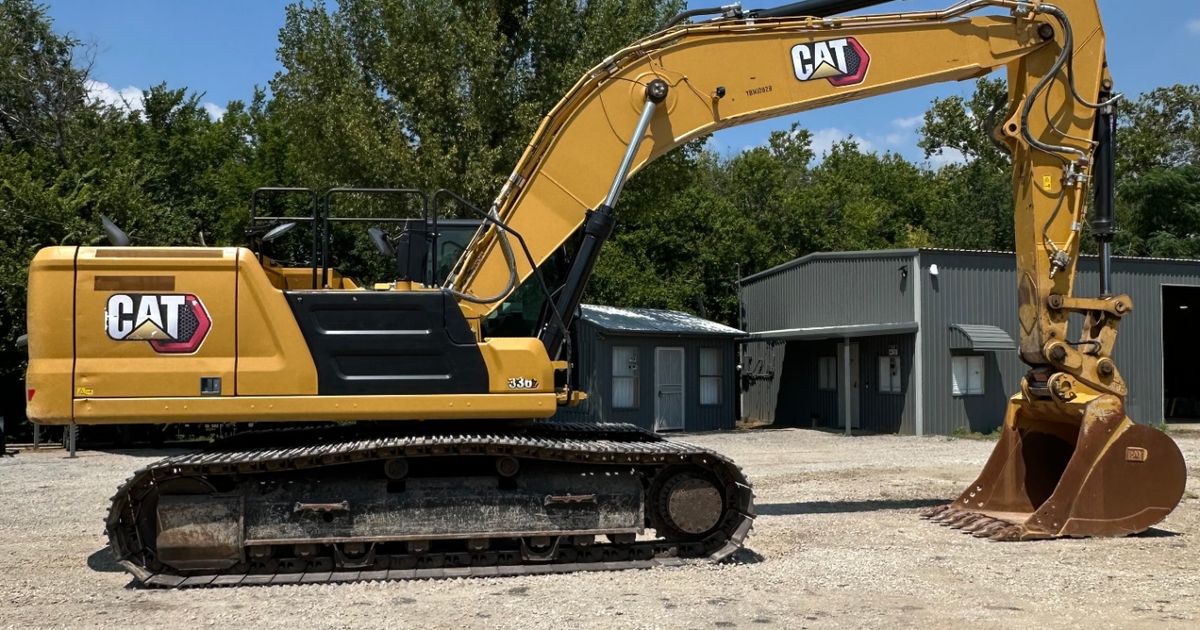
We get this question multiple times a week at our Denton yard: "Should I grab a mini or go with a full-size machine?" Sometimes the answer is obvious. More often, contractors make the wrong call — usually toward undersizing — and end up losing two days of productivity on a job that should have taken one. After running rental fleets across Denton, McKinney, Fort Worth, and the surrounding North Texas growth corridor, we've seen the consequences of both choices. Here's how to get it right before you load the trailer.
Key Takeaways
- Mini excavators (1.5–6 ton class) can access gates as narrow as 36 inches, making them the only viable option for enclosed backyard work in residential subdivisions across Frisco, Prosper, and Celina
- Standard excavators deliver 3–5x more bucket force than comparably-priced minis, a critical advantage when hitting caliche at 4–8 feet deep in DFW-area soils
- North Texas expansive clay (black gumbo) adds significant weight and resistance to bucket loads — undersizing your machine in these conditions costs time and fuel
- Fuel consumption differences are significant: a CAT 308 mini averages 2–3 gallons/hour vs. 6–9 gallons/hour for a CAT 320, so short-duration residential jobs favor the mini on operating cost
- Summer heat above 100°F in North Texas stresses hydraulic systems — properly sized machines run cooler and more efficiently than undersized equipment pushed beyond its capacity
What Is the Actual Difference Between a Mini and Standard Excavator?
The industry typically draws the line at 10,000 lbs operating weight, though most rental professionals think in terms of three practical tiers. Compact excavators run from 1.5 to 6 metric tons (the CAT 301.7, 303, 305, and 308 CR fall into this range). Mid-size machines like the CAT 315 and 320 sit in the 15–22 ton bracket. Full-size production excavators — CAT 323, 330, 336 — go from 22 tons upward and handle the heavy work.
What those weight classes actually translate to on a job site is dig force and cycle time. A CAT 308 CR delivers roughly 11,000 lbs of bucket breakout force. A CAT 320 produces approximately 34,000 lbs. That's not a minor difference when you're cutting through the clay-caliche interface that sits 4–8 feet below grade across most of the DFW metro. The mini will get there eventually. The standard excavator gets there in a fraction of the time — and with significantly less operator strain.
According to Caterpillar's excavator product specifications, the CAT 320 GX achieves up to 15% better fuel efficiency than previous generation models, which closes some of the operating cost gap on longer projects where production rates matter more than daily rental rates.
When Should You Choose a Mini Excavator for Your Project?
Residential backyard work is the most clear-cut case for a mini, and not just because of the "cool factor" of a smaller machine. In subdivisions across Trophy Club, Argyle, Celina, and Prosper — where lot sizes run 6,000–10,000 square feet and fences are already up — a standard excavator physically cannot access the work area. The CAT 308 CR in zero-tail-swing configuration fits through a standard 36-inch gate opening. No standard machine does.
Beyond access, mini excavators are the right tool when your dig depth stays under 10–12 feet and your production volume is modest. Pool excavations for standard residential pools (12×24 to 16×32 feet), irrigation line installs, sprinkler system repairs, landscape grading, and shallow utility connections all fall into this category. We routinely put our CAT 305 and 308 units to work on these jobs across the Denton-to-McKinney corridor with excellent results.
The economic case for minis on short-duration jobs is also real. At 2–3 gallons per hour versus 6–9 for a mid-size machine, a three-day residential job can save $300–500 in fuel alone — meaningful money on a smaller contract. The Associated General Contractors of America notes that equipment operating costs (fuel, maintenance, operator hours) routinely exceed rental costs on jobs under five days, which makes right-sizing critical to profitability.
When Does a Standard Excavator Outperform a Mini Every Time?
The honest answer is: on most commercial ground disturbance work in North Texas, a standard machine pays for the higher rental rate in production gains. The caliche issue is the biggest factor our customers underestimate. That dense calcium carbonate rock layer — typically 4–8 feet below grade across Denton County, Collin County, and much of the Metroplex — will stop a mini excavator in its tracks without a hydraulic hammer attachment. A CAT 320 with a properly matched thumb and bucket can often push through softer caliche deposits with brute force alone, saving the attachment swap and setup time.
Commercial utility work (water mains, sewer lines, storm drainage) requires consistent 10–16 foot trench depths in most municipal right-of-way projects across the region. OSHA 1926 Subpart P excavation and trenching standards require specific shoring, sloping, or shielding at these depths — and the machine needs enough reach and power to properly establish safe trench geometry. A mini excavator at 12 feet of depth is at or beyond its operational limit. A CAT 320 is working comfortably in its middle range.
Foundation work for commercial buildings, detention pond excavation, road base prep, and site clearing for subdivision development in fast-growing areas like Van Alstyne, Gunter, and Aubrey — these are all standard excavator jobs. We've seen contractors try to save $200/day by renting a 308 for work that needed a 320, and the lost production time cost them $800 in additional rental days plus an unhappy GC.
How Do North Texas Soil Conditions Change the Sizing Decision?
North Texas soils make the sizing question more consequential than it would be in sandy or loam-dominated regions. The expansive black clay — called black gumbo locally — that dominates Denton, Tarrant, and Collin counties behaves differently depending on season, moisture content, and depth. In dry summer conditions (which in North Texas means June through September at 100°F+), this clay becomes extremely hard and dense. A bucket that slides through the same material after February rains requires 40–60% more breakout force in August. That's not an abstraction — it's the difference between a CAT 308 that's adequate versus one that's visibly struggling, overheating hydraulics, and burning excessive fuel.
The USDA Natural Resources Conservation Service soil surveys for Denton and Collin counties confirm the prevalence of Houston Black clay (shrink-swell index among the highest in the country), which has direct implications for excavation planning. When dry, this material has an unconfined compressive strength that can exceed 2 tons per square foot in the upper horizon — well above what a compact machine handles efficiently.
Our practical guidance: if you're working in North Texas clay from May through September and your dig depths exceed 6 feet, size up one class. The machine that seems like overkill in the spec sheet is often right-sized once you factor in soil conditions and summer heat stress on hydraulic systems. When outdoor temps hit 105°F, hydraulic fluid temps in undersized, overworked machines can breach 200°F — triggering thermal protection shutdowns that cost you time mid-shift.
What Are the Transport and Jobsite Logistics Differences?
Transport requirements often drive the final decision as much as production specs. Mini excavators in the 1.5–6 ton class (CAT 301.7 through 308) can be trailered on a standard 10,000–14,000 lb equipment trailer pulled by a 3/4-ton pickup. No CDL required, no overweight permit, and no complicated logistics. That matters enormously for contractors working multiple sites across Denton, Carrollton, Mansfield, or Irving in a single week.
Standard excavators (CAT 320 and above) require a minimum 20-ton tag trailer or lowboy, typically a Class 8 tractor, and depending on the machine's transport weight, may require overweight permits on Texas highways. The Texas Department of Transportation oversize/overweight permit process adds cost and planning time, though for production-scale jobs it's entirely manageable. Many of our commercial customers factor delivery into the rental rather than transporting themselves.
Jobsite footprint also matters beyond just gate access. In active construction zones with underground utilities, other trades, and confined laydown areas — common on commercial infill projects in Waco, Sherman, Denison, and the core DFW suburbs — a zero-tail-swing CAT 308 CR can work without swinging its counterweight beyond the chassis. Standard machines require full swing clearance, which can be 6–10 feet beyond the machine's width. On tight urban lots, that's often a deal-breaker.
How Do You Calculate Which Machine Size Is Actually Cost-Effective?
The calculation most contractors skip is production rate vs. rental rate. A CAT 320 rents for approximately 40–60% more per day than a CAT 308, but it moves 3–4 times the material per hour in comparable soil conditions. If your job requires moving 500 cubic yards of material, the math often shows the larger machine completing the work in fewer total rental days — resulting in a lower total project cost despite the higher daily rate.
A simple framework our customers find useful: estimate your total dig volume in cubic yards, divide by the machine's realistic hourly production rate in your soil type (your operator's experience matters here), add 25% for North Texas clay conditions and weather delays, and compare the total rental days needed across machine classes. The American Society of Civil Engineers publishes production rate data for excavation equipment that provides a useful baseline, though actual North Texas conditions typically run 15–20% slower than published averages due to soil density and summer heat impacts.
For a quick field estimate: a CAT 308 CR in moderate clay can move approximately 40–60 cubic yards per hour at 6-foot depth. A CAT 320 GX in the same conditions moves 150–200 cubic yards per hour. Those numbers shift significantly when you hit caliche.
Ready to Right-Size Your Next North Texas Project?
We've helped contractors across the region — from pool builders in Prosper to utility crews working Wichita Falls municipal contracts — match the right machine to the right job. Getting the size correct upfront isn't just about efficiency; it's about protecting your project margin, keeping your schedule, and not beating up a machine that wasn't built for what you're asking it to do.
Our fleet runs CAT compact excavators through full-size production machines, and we know these soils and conditions as well as anyone operating in North Texas. Give us a call at (817) 403-4334 and we'll talk through your project specifics — dig depth, soil type, site access, and timeline — and recommend exactly what makes sense. We're in Denton and ready to put the right machine on your trailer.
Frequently Asked Questions
Can a mini excavator break through caliche rock in North Texas?
A mini excavator can penetrate softer caliche formations when equipped with a hydraulic hammer attachment, but it struggles significantly in the dense caliche layers commonly found 4–8 feet below grade in Denton, Collin, and Tarrant counties. In hard caliche conditions, a CAT 320 or larger with a properly matched hydraulic breaker is far more productive — often completing in hours what a mini takes a full day to accomplish. If your project regularly hits caliche at depth, sizing up to a standard excavator is almost always the right economic decision.
What is the smallest excavator that can dig a residential pool in North Texas?
A CAT 305 or CAT 308 CR compact excavator is the minimum practical size for a standard residential pool excavation (up to 16×32 feet, 6–8 feet deep) in North Texas clay soils. The CAT 308 CR is the most commonly specified machine for this work because it fits through standard fence gates in zero-tail-swing configuration while delivering enough bucket force (approximately 11,000 lbs breakout force) to handle hardened summer clay. For pools with deep ends exceeding 8 feet or sites with heavy caliche, a CAT 315 or 320 is worth the additional daily rental cost.
How much more fuel does a standard excavator use compared to a mini excavator?
The fuel consumption difference is substantial. A CAT 308 compact excavator averages 2–3 gallons per hour under normal working conditions, while a CAT 320 consumes 6–9 gallons per hour. Over a 5-day project with 8-hour workdays, that translates to a difference of roughly $500–900 in fuel costs alone (at $4/gallon diesel). However, the CAT 320's production rate is 3–4x higher than the CAT 308 in comparable soil, meaning total project cost often favors the larger machine on any job requiring more than 200–300 cubic yards of excavation.
Do I need a CDL to haul a mini excavator in Texas?
Most compact excavators in the 1.5–6 ton class (including the CAT 301.7, 303, 305, and 308) can be transported on a standard 10,000–14,000 lb bumper-pull trailer towed by a 3/4-ton or 1-ton pickup without a CDL in Texas, provided the combined gross vehicle weight rating stays under 26,001 lbs. Texas DPS CDL requirements apply when the combination vehicle GVWR exceeds 26,000 lbs or when hauling hazardous materials. Standard excavators (CAT 320 and above) typically require a Class 8 tractor and lowboy trailer, and may require TxDOT oversize/overweight permits depending on transport configuration.
How does extreme summer heat in North Texas affect excavator performance and which size is better?
North Texas summer temperatures regularly exceeding 100°F place significant thermal stress on hydraulic systems, and undersized machines working beyond their rated capacity are most vulnerable. When an excavator is pushed past its optimal workload — such as a CAT 308 attempting production rates more appropriate for a 320 — hydraulic fluid temperatures can exceed 200°F, triggering thermal protection shutdowns mid-shift. Properly sized machines maintain hydraulic fluid temperatures in the 140–180°F operating range even in extreme heat. In summer conditions with heavy North Texas clay, our recommendation is consistently to size up one class from the minimum spec, which keeps the machine operating efficiently rather than fighting its thermal limits.