.png)
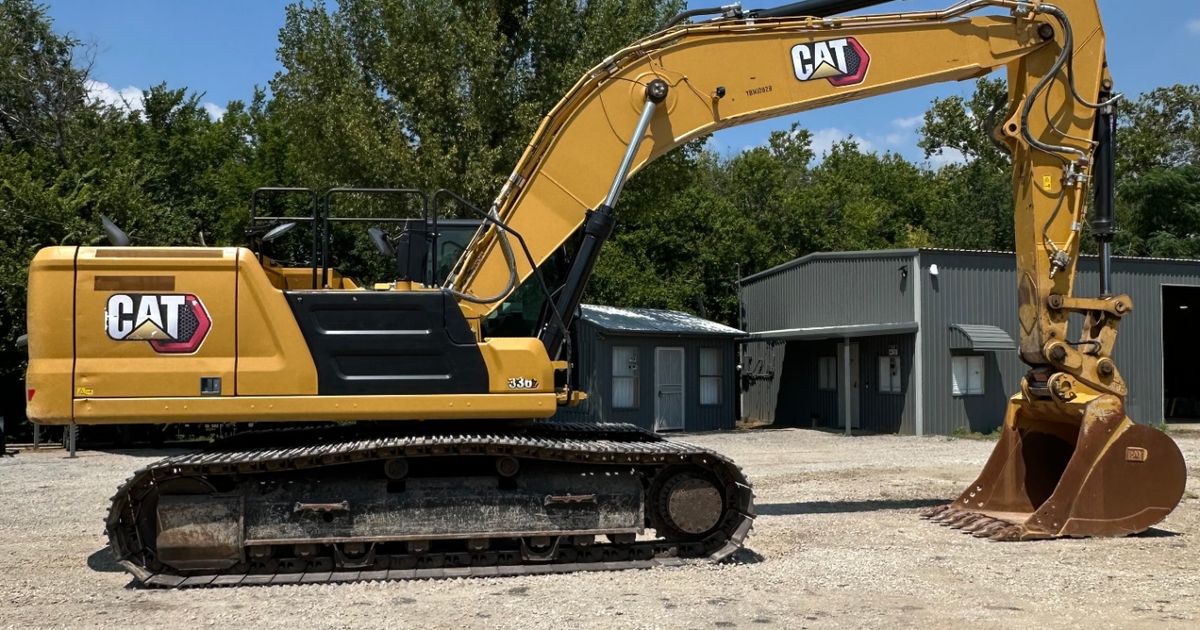
We talk to contractors every week who are wrestling with the buy-versus-rent decision, and the math usually comes out the same way: ownership looks attractive right up until you account for everything that ownership actually costs. A CAT 320 excavator might run $180,000–$220,000 purchased new. That number feels manageable on a big contract — until you add dealer financing, insurance riders, annual service intervals, hydraulic fluid changes suited for North Texas summers, potential caliche damage to undercarriage components, and the cost of storing a piece of iron you're not using between jobs. Monthly rentals eliminate nearly every one of those line items.
We've built our rental fleet at Benchmark Equipment specifically to serve contractors across Denton, Frisco, McKinney, Prosper, Celina, and the broader North Texas growth corridor who need equipment on their terms — not on a bank's amortization schedule. Here's how we think about when long-term monthly rentals genuinely outperform ownership.
Key Takeaways
- Monthly rentals save contractors 30-40% over ownership when equipment utilization falls below 60-70% annually
- North Texas expansive clay and caliche conditions accelerate equipment wear, making maintenance-included rentals especially valuable
- Long-term rentals preserve capital for labor, materials, and bidding new work rather than tying up funds in depreciating assets
- CAT rental equipment comes fully maintained and ready for 100°+ Texas summer heat — no seasonal service costs on your books
- Rental fleets allow contractors to scale machine size to each phase of a project without being locked into one spec
What Is the Break-Even Point Between Renting and Buying Construction Equipment?
The construction industry's general rule of thumb — backed by Associated General Contractors of America financial guidance — is that equipment ownership becomes cost-competitive only when a machine is utilized at 60-70% or more of available working hours per year. Below that threshold, rental wins. For a contractor running one or two major projects annually, hitting that utilization rate on a single owned machine is harder than it sounds.
Consider the actual ownership cost breakdown on a mid-size excavator in the $200,000 range. IRS Publication 946 shows heavy construction equipment depreciates on a 5-7 year MACRS schedule, meaning you're losing roughly $28,000–$40,000 in book value every year regardless of whether the machine turns a single hour of productive work. Stack on top of that: insurance (typically 1-3% of asset value annually), annual preventive maintenance ($8,000–$15,000 per year on excavators per industry benchmarks), and you're looking at a carrying cost of $50,000–$65,000 per year on a machine that may only be working 6-8 months.
Monthly rental rates on comparable CAT equipment run $8,000–$15,000 depending on machine class. Even at the high end, three to four months of monthly rental — covering the actual duration of most projects we see — lands well below the annual carrying cost of ownership.
How Does North Texas Soil Affect Long-Term Equipment Wear and Rental Value?
North Texas geology is genuinely hard on equipment, and that's a major reason our customers find long-term rentals particularly compelling. The expansive black gumbo clay soil across the DFW metro — including much of Denton County, Collin County, and down through the Prosper and Celina development corridors — is notorious for shrink-swell behavior. In dry summer conditions, that clay contracts and creates massive surface cracking. During wet seasons, it swells and becomes adhesive, packing into undercarriages, clogging final drives, and accelerating track wear far faster than contractors who've worked in other parts of the country expect.
We've had customers come back after a single summer project in Little Elm and Gunter reporting track wear intervals 30-40% shorter than what they'd experienced on similar equipment in other states. When you own that machine, every one of those accelerated wear items comes out of your pocket. When you rent from us, our team handles scheduled undercarriage inspections, track tension adjustments, and component replacements as part of fleet maintenance.
Caliche formations add another layer. The hard caliche rock typically found 4-8 feet below grade across much of the DFW area — particularly as you move west toward Weatherford and north through Wise County and Decatur — puts significant stress on bucket teeth, cutting edges, and hydraulic systems. A contractor who owns equipment and hits a surprise caliche layer on a utility project in Argyle or Aubrey is absorbing repair costs that weren't in the bid. A contractor renting monthly has a known, fixed cost regardless of what the ground does to the machine.
When Does a Multi-Month Project Justify a Monthly Rental Agreement?
The sweet spot for monthly rentals — based on what we see across our Denton-area customer base — is any project running 3-9 months that requires consistent, daily use of a primary machine class. Residential subdivision development, commercial site prep, municipal utility contracts, and pipeline work all fit this profile well. These jobs require reliable iron on-site every day, but they have defined endpoints that make purchasing a machine impractical.
One scenario we see frequently: a grading and site prep contractor in the Celina-Prosper corridor lands a 150-lot subdivision contract expected to run 6-8 months. The work requires a CAT 320 or 323 excavator for the primary earthwork plus a motor grader for finish grading and a compactor for subgrade prep. Purchasing all three machines outright requires $500,000–$700,000 in capital — capital that contractor needs for bonding capacity, payroll, and materials procurement. A monthly rental package covering all three machines costs a fraction of that, preserves the contractor's liquidity for the next bid, and means returning the equipment when the project closes rather than trying to remarket owned iron in a soft used-equipment market.
According to U.S. Census Bureau construction data, North Texas has seen consistent 8-12% annual growth in construction starts over the past five years, meaning most contractors here are managing multiple overlapping projects with varying equipment needs. Monthly rentals let you right-size your fleet to your actual backlog rather than owning to peak capacity and carrying idle iron between contracts.
What Are the Tax and Cash Flow Advantages of Long-Term Equipment Rentals?
Rental payments are fully deductible as ordinary business expenses in the year they're incurred, with no depreciation schedules to manage and no Section 179 elections to track. The IRS treatment of rental expenses as direct operating costs simplifies bookkeeping significantly compared to owned asset depreciation, especially for contractors managing multiple projects with different equipment needs per job.
Beyond the tax treatment, the cash flow picture is straightforward: monthly rentals convert an unpredictable ownership cost structure into a predictable, budgetable line item. When you own equipment, your monthly costs vary based on what breaks, when service intervals hit, and whether the machine is productive or sitting. When you rent, the cost is fixed. That predictability has real value in bid preparation — you can put an exact equipment cost into your proposal rather than building in a contingency buffer for maintenance unknowns.
We also offer flexible terms at Benchmark that allow customers to adjust rental periods based on project timelines. If a project in Sherman or Van Alstyne runs long due to weather delays or scope changes, extending a monthly rental is a phone call. There's no asset sitting on your books generating carrying costs while you wait for the next project to start.
How Does Equipment Availability and Technology Access Factor Into Monthly Rentals?
One advantage of long-term rental that contractors frequently underestimate is access to current-generation equipment technology without the capital commitment of ownership. CAT's current generation of excavators — the 320, 323, and 330 — incorporates E-fence, Grade with 2D, and payload monitoring systems that can improve productivity 15-20% on grading-intensive work compared to machines that are 5-7 years old. Caterpillar's product documentation supports these efficiency figures on finish grading applications specifically.
A contractor who purchased equipment four years ago is running technology that's now two product generations behind. A contractor renting from an updated fleet has access to the current standard. In competitive North Texas bidding environments — where the difference between winning and losing a contract in the Frisco or McKinney commercial development market can come down to productivity — that technology gap matters.
Heat performance is another factor our customers cite. North Texas summers run 100°F+ for weeks at a time, and hydraulic systems on older, high-hour machines are more vulnerable to heat-related performance degradation and seal failures. Our fleet is maintained to factory hydraulic specifications and fluid change intervals designed for Texas operating conditions. Contractors running owned equipment through a DFW August often see hydraulic efficiency drop and cycle times slow — a problem that compounds on tight schedules.
What Should Contractors Negotiate in a Long-Term Monthly Rental Agreement?
Not all monthly rental agreements are structured the same way, and knowing what to ask about upfront saves friction later. The key items worth clarifying before signing a monthly rental contract include: what maintenance is included versus what triggers additional charges, whether there are hour limits per month that affect rate structures, how machine swap-outs are handled if a piece of equipment goes down for an unscheduled repair, and whether early return provisions exist if your project closes ahead of schedule.
At Benchmark, we structure our monthly agreements to keep things operationally simple for contractors. We handle scheduled maintenance, provide replacement equipment for extended repairs, and work with our customers on flexible return terms when project timelines shift. For contractors working across our service area — from Wichita Falls and Bowie in the north down through Fort Worth, Mansfield, and Crowley — having a rental partner who understands North Texas conditions and project realities matters more than finding the lowest posted daily rate.
We've seen contractors in the Irving and Carrollton markets run into issues with national rental companies that have rigid rate structures and no flexibility when a project hits an unexpected delay. Local relationships and operational knowledge of your specific job conditions make a difference when problems come up — and on North Texas sites with black gumbo clay, caliche surprises, and summer heat, something always comes up.
If you're pricing out a project in North Texas and trying to determine whether a monthly rental makes sense for your equipment needs, call us at (817) 403-4334. We'll walk through your project scope, timeline, and machine requirements and put together a rental structure that works for your job — not a one-size-fits-all rate sheet. Our team in Denton knows this market, and we've helped contractors from Gainesville to Waco figure out the right equipment strategy for their specific conditions.
Benchmark Equipment Rental & Sales serves contractors across the DFW Metroplex and surrounding North Texas region from our Denton, TX location. Our CAT rental fleet is maintained for Texas operating conditions and available on daily, weekly, and monthly terms.
Frequently Asked Questions
How much does it cost to rent a CAT excavator per month in North Texas?
Monthly rental rates for CAT excavators in the North Texas DFW market typically range from $8,000–$15,000 per month depending on machine class — mid-size models like the CAT 320 fall in the middle of that range. These rates include scheduled maintenance, making them significantly more predictable than ownership costs. Compared to purchasing a new CAT 320 at $180,000–$220,000, a 6-month rental project costs $48,000–$90,000 in rental fees versus $50,000–$65,000 in annual carrying costs on a purchased machine that may sit idle between jobs.
At what point does renting equipment become cheaper than buying?
Equipment ownership becomes cost-competitive only when a machine is utilized at 60-70% or more of available working hours per year — a standard supported by Associated General Contractors of America financial guidance. Below that utilization threshold, monthly rentals nearly always win on total cost. For most North Texas contractors managing project-based work with seasonal demand, hitting 60-70% annual utilization on a single owned machine is difficult, making monthly rentals the financially superior option for equipment used less than roughly 8-9 months per year.
What are the tax advantages of renting equipment versus buying?
Monthly rental payments are fully deductible as ordinary business expenses in the year incurred under IRS guidelines, with no depreciation schedules, Section 179 elections, or asset tracking required. Owned equipment must be depreciated over a 5-7 year MACRS schedule for heavy construction machinery, meaning the tax benefit is spread over multiple years rather than taken immediately. Rental expenses also reduce taxable income dollar-for-dollar in the current tax year, which improves cash flow for contractors managing multiple concurrent projects.
Can I switch equipment sizes during a long-term rental if my project needs change?
Most reputable equipment rental companies, including Benchmark Equipment in Denton TX, offer flexibility to swap machine sizes or configurations as project phases change — for example, moving from a large excavator during mass earthwork to a compact unit for utility trenching. This is one of the key advantages of monthly rental over ownership: you're not locked into a single machine spec for the life of a project. Contractors in North Texas working phased subdivision development or multi-phase commercial projects particularly benefit from this flexibility, since earthwork, utility, and finish grading phases often require different machine classes.
How do North Texas soil conditions affect the cost of owning versus renting construction equipment?
North Texas's expansive black gumbo clay soil and caliche rock formations — typically found 4-8 feet below grade across the DFW area — accelerate equipment wear significantly compared to other regions. Contractors who own equipment in this market see track wear intervals 30-40% shorter than national averages, plus elevated hydraulic stress from caliche-heavy excavation. When renting monthly, all maintenance, undercarriage service, and wear component replacement are handled by the rental company, converting unpredictable repair costs into a fixed monthly expense. For contractors working in cities like Prosper, Celina, Argyle, or Weatherford where caliche encounters are common, this maintenance inclusion represents substantial risk transfer.