.png)
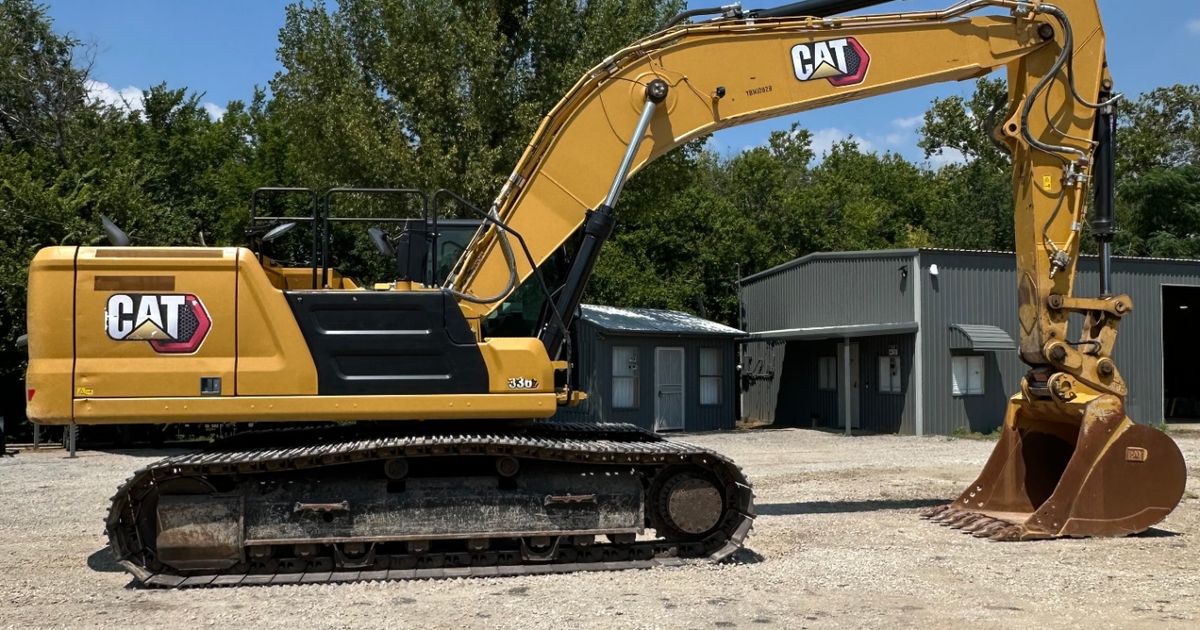
Every contractor we talk to in the Denton area knows the feeling: a machine goes down mid-shift, the crew stands around burning daylight, and the project schedule starts slipping in real time. What most don't realize until they do the math is how often that scenario is directly tied to the age of the equipment they're running. Machine age isn't just a number — it's a proxy for reliability, fuel efficiency, hydraulic integrity, and access to the kind of diagnostic technology that keeps breakdowns from becoming disasters.
We've built our rental fleet at Benchmark Equipment around this reality. Keeping late-model CAT machines on the line isn't just a marketing position — it's an operational philosophy rooted in what we've seen happen on job sites across Denton, Frisco, McKinney, Celina, and the broader North Texas region over years of putting iron to work in some genuinely demanding conditions.
Key Takeaways
- Late-model CAT equipment (2019 and newer) averages 25% fewer unplanned maintenance events compared to machines over 8 years old, according to fleet utilization data from heavy equipment operators.
- Modern Tier 4 Final engines in CAT excavators and dozers consume 15-20% less fuel than Tier 3 predecessors — a significant saving when equipment runs 10-hour days in 100°+ North Texas summers.
- CAT Product Link telematics on late-model machines allow rental companies like Benchmark to diagnose fault codes remotely, often resolving issues before they become job-stopping failures.
- North Texas caliche rock formations (found 4-8 feet deep across much of Denton, Prosper, and McKinney) put extreme stress on hydraulic systems — a stress that aged hydraulic components handle far less reliably than late-model systems.
- Renting late-model equipment rather than buying aging machines eliminates the hidden cost of depreciation on outdated technology, keeping your capital available for growth.
How much does equipment age actually affect job site uptime?
Unplanned downtime is the most expensive line item that never appears on a bid. A machine that stops working at 10 AM doesn't just cost you a repair bill — it costs you operator hours, project schedule buffer, subcontractor coordination, and sometimes liquidated damages if you're on a tight delivery contract. According to Associated General Contractors of America, equipment-related delays are among the top five causes of construction project overruns nationally.
Fleet data from heavy equipment operators consistently shows that machines over 8 years old experience unplanned maintenance events at roughly 25% higher frequency than equipment under 5 years old. The causes aren't random — they're structural. Seals degrade, hydraulic hoses fatigue, electrical systems develop intermittent faults, and engine components that were engineered for a 10,000-hour service life start approaching those limits in older machines. A CAT 320 excavator from 2016 and a CAT 320 from 2022 may look similar on a spec sheet, but they represent very different risk profiles on a live job site.
We've seen this play out directly with customers running utility work in Aubrey and Gunter, where schedules are tight and the nearest equipment dealer is a real drive away. A breakdown there isn't a minor inconvenience — it's a half-day event minimum. Late-model machines with modern diagnostic systems give us the ability to intervene before a minor fault becomes a stopped machine.
Why do late-model engines perform better in North Texas summer heat?
Sustained heat above 100°F — which North Texas sees routinely from June through September — pushes every component of a diesel engine harder than the manufacturer's standard test conditions. Cooling systems work at maximum capacity, hydraulic fluid temperatures climb, and electronic control modules make constant adjustments to protect the engine. Older Tier 3 engines, which lack the sophisticated thermal management systems built into modern Tier 4 Final designs, are particularly vulnerable.
CAT's current generation of Tier 4 Final engines found in machines like the CAT 308 CR mini excavator, the CAT 299D3 compact track loader, and the CAT 336 large excavator incorporate after-treatment systems and engine control strategies that actively manage combustion efficiency under thermal stress. The result is a measurable difference: modern Tier 4 Final engines deliver 15-20% better fuel efficiency compared to their Tier 3 predecessors under equivalent load conditions. On a machine running a 10-hour shift at full load during a Texas August, that efficiency gap translates directly to operating cost — and to reduced heat load on the engine itself, which feeds back into reliability.
The EPA's Tier 4 Final standards that drove this engineering leap also pushed manufacturers to redesign cooling circuits, turbocharger systems, and oil management — improvements that benefit reliability in heat as much as they reduce emissions. When our customers are running equipment in Wichita Falls or working a summer pipeline project outside Decatur, those engineering margins are the difference between finishing the shift and calling for a service truck.
What role does caliche and North Texas soil play in equipment wear rates?
North Texas soils present a two-phase wear challenge that accelerates aging in equipment that's already operating on marginal hydraulic health. The expansive black gumbo clay that dominates the topsoil profile across Denton County, Collin County, and much of the Metroplex swells when wet and shrinks when dry, creating dynamic loading conditions on bucket teeth, cutting edges, and undercarriage components. Then, typically between 4 and 8 feet of depth, operators hit caliche — a calcium carbonate hardpan formation that requires serious breakout force and puts real stress on hydraulic cylinders, boom bushings, and stick pins.
In late-model CAT excavators, hydraulic systems are engineered with tighter tolerances and higher-quality seal materials than older generations. The CAT 320 Next Generation, for example, features hydraulic oil cooling improvements and updated main control valve designs that maintain consistent performance under the repeated high-pressure cycles that caliche breaking demands. An older machine with worn cylinder seals and marginal pump output may still function in average conditions but will show its age quickly in the rocky, clay-heavy soil profiles we see on utility and subdivision work in Prosper, Celina, and Van Alstyne.
We routinely advise customers on ground conditions before they commit to a machine spec. When a crew is heading into caliche country north of McKinney or working a foundation dig in Frisco where soil conditions can swing dramatically between pours, starting with late-model equipment is the risk management decision — not a premium luxury.
How does CAT telematics on late-model machines prevent downtime before it starts?
CAT Product Link, the telematics platform built into late-model CAT machines, is arguably the single biggest operational advantage that newer iron holds over older equipment — and it's one that rarely gets the attention it deserves in equipment discussions. Every late-model CAT machine in our fleet transmits live data including engine load, fuel consumption, idle time, fault codes, and location. That data stream allows us to identify developing issues before they become field failures.
The practical impact of this is significant. According to Caterpillar's Product Link documentation, proactive fault code monitoring can reduce unplanned downtime by up to 30% compared to reactive maintenance approaches. We've used Product Link data to identify hydraulic temperature trends suggesting a developing cooling issue, flag abnormal fuel consumption that pointed to an injector problem, and catch DEF system faults before they triggered a derate that would have shut a machine down mid-shift.
For a contractor running a CAT 336 excavator on a commercial site in Carrollton or a CAT D6 dozer on a road project outside Weatherford, that early warning capability is worth more than the rental rate differential between an older machine and a late-model one. Older equipment simply doesn't have this infrastructure — and there's no retrofit path that replicates it fully.
Is renting late-model equipment more cost-effective than owning older machines?
The rent-versus-own calculation has always involved more variables than the monthly payment comparison suggests. When you own a fleet, you own its depreciation trajectory, its maintenance liability, and its technology obsolescence. A machine purchased new in 2014 was state-of-the-art then — but it's now operating on pre-Tier 4 engine technology, lacks modern telematics, and is carrying accumulated wear on every major system. The cost to bring that machine to late-model performance levels isn't recoupable through ownership.
Renting from a fleet that's actively maintained and age-managed — which is how we operate at Benchmark Equipment — transfers that technology risk to us and gives contractors access to the most current equipment specifications for the duration of their project. There are no storage costs between projects, no annual inspection liabilities, and no capital tied up in assets that depreciate while sitting in a yard. The American Rental Association has consistently noted that rental penetration in the construction market grows during periods of technology transition precisely because contractors recognize the advantage of flexibility over ownership when equipment generations are changing rapidly.
For smaller contractors in our service area — the residential site work crews in Trophy Club, the utility contractors in Sherman and Denison, the dirt movers working new subdivisions in Argyle and Little Elm — renting late-model equipment levels the playing field with larger operators who have dedicated fleet management departments. The machine on their job site performs the same as the machine on a national contractor's job site, without the capital commitment.
What CAT models in Benchmark's fleet represent the late-model advantage?
Our fleet at Benchmark Equipment is centered on late-model CAT machinery selected specifically for the demands of North Texas construction work. The CAT 320 and CAT 323 excavators handle the bread-and-butter utility and foundation work that defines Denton County's growth corridor. The CAT 308 CR mini excavator gives contractors access to a machine that fits tight residential lots in established neighborhoods without sacrificing the hydraulic performance needed to break caliche. Our CAT 299D3 and CAT 259D3 compact track loaders are current-generation machines built for the mixed-terrain conditions of North Texas subdivisions and commercial pads.
Every machine in our rental fleet is maintained on a scheduled PM program tied to CAT factory specifications, and Product Link data backs up every service interval decision. When a contractor calls us at (817) 403-4334 and describes a job in Gainesville or Mansfield, we're not just matching horsepower to the application — we're matching machine age and health to project risk tolerance.
The OSHA 1926 construction standards require that equipment used on job sites be in safe operating condition. Late-model machines with documented service histories and telematics-verified performance data give contractors a defensible compliance position that aging, poorly documented equipment cannot. That matters on permitted commercial sites in Irving, Fort Worth, and Mesquite where inspections are routine.
How should contractors evaluate machine age when choosing a rental company?
Not all rental fleets are created equal, and machine age is one of the most honest metrics a contractor can use to evaluate a rental company's operational philosophy. A company that cycles late-model equipment into its fleet regularly is making a capital commitment to uptime — because they're the ones who absorb the cost when a machine goes down. A company running aging iron passes that risk to the renter in the form of unplanned downtime, reduced performance, and older technology.
Ask a rental company directly: what is the average age of your excavator fleet? What telematics system do your machines run? How do you handle after-hours breakdowns in the field? These questions separate operationally serious rental companies from commodity equipment suppliers. The American Rental Association's equipment management guidelines recommend that rental companies establish fleet age targets aligned with manufacturer lifecycle recommendations — a standard we take seriously at Benchmark.
Our customers across the Denton, Fort Worth, and North Texas corridor are running projects on compressed schedules in demanding conditions. The equipment they put on those sites needs to perform — not just start in the morning, but sustain production through a full shift in August heat, through caliche, and through the unpredictable demands of active construction. Late-model equipment is how we back that up. If you're planning a project and want to talk through the right machine for your conditions, call us at (817) 403-4334. We'll match you to equipment that's built to go the distance on your specific job.
Frequently Asked Questions
How much more reliable is late-model construction equipment compared to older machines?
Fleet utilization data from heavy equipment operators shows that machines over 8 years old experience unplanned maintenance events at roughly 25% higher frequency than equipment under 5 years old. Late-model machines also benefit from modern telematics systems like CAT Product Link, which can reduce unplanned downtime by up to 30% through proactive fault code monitoring — a capability that older equipment simply does not have.
Does equipment age affect fuel efficiency on construction sites?
Yes, significantly. Modern Tier 4 Final engines found in late-model CAT equipment deliver 15-20% better fuel efficiency compared to older Tier 3 engines under equivalent load conditions. In North Texas, where equipment regularly runs 10-hour shifts in temperatures exceeding 100°F, that efficiency gap translates directly to operating cost savings and reduced thermal stress on the engine, which feeds back into overall machine reliability.
What is CAT Product Link and why does it matter for rental equipment?
CAT Product Link is the factory-installed telematics platform on late-model Caterpillar machines that transmits live data including engine load, fuel consumption, idle time, fault codes, and GPS location. For rental customers, this means the rental company can monitor developing mechanical issues remotely and intervene before a minor fault becomes a field failure. Caterpillar's own documentation indicates proactive telematics monitoring can reduce unplanned downtime by up to 30% compared to reactive maintenance approaches.
Why do North Texas soil conditions make equipment age especially important?
North Texas presents a two-phase wear challenge: expansive black gumbo clay in the upper soil profile creates dynamic loading on undercarriage and bucket components, and caliche hardpan formations — typically found 4-8 feet deep across Denton, Collin, and surrounding counties — demand repeated high-pressure hydraulic cycles that stress cylinders, seals, and boom components. Late-model CAT equipment uses higher-quality seal materials and improved hydraulic cooling designs that maintain performance under these conditions, while aging machines with worn hydraulic components often fail prematurely in heavy caliche work.
Is renting late-model equipment more cost-effective than owning older construction machines?
For most contractors, renting late-model equipment is more cost-effective than owning aging machines because it eliminates depreciation liability, maintenance overhead, and technology obsolescence risk. A machine purchased new in 2014 now operates on pre-Tier 4 engine technology, lacks modern telematics, and carries accumulated wear on major systems — costs that can't be recouped through ownership. Renting transfers that technology risk to the rental company while giving contractors access to current equipment specifications and manufacturer-level service support on every project.