.png)
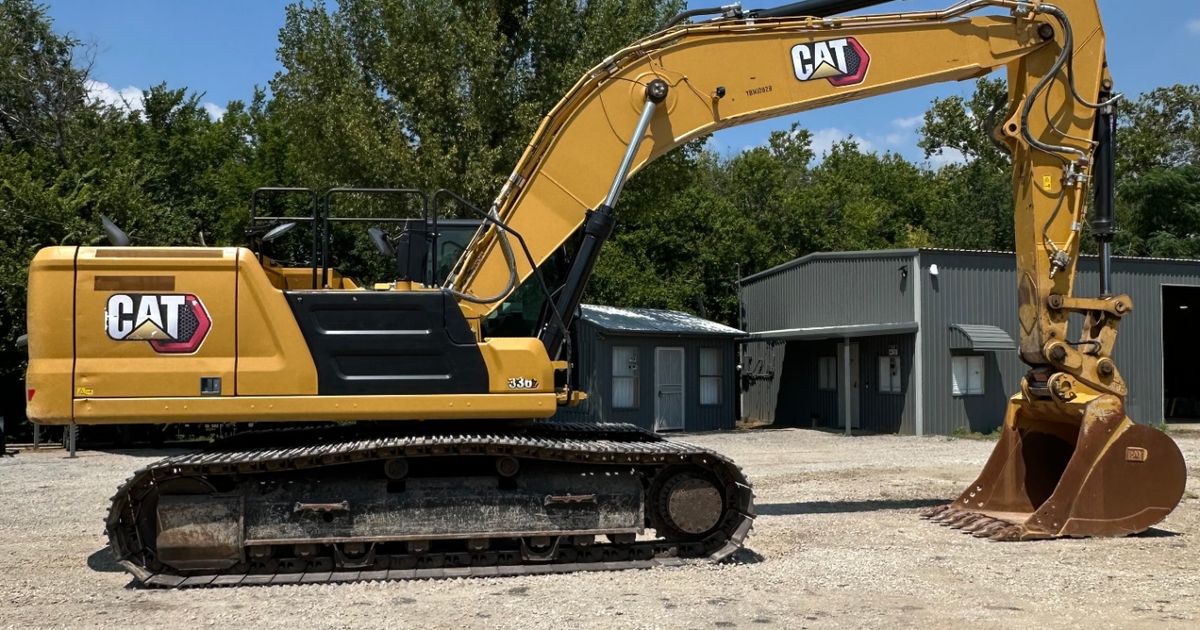
Every excavator job in North Texas starts with the same question from our customers: what is this machine actually going to cost me to run? It's a fair question, and the honest answer is more nuanced than a simple dollar figure. Fuel burn, preventive maintenance intervals, hydraulic system health, operator skill, and the specific ground conditions on your job site all factor into the real number. We've watched contractors underestimate operating costs by 30–40% because they only planned for diesel and ignored the compounding effect of everything else. This breakdown is built on what we see running through our rental fleet every day across Denton, Frisco, McKinney, Celina, Prosper, and the surrounding North Texas service area.
Key Takeaways
- CAT excavators burn 4–8 gallons of diesel per hour depending on machine size and load, with North Texas caliche rock conditions pushing fuel consumption toward the high end of that range.
- Total hourly operating costs (fuel + maintenance + operator) typically land between $45–$85/hr for 20–35 ton excavators, not counting ownership or rental costs.
- Proper hydraulic fluid management is critical in DFW summer heat—hydraulic systems operating above 180°F see accelerated wear that compounds maintenance costs significantly.
- Renting eliminates scheduled maintenance costs, which average $8,000–$15,000 annually for owned excavators, making it the smarter choice for most specialty or seasonal contractors.
- Cycle time optimization—not raw horsepower—is the primary driver of excavator productivity on North Texas job sites.
How Much Fuel Does an Excavator Burn Per Hour?
Fuel is the most visible line item on an excavator operating budget, and it's also the one that varies most dramatically based on conditions. A CAT 320 excavator running light utility work in sandy loam will consume roughly 4–5 gallons of diesel per hour. That same machine breaking through the caliche rock layer that sits 4–8 feet down across much of the Denton, Aubrey, and Gunter corridors can hit 7–8 gallons per hour without breaking a sweat. The CAT 336, which is our most-rented machine for larger utility and commercial grading projects, averages 6–9 gallons per hour under moderate to heavy load.
At current diesel prices in the $3.50–$4.00 per gallon range, that translates to a fuel cost of roughly $14–$36 per hour depending entirely on machine size and what you're asking it to do. Contractors who quote jobs based on light-soil fuel consumption and then hit a pocket of black gumbo clay or unexpected caliche shelf get squeezed fast. The U.S. Energy Information Administration's diesel price tracker is worth bookmarking for job costing if you're doing fixed-bid work.
One of the most consistent fuel-saving moves we recommend is matching machine size to actual task requirements. We've seen contractors bring in a CAT 349 for a job that a CAT 320 handles efficiently, and they're burning 30–40% more fuel for no productivity gain. Right-sizing is the single fastest way to reduce fuel cost per cubic yard of material moved.
What Are the Real Maintenance Costs for an Excavator?
Owned excavator maintenance is a cost that creeps up on contractors who aren't tracking it systematically. CAT's recommended preventive maintenance schedules call for engine oil and filter changes every 250–500 hours, hydraulic oil analysis every 500 hours, and undercarriage inspection every 250 hours—intervals that add up fast on a machine running 1,500+ hours per year. Industry data from the Associated General Contractors of America suggests that annual maintenance costs for owned excavators in the 20–35 ton class average $8,000–$15,000 per year under normal operating conditions.
North Texas conditions add pressure to those maintenance intervals in two specific ways. First, the expansive black gumbo clay that blankets much of the DFW Metroplex is abrasive enough to accelerate undercarriage wear by 15–25% compared to sandy or loamy soils. Contractors running track excavators in the Mesquite, Carrollton, and Irving areas on clay-heavy sites should be budgeting for bushing and link replacement earlier than the standard schedule suggests. Second, our summers routinely push ambient temperatures above 100°F, which stresses hydraulic systems hard. Hydraulic fluid operating above 180°F breaks down faster, and the resulting seal wear and pump inefficiency creates a compounding maintenance cost that doesn't show up as a single large repair—it shows up as a string of $800–$2,500 service calls across an operating season.
When customers rent from us, they're transferring all of that scheduled maintenance cost and risk to Benchmark. That's a real dollar value that doesn't appear on the rental invoice but absolutely belongs in any honest rent-versus-own analysis.
How Does North Texas Soil Affect Excavator Productivity?
Productivity on a North Texas job site is rarely limited by machine horsepower—it's almost always limited by soil conditions and operator technique. The expansive clay soils that dominate much of our service area from Denton south through Frisco, Prosper, and Celina have a shrink-swell characteristic that creates unique challenges. In wet conditions, the clay loads the bucket with material that doesn't release cleanly, adding cycle time and reducing the effective payload per pass. In dry summer conditions, that same clay bakes to near-concrete hardness in the top 12–18 inches, requiring extra breakout force that slows digging cycles.
Caliche rock—the calcium carbonate hardpan layer found 4–8 feet down across much of the DFW area and heavier through the Weatherford, Decatur, and Wichita Falls corridors—is where productivity assumptions go sideways most often. We've had customers plan utility trenching projects based on clay-soil production rates and then hit a consistent caliche shelf that cut their daily footage by 40–50%. A CAT 323 with a rock bucket and a tooth-style bucket system is a fundamentally different productivity calculation than the same machine with a general-purpose bucket in sandy soil. Choosing the right bucket configuration for North Texas subsurface conditions can recover 20–30% of production time that would otherwise be lost to poor material penetration.
The OSHA 1926 Subpart P excavation standards also factor into productivity planning—soil classification affects sloping and shoring requirements, which directly impacts how efficiently a machine can work within a trench footprint.
What's the True Hourly Cost to Operate a Rented vs. Owned Excavator?
The all-in hourly cost calculation is where the rent-versus-own decision gets honest. For an owned CAT 320-class excavator purchased at roughly $200,000–$250,000, the ownership cost alone—depreciation, financing, insurance, storage—typically runs $25–$40 per hour when amortized across a realistic 1,200 annual operating hours. Stack fuel ($18–$28/hr), maintenance ($6–$12/hr), and operator labor ($35–$55/hr based on prevailing North Texas wages per Bureau of Labor Statistics data for operating engineers), and you're looking at a true all-in cost of $84–$135 per hour for an owned machine.
A rented CAT 320 from our fleet runs considerably less on a daily and weekly basis when you remove the ownership burden. For contractors running 600–800 annual machine hours or fewer, rental is almost always the lower-cost option when the math is done honestly. The break-even threshold for ownership generally sits around 1,000–1,200 hours per year for a machine in this class, and that's before accounting for the capital tied up in the purchase.
We've had commercial contractors in the Sherman, Denison, and Van Alstyne areas call us mid-project after their owned machine went down for a major hydraulic repair at the worst possible time. The repair bill was significant, but the real cost was two weeks of lost production on a fixed-deadline project. Rental gives you a known cost and a functioning machine—if something goes sideways with a unit, we swap it out. That risk transfer has real dollar value that rarely appears in a spreadsheet comparison.
How Does Operator Skill Impact Excavator Operating Costs?
Operator quality is the most underappreciated variable in excavator cost management, and it affects every other cost category simultaneously. A skilled operator running a CAT 336 with efficient swing angles, full bucket loads, and smooth hydraulic inputs will move 20–35% more material per hour than a less experienced operator on the same machine. That productivity gap directly affects your cost per cubic yard, which is the number that actually determines job profitability.
Beyond productivity, operator habits affect fuel consumption and maintenance costs in measurable ways. Hard, jerky hydraulic inputs increase fuel burn by an estimated 10–15% compared to smooth, deliberate operation. They also accelerate hydraulic pump wear and increase stress on boom and stick cylinder seals—costs that show up 6–12 months later as unplanned repairs. The National Commission for the Certification of Crane Operators (NCCCO) and related NCCER training programs provide formal operating certifications that translate to both safety and cost outcomes on complex job sites.
When our customers are planning projects in high-heat summer conditions—and in Denton, Crowley, Mansfield, and Trophy Club, that means five-plus months of 95°F+ days—we recommend scheduling the heaviest production work in early morning hours. Hydraulic systems perform most efficiently when ambient temperatures are lower, which means cleaner fuel burn numbers and better cycle times during the hours that matter most.
When Does Renting an Excavator Make More Financial Sense Than Owning?
The financial case for renting an excavator from Benchmark is strongest in three specific situations. First, when annual machine utilization is below 800 hours—ownership costs per hour climb steeply as utilization drops, and the math simply doesn't support the capital outlay. Second, when a project requires a machine size or attachment configuration outside your standard work—a contractor who primarily runs CAT 320s doesn't need to own a CAT 336 for a single large commercial excavation in Gainesville or Bowie. Third, when project timing and cash flow require capital preservation—tying up $200,000+ in iron limits flexibility in ways that rental doesn't.
We stock a full range of CAT excavators from the compact 305 class up through 336-class machines, along with rock buckets, hydraulic thumbs, and specialty attachments sized for North Texas soil and rock conditions. Our team has run these machines in the same clay and caliche conditions your crews face, and we can help you spec the right machine and attachment combination before the project starts rather than after you've already lost production time to an undersized bucket or wrong-class machine.
Call our Denton team at (817) 403-4334 to talk through the operating cost math on your next project. We'd rather help you build an accurate budget upfront than have you discover the gap mid-project when it's too late to adjust.
Frequently Asked Questions
How much does it cost to run an excavator per hour?
Total excavator operating costs—including fuel, routine maintenance, and operator labor but not ownership or rental—typically run $45–$85 per hour for 20–35 ton CAT excavators under normal conditions. In challenging soil conditions like North Texas caliche rock or expansive clay, fuel consumption increases and that range can push toward $95–$110 per hour. When ownership costs (depreciation, insurance, financing) are factored in, all-in costs for an owned CAT 320-class machine typically land between $84–$135 per hour.
How many gallons of fuel does an excavator use per hour?
A CAT 320 excavator burns approximately 4–6 gallons of diesel per hour under moderate load, while a larger CAT 336 consumes 6–9 gallons per hour depending on work intensity. In hard digging conditions—like breaking through caliche rock formations common in North Texas at 4–8 feet depth—fuel consumption can reach the high end of those ranges or exceed them temporarily. Right-sizing the machine to the actual task is the most effective way to control fuel costs per cubic yard of material moved.
How often does an excavator need maintenance?
CAT excavators require engine oil and filter changes every 250–500 operating hours, hydraulic oil analysis every 500 hours, and undercarriage inspection every 250 hours. Annual maintenance costs for owned 20–35 ton excavators average $8,000–$15,000 under normal conditions, though abrasive soils like DFW-area black gumbo clay accelerate undercarriage wear by 15–25% and can increase those costs. Operating in high ambient temperatures (common in North Texas summers) also stresses hydraulic systems and can shorten fluid service intervals.
Is it cheaper to rent or own an excavator?
For contractors running fewer than 800–1,000 machine hours per year, rental is typically the lower-cost option when all ownership expenses—depreciation, financing, insurance, storage, and maintenance—are honestly factored in. The ownership break-even threshold for a CAT 320-class excavator generally sits around 1,000–1,200 annual hours. Rental also eliminates unplanned repair risk, which can be significant: a major hydraulic failure on an owned machine can generate repair costs of $10,000–$30,000 plus lost production time.
How does soil type affect excavator productivity?
Soil conditions are the primary variable in excavator productivity, often more impactful than machine horsepower or operator experience. Expansive clay soils—common throughout DFW including Denton, Frisco, and Prosper—load buckets with sticky material that reduces effective payload and increases cycle time, while dry summer conditions harden the same clay to near-concrete resistance. Caliche rock formations found 4–8 feet deep across much of North Texas can cut trenching production rates by 40–50% compared to soft soil estimates, making accurate subsurface assessment critical before finalizing project budgets.