.png)
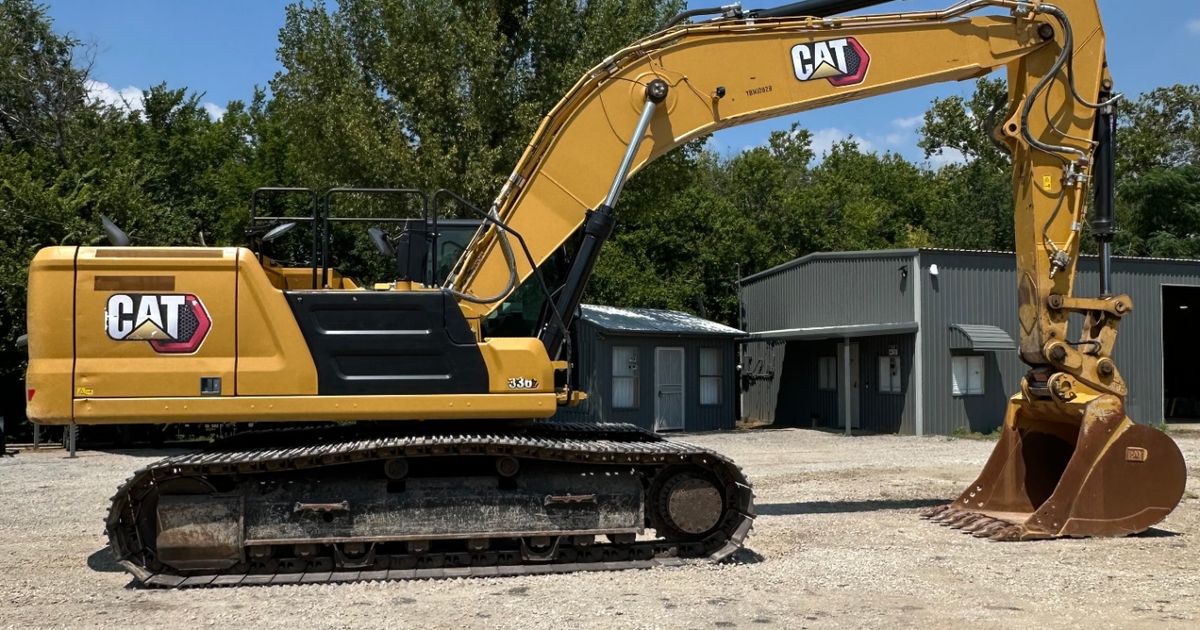
We get this call regularly from contractors working sites around Denton, Prosper, Celina, and out toward Weatherford: the job bid assumed soft dig, but the machine is bouncing off something hard at five feet and the standard bucket is already showing wear. North Texas is genuinely one of the more demanding environments for excavator bucket selection in the country—you can move from gummy black clay to solid caliche within a single lift. Getting the bucket right isn't a minor detail. It determines whether your operator hits production targets or spends the afternoon fighting the ground.
Key Takeaways
- North Texas caliche rock, typically encountered 4–8 feet below grade in the DFW area, requires a heavy-duty rock bucket with replaceable teeth and reinforced side cutters—standard GP buckets can fail within a single shift in hard caliche.
- Expansive black clay (shrink-swell) soil grips smooth bucket edges and increases cycle time; buckets with sharp, narrow profiles and aggressive tooth spacing clear sticky clay up to 25% faster than wide-profile general-purpose buckets.
- Using a bucket that's too wide for your CAT excavator's hydraulic output reduces breakout force efficiency—bucket width should match the machine's spec, e.g., a CAT 320 GX paired with a 36-inch bucket for most North Texas utility trenching.
- In 100°F+ North Texas summers, slower cycle times from the wrong bucket put additional thermal load on hydraulic systems; correct bucket matching is also an equipment-protection strategy.
- Benchmark Equipment in Denton stocks multiple bucket configurations across our rental fleet so customers can swap attachments mid-project as soil conditions change—a common need on sites that transition from clay topsoil to caliche in the same excavation.
What Makes North Texas Soil So Challenging for Excavator Buckets?
The soil profile across the DFW metro and the surrounding region is unlike most of the country, and it creates a bucket-selection problem that doesn't exist on job sites in, say, coastal sandy soils or uniform Midwest loam. The surface layer—often extending two to four feet—is predominantly expansive black clay, sometimes called black gumbo locally. This material has a plasticity index that can exceed 40, meaning it swells significantly when wet and cracks hard when dry. According to the USDA Natural Resources Conservation Service, shrink-swell soils like these cover a substantial portion of North Central Texas and rank among the most problematic for construction operations.
Below that clay layer, contractors frequently hit caliche—a calcium carbonate cemented hardpan that can have compressive strengths rivaling soft rock. On many sites in Argyle, Aubrey, McKinney, and the growing corridor up through Gunter and Van Alstyne, that caliche starts showing up between four and eight feet deep. It doesn't announce itself ahead of time. One pass you're in clay, and two passes later the machine is stalling. The bucket that got you through the morning won't get you through the afternoon.
Add North Texas summers—where ambient temperatures regularly exceed 100°F and ground surface temperatures can reach 140°F—and you have a situation where fighting the wrong bucket doesn't just slow production. It puts unnecessary hydraulic strain on the machine and accelerates wear on both the bucket and the quick coupler system.
What Are the Main Types of Excavator Buckets and When Should You Use Each?
There are five bucket types our customers most commonly need across North Texas job sites, and each has a specific application logic rather than a "one size handles most things" profile.
General-Purpose (GP) Buckets handle the widest range of soft-to-medium soil conditions and are the correct choice for topsoil stripping, backfill, and general grading in the upper clay layer. A standard GP bucket on a CAT 320 or CAT 323 works well in Denton County soils when you're staying above that caliche horizon. The mistake contractors make is using these buckets as an all-day tool on sites that transition into harder material—GP buckets aren't built for repeated impact loading, and the cutting edge will roll or chip in hard caliche within a shift. Caterpillar's attachment specifications list breakout force ratings by machine model, and a GP bucket uses that force efficiently only in compatible soil classes.
Heavy-Duty Rock Buckets are the correct answer for caliche and the tool we recommend most often for sites in the I-35 corridor from Denton south through Carrollton and Irving, where subsurface conditions are well-documented as hard. These buckets feature thicker side walls (often 25–40% more steel than GP buckets), reinforced wear bars across the base, and J-series or K-series replaceable tip systems that let you swap worn teeth without replacing the entire bucket. On a CAT 336, a rock bucket with a 48-inch profile and tiger tooth configuration can maintain production in caliche that would destroy a GP bucket in hours. Industry data from AEO Manufacturing indicates heavy-duty bucket designs can extend service life by up to 300% in abrasive rock conditions compared to standard GP configurations.
Trenching Buckets are narrow-profile buckets—typically 12 to 24 inches wide—designed specifically for utility installation. Around Frisco, Little Elm, Celina, and Prosper, where residential and commercial utility work is constant, trenching buckets are in high demand because they minimize over-excavation in tight residential lots and reduce spoil volume. The narrow profile also concentrates breakout force, which matters when you're cutting through that upper clay layer with limited machine weight. Most utility contractors working to OSHA 1926.652 excavation standards need clean, consistent trench walls—trenching buckets deliver that where a GP bucket would create sloped or irregular sides.
Skeleton (Screen) Buckets do one thing particularly well: they let material fall through while retaining larger debris. In North Texas drainage and land clearing work—common in the Denton Creek and Trinity watershed areas around Trophy Club, Argyle, and Flower Mound—skeleton buckets allow operators to separate rocks, roots, and debris from backfill material without a separate screening operation. We've seen contractors cut a full day of sorting labor off drainage projects by using skeleton buckets during initial excavation rather than sorting spoil piles afterward.
Cleanup (Grading) Buckets are wide, shallow-profile buckets with no teeth—just a straight cutting edge. These are finishing tools for grading pads, cleaning trench bottoms to grade, and final earthwork before concrete. On commercial pad sites from Fort Worth through Mansfield and Crowley, cleanup buckets on a CAT 308 or CAT 312 are the standard final pass before the forms crew arrives. The flat profile follows grade consistently and doesn't leave tooth drag marks that require additional finishing.
How Do You Match Bucket Size to Your CAT Excavator Model?
Bucket sizing is where we see the most mistakes from contractors who aren't used to CAT's hydraulic output specifications. Running an oversized bucket reduces the effective breakout force because the machine's hydraulic system can't deliver rated force across the wider cutting edge. The result is an operator who's dumping partial loads, over-cycling, and burning fuel without making production. Running an undersized bucket wastes machine capacity and extends the job unnecessarily.
For the machines we run most frequently in North Texas, here are the practical bucket width ranges we recommend for general earthwork:
- CAT 308 CR (8-ton class): 24–36 inch GP bucket; 18–24 inch trenching bucket
- CAT 320 GX (20-ton class): 36–48 inch GP or HD rock bucket; 24–36 inch trenching bucket
- CAT 323 (23-ton class): 42–54 inch GP; 36 inch trenching; 48 inch rock bucket in caliche
- CAT 336 (36-ton class): 54–66 inch HD rock or GP; this is the machine for deep caliche excavation on commercial sites
These ranges assume North Texas soil density. In loose fill or sand, you can push toward the larger end. In hard caliche, you want to stay at the middle to lower end of the range and let tooth geometry do the work rather than trying to take oversized bites. The Associated General Contractors of America production benchmarks for excavation reflect that proper attachment matching is as significant to cycle time as operator experience.
What Tooth System and Cutting Edge Options Matter Most in North Texas?
The tooth system is the detail that separates a bucket that handles caliche from one that fails in it. CAT's proprietary POSS (Penetration, Optimized Structural Strength) tooth system uses a dedicated pin-and-retainer design that resists the lateral loads generated in hard rock. For caliche work in the DFW area, we consistently recommend tiger-point or twin-point teeth over standard conical or general-purpose tips—they concentrate load on a smaller surface area, which improves initial penetration into the cemented layer rather than pushing across the top of it.
Side cutters are equally important on rock buckets working in caliche. Unprotected side plates wear laterally in hard material, and once the side plate goes, the bucket shell is exposed. Heavy-duty abrasion-resistant (AR) steel side cutters—typically AR400 or AR450 grade—extend side plate life substantially on sites with consistent rock contact. Some of our customers working the Decatur and Bowie areas in Wise County, where caliche formations are particularly hard and consistent, have moved to fully AR-lined rock buckets for extended projects.
For clay work, the tooth geometry logic reverses. Aggressive multi-point teeth in sticky black clay create drag and packing—clay fills the space between teeth and doesn't release cleanly. A wider-spaced two-tooth or three-tooth configuration on a GP bucket moves clay more efficiently by creating larger void spaces where material can release on the dump cycle. In our experience, operators notice the difference immediately: the bucket stops holding material and cycle time tightens up by 15–20%.
How Does North Texas Summer Heat Affect Bucket and Attachment Decisions?
Thermal management on excavators is a real operational concern from May through September across the entire North Texas service area. When ambient temperatures are above 100°F—which is a routine summer condition in Wichita Falls, Sherman, Denison, and the northern part of our service area—hydraulic fluid temperatures climb faster, and the system reaches thermal relief valve range more quickly. A bucket that requires excessive force to cycle, whether because it's the wrong type for the soil or because teeth are worn down, increases hydraulic pressure demand and accelerates heat buildup.
This isn't just a maintenance concern—it affects daily production. Most CAT excavators will automatically reduce hydraulic performance as fluid temperatures rise, which means afternoon productivity drops on a hot day when the machine is already working hard. Matching the bucket correctly for the morning's soil conditions keeps cycle times efficient, keeps hydraulic temperatures in the normal operating range, and preserves that performance through a full shift. When customers call us from sites in Garland, Mesquite, or Irving during July complaining that the machine is slow in the afternoon, wrong bucket selection is often part of the diagnosis.
Conversely, during the occasional North Texas freeze events, clay soils can harden significantly near the surface, temporarily behaving more like soft rock. We've seen situations in January and February around Gainesville and the Red River corridor where contractors were using summer-spec GP buckets on ground that had frozen to 12–18 inches deep. Switching to a rock bucket for the morning hours until the ground thaws is a practical call that protects both the bucket and the hydraulic system from impact shock loads.
What Should You Ask Before Renting an Excavator with a Bucket Attachment?
The most useful question you can answer before calling us is: what's the soil profile at depth on your specific site? If you have a geotechnical report—required on most commercial projects under ASTM D1586 standard penetration testing—that document will tell you exactly what you're digging through and at what depth. If you don't have one, neighbor contractors or the local municipality's utility department often have informal knowledge of what's typical in that area.
Second question: what's your trench or excavation specification? Width, depth, and wall quality requirements all affect bucket choice. A residential utility contractor in Prosper running 8-foot deep sanitary sewer needs a different setup than a pond contractor in Decatur doing a 15-foot deep water feature in rock country.
Third question: do you need to change buckets mid-project? We maintain quick coupler systems on our fleet specifically because North Texas sites frequently require bucket swaps as you transition soil layers. If you know going in that you'll hit clay for the first six feet and caliche below, plan for a bucket swap rather than trying to find a single bucket that handles both. It'll be faster and cheaper than trying to muscle through caliche with a GP bucket.
If you're working anywhere in our North Texas service area and want to talk through bucket selection before you pull a machine, call us at (817) 403-4334. We've dug in this ground for years and we can tell you exactly what's worked on sites similar to yours. Our Denton yard carries a full range of bucket configurations for our CAT fleet, and we're set up to help you get the right tool before you load out—not after you're already fighting the wrong one on site.
Frequently Asked Questions
What type of excavator bucket works best in North Texas caliche rock?
A heavy-duty rock bucket with tiger-point or twin-point replaceable teeth and AR400/AR450 side cutters is the correct choice for North Texas caliche, which typically appears 4–8 feet below grade in the DFW area. These buckets feature 25–40% thicker side walls than standard GP buckets and are designed to handle the compressive strength of cemented caliche without structural failure. Standard general-purpose buckets can sustain significant damage in a single shift of caliche excavation.
How does expansive black clay in North Texas affect excavator bucket selection?
North Texas black gumbo clay, with a plasticity index that can exceed 40, grips standard bucket profiles and significantly increases cycle time due to material sticking and not releasing cleanly. Buckets with wider tooth spacing—two to three teeth rather than closely spaced multi-tooth configurations—allow larger voids for clay release during the dump cycle, improving cycle efficiency by 15–25%. A sharp, narrow cutting edge profile also reduces the surface area that sticky clay can adhere to during penetration.
What size bucket should I use on a CAT 320 excavator for utility trenching?
For utility trenching in North Texas soils, a CAT 320 GX is most efficiently matched with a 24–36 inch trenching bucket, depending on your specified trench width. Using a bucket wider than 36 inches on a 20-ton class machine reduces effective breakout force per inch of cutting edge, which matters most when transitioning from clay into harder caliche material. A properly sized trenching bucket also produces cleaner trench walls consistent with OSHA 1926.652 excavation standards.
Can I use one excavator bucket for both clay and caliche on the same North Texas job site?
In practice, no single bucket performs optimally in both North Texas black clay and caliche rock—the material properties are too different. Clay work benefits from wider tooth spacing and GP-style profiles, while caliche requires concentrated breakout force and heavy reinforcement. On sites that transition between the two layers, the most efficient approach is planning a mid-project bucket swap using a quick coupler system, which takes less than 10 minutes and preserves production in both soil types rather than compromising efficiency in one.
Does North Texas summer heat affect which excavator bucket I should use?
Indirectly, yes. In temperatures above 100°F—common across the DFW area and locations like Wichita Falls and Sherman from May through September—CAT excavator hydraulic systems reach operating temperature faster and may reduce performance as fluid temperatures rise. Using the wrong bucket increases hydraulic pressure demand and accelerates heat buildup, which compounds afternoon production losses on hot days. Correct bucket matching keeps cycle times efficient and hydraulic temperatures in the normal operating range, preserving consistent performance through a full summer shift.