.png)
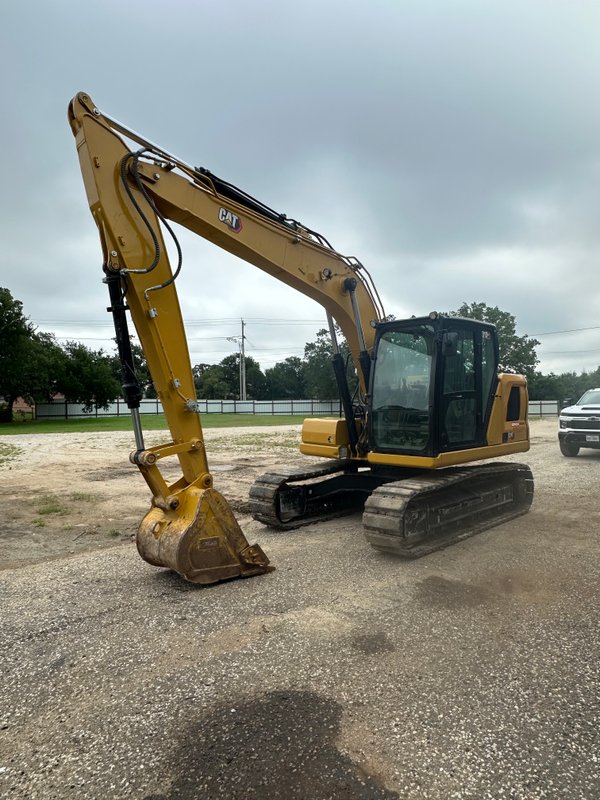
The question we hear most from contractors across the DFW metroplex is straightforward: "What am I actually paying for?" Rental rate sheets can look simple on the surface—a daily, weekly, or monthly number next to a machine—but the final invoice often tells a different story. We see it regularly at our Denton yard: a contractor budgets $3,500 for a two-week excavator rental, then gets surprised by delivery charges, fuel surcharges, and overtime hours that push the real cost past $5,000.
That gap between quoted rate and actual cost is not a trick. It is the industry standard. But the difference between a transparent rental partner and one that buries fees in fine print can make or break your project budget. This guide breaks down exactly how equipment rental pricing works, what is bundled into that base rate, and where the add-on charges live—so you can plan accurately whether you are grading a pad site in Prosper or trenching utilities in Fort Worth.
Key Takeaways
- Base rental rates cover the machine and standard maintenance—fuel, delivery, and damage waivers are separate line items on virtually every rental agreement.
- Single-shift hour limits (typically 8 hours/day, 40 hours/week, 160 hours/month) are built into the rate; exceeding them triggers overtime charges of 1/8th the daily rate per extra hour.
- Weekly rates run roughly 3x the daily rate, and monthly rates about 3x the weekly—renting for a full week instead of 5 individual days saves you about 40%.
- Local owner-operator rental companies like ours in Denton typically include more transparent pricing and flexible terms than national chain competitors.
- According to the American Rental Association, the U.S. equipment rental industry reached $76.8 billion in 2024 revenue, and rate transparency is a top concern among surveyed contractors.
How Are Equipment Rental Rates Structured?
Equipment rental rates follow a tiered structure: daily, weekly, and monthly. The longer the rental period, the lower the effective daily cost. Here is a realistic look at how this works for common machines in our North Texas fleet:
Mini Excavators (Cat 304-308 class, 8,000-18,000 lbs): Daily rates typically range from $350-$550, weekly rates from $1,100-$1,600, and monthly rates from $3,000-$4,500. Contractors working residential jobs across Denton County frequently rent these for one to two weeks.
Mid-Size Excavators (Cat 320-336 class, 45,000-82,000 lbs): Daily rates run $800-$1,500, weekly rates $2,400-$4,500, and monthly rates $6,500-$12,000. These machines handle the heavy site work on commercial pads and subdivision infrastructure throughout the metroplex.
Skid Steers and CTLs (Cat 259-299 class): Daily rates from $275-$500, weekly from $800-$1,400, monthly from $2,200-$3,800. These are our most-rented category because of their versatility.
The math strongly favors weekly and monthly rentals. If you need a skid steer for four days, renting at the daily rate costs roughly $1,200-$2,000. The weekly rate is $800-$1,400—meaning you save money renting for the full week even if the machine sits idle on Friday. The Associated General Contractors of America (AGC) advises contractors to always compare per-day costs across rate tiers before committing to a rental period.
What Is Included in the Base Rental Rate?
The base rental rate covers two things: the machine and standard preventive maintenance performed between rentals. Here is specifically what is bundled:
The machine itself—with standard bucket or attachment. Specialty attachments like breakers, augers, and grapples carry separate rental fees.
Standard maintenance between rentals—engine oil and filter changes, hydraulic fluid checks, coolant service, air filter replacement, and undercarriage inspection.
Normal wear items—cutting edges, bucket teeth, and rubber tracks that wear during normal operation are the rental company's responsibility to replace between customers.
A set number of operating hours—this is the single most important detail in any rental agreement.
How Do Hour Limits Work on Rental Equipment?
Every rental rate is built around single-shift operation: 8 hours per day, 40 hours per week, and 160 hours per month. These are tracked by the machine's hour meter.
If you run a machine beyond those limits, you will pay overtime charges. The standard formula is 1/8th of the daily rate per excess hour. On a mid-size excavator with a $1,200 daily rate, that is $150 for every hour over the 8-hour daily limit. Run two extra hours every day for a week, and you are looking at $1,500 in overtime charges on top of your weekly rate.
We had a contractor running a Cat 320 on a fast-tracked commercial pad in McKinney last summer—two shifts, roughly 14 hours a day for three weeks. He called us beforehand, and we set up a double-shift rate that saved him about $4,200 compared to what the overtime charges would have been. The lesson: if you know you are running extended hours, negotiate that upfront.
According to data from the American Rental Association's industry benchmarks, approximately 23% of rental invoices include excess-hour charges, and the average overage adds 12-18% to the base rental cost.
What Extra Charges Should You Expect Beyond the Base Rate?
Delivery and Pickup: From our Denton location, a delivery to a local site runs $150-$350 depending on equipment size. A delivery to Fort Worth or Dallas runs $300-$600. Pickup is the same charge—factor in round-trip transportation cost.
Fuel: You receive the machine with a full tank and are expected to return it full. A Cat 336 excavator burns 5-8 gallons per hour under load—on a 40-hour week, that is 200-320 gallons. At current diesel prices in DFW, fuel alone can run $700-$1,100 per week on a large excavator.
Damage Waiver / Equipment Protection Plan (EPP): This optional coverage typically costs 10-15% of the base rental rate. Without it, you are responsible for full repair costs—and a hydraulic cylinder replacement on an excavator can easily exceed $8,000. We strongly recommend EPP, especially on sites with uncertain ground conditions. That black clay across Denton and Tarrant counties hides all kinds of buried debris.
Environmental / Emissions Fees: Some rental companies add a flat environmental fee ($25-$75) to cover fluid recycling and emissions compliance costs.
Attachment Rentals: Specialty attachments rent separately from the base machine. A hydraulic breaker for a mid-size excavator might add $300-$500 per day. Contractors hitting caliche rock layers around the 4-6 foot mark on Denton County sites regularly add breakers to their excavator rentals.
How Do Local Rental Companies Compare to National Chains on Pricing?
National chains like United Rentals, Sunbelt, and BlueLine operate at massive scale, but their overhead structure gets passed through in rates that are often 15-25% higher than what local operators charge for comparable equipment.
The U.S. Small Business Administration (SBA) has noted that small and mid-size equipment providers tend to offer more straightforward pricing with fewer hidden fees.
Rate negotiation: Local companies have the authority to adjust rates based on rental duration, repeat business, and multi-machine packages. A contractor renting three machines for a month can usually negotiate a 10-15% package discount from a local provider.
Delivery flexibility: We can usually get a machine to a Denton, Fort Worth, or north Dallas site same-day because our equipment is sitting in our yard—not at a distribution hub two hours away.
Machine quality: Our equipment averages under 4,000 hours, and every unit gets a full inspection before each rental.
How Can You Get the Best Value on Equipment Rentals?
Right-size your equipment. Renting a Cat 336 when a 320 handles the job costs you an extra $300-$500 per day in rate alone, plus higher fuel consumption. On the flip side, undersizing means slower production that extends your rental period.
Rent by the week or month when possible. The weekly rate is typically equal to about 3 daily rates, so anything beyond 3 days should go on a weekly agreement. The IRS Section 179 deduction also allows businesses to deduct the full cost of equipment rentals in the year incurred.
Plan your hours. Track daily usage and schedule work to stay within the 8-hour single-shift limit. If you know you will exceed it, negotiate a double-shift rate upfront.
Coordinate delivery with other equipment. Moving two machines on one trip costs less than two separate mobilizations.
Build a relationship with your rental provider. According to For Construction Pros, contractors who maintain consistent relationships with one or two rental providers save an average of 8-12% annually compared to those who shop every rental individually.
What Should You Check Before Signing a Rental Agreement?
The AGC reports that 40% of rental billing disputes stem from contractors not reviewing the terms they signed. Here is what to verify:
Hour limits and overtime rate: Confirm the included hours and per-hour overtime charge in writing.
Delivery and pickup charges: Confirm both directions are quoted.
Damage waiver terms: Understand what the EPP covers and excludes.
Fuel return policy: Verify full-to-full or convenience charge option.
Billing cycle: Know when your rental period starts—from the yard or from your site?
Off-rent process: Understand how to call the machine off rent. Most agreements require notification before noon to avoid an additional day charge.
Ready to Get a Transparent Rental Quote?
We built Benchmark Equipment around the idea that contractors deserve to know exactly what they are paying before the machine hits the trailer. No hidden fees, no surprise surcharges, no corporate runaround.
Browse our current inventory at rent.benchmarkequip.com or call us directly at (817) 403-4334. We will give you an honest number—and explain every line on it.
Frequently Asked Questions
What is typically included in a base equipment rental rate?
A base rental rate covers the machine itself with a standard attachment, all preventive maintenance performed between rentals, and a set number of operating hours per period—usually 8 hours per day, 40 per week, or 160 per month. Fuel, delivery, damage waivers, and specialty attachments are separate charges.
How much does it cost to rent a mini excavator per week in the DFW area?
Mini excavators in the Cat 304-308 class typically rent for $1,100 to $1,600 per week in the DFW metroplex. Add delivery ($150-$350 locally, $300-$600 to Dallas or Fort Worth), fuel, and optional damage waiver at 10-15% of the base rate for your total weekly cost.
What happens if I go over the hour limit on rental equipment?
Exceeding the included hours triggers overtime charges calculated at 1/8th of the daily rate per excess hour. For example, a machine with a $1,000 daily rate charges $125 per overtime hour. If you know you will be running extended hours, negotiate a double-shift rate upfront—it is significantly cheaper than paying hourly overages.
Are local equipment rental companies cheaper than national chains?
Local owner-operator rental companies typically offer base rates 15-25% lower than national chains for comparable equipment, with more transparent pricing and fewer hidden fees. Local companies also provide greater flexibility on rate negotiation, same-day delivery, and package discounts for multi-machine rentals.