.png)
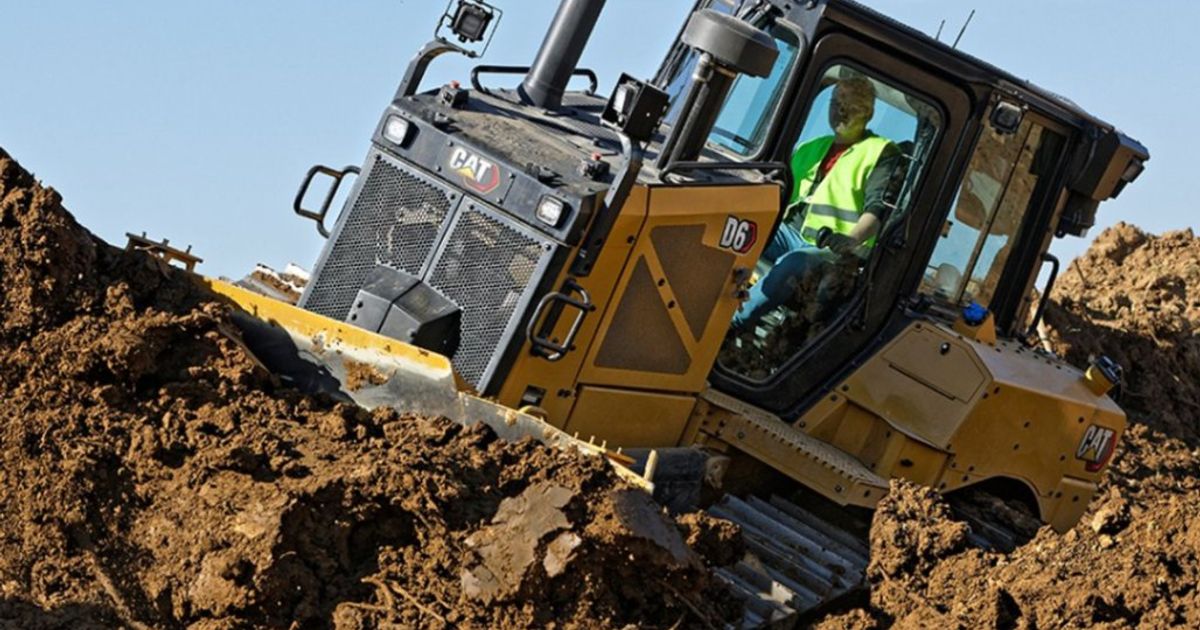
Every week we talk to grading contractors across Denton, Prosper, Celina, and McKinney who are trying to solve the same problem: they've got a significant amount of dirt to move, a budget to hit, and a deadline that doesn't care about either. The dozer-versus-scraper question comes up constantly, and the honest answer is that neither machine is universally superior — they're tools built for different production scenarios, and confusing one for the other is one of the fastest ways to blow a bid.
We've watched both machines work in North Texas conditions long enough to have some strong opinions. Here's how we break it down for our customers.
Key Takeaways
- Scrapers become cost-competitive at haul distances over 300-500 feet, with peak efficiency between 500-2,000 feet per pass
- North Texas caliche rock formations (typically 4-8 feet deep) often require dozer ripping before scrapers can load effectively
- A standard motor scraper moves 18-22 cubic yards per load compared to a dozer's push-and-spread method averaging 400-600 cubic yards per hour on ideal terrain
- Dozer-scraper push-assist combinations can boost scraper productivity by 25-40% in heavy clay conditions common across the DFW area
- For jobs under 30,000 cubic yards or with haul roads under 300 feet, a dozer-only approach typically wins on total project cost
What Is the Real Cost-Per-Yard Difference Between Dozers and Scrapers?
Cost-per-cubic-yard is the number that actually matters, and it shifts dramatically based on your haul distance. On a short push — say, 200 feet or less — a CAT D6 or D8 dozer working in spread-and-grade mode can move dirt at a cost of $1.50 to $2.50 per cubic yard all-in, including operator and fuel. Push that haul distance out to 800 feet and the same dozer's cost climbs to $4.00–$6.00 per yard because you're spending more time traveling than you are moving material.
A CAT 621 or 657 push-pull scraper at that same 800-foot haul distance is typically working at $2.00–$3.50 per yard. The crossover point — where scrapers start beating dozers on cost — sits somewhere around 300 to 500 feet depending on soil conditions, operator skill, and whether you need a push dozer assist. According to the National Ready Mixed Concrete Association and industry earthwork productivity studies, optimized scraper cycles in the 500–1,500 foot haul range consistently outperform dozer-only approaches by 30 to 50 percent on a cost-per-yard basis.
The math gets more complicated when you factor in mobilization. Scrapers are large, expensive machines to transport. If your job is in Frisco or Little Elm and you're moving 20,000 yards, the mob cost may wipe out any per-yard savings. For jobs pushing 100,000 yards and up — like the large master-planned community pads we see going in around Gunter, Aubrey, and Van Alstyne — scrapers pay for themselves quickly.
How Does North Texas Soil Actually Affect Dozer vs Scraper Performance?
North Texas soil is not cooperating with anyone's theoretical productivity numbers. The expansive black clay — what locals call black gumbo — dominates much of the DFW corridor and presents two major challenges for scrapers: it sticks to the bowl, and it resists cutting when dry. In summer, when temperatures in Denton and the surrounding area routinely hit 100°F or higher, that clay bakes into a surface that a scraper bowl will bounce off of without a ripper or push dozer to break it first.
We've had customers tell us they watched a scraper lose an entire hour of production in August because the cut area dried out between the morning moisture and afternoon passes. A dozer with a ripper shank handles that transition far better — it can break material loose regardless of moisture state and still maintain productive push cycles on the short hauls.
Caliche is the other variable that changes the calculation. Across much of the DFW metroplex and extending north toward Sherman, Denison, and Gainesville, contractors typically hit caliche rock layers at 4 to 8 feet of depth. Scrapers cannot self-load in caliche — full stop. You need dozer ripping, and often pneumatic rock breaking, before a scraper bowl can engage. The OSHA 1926 Subpart P excavation standards classify Type C soils specifically because of these unstable, fractured rock-and-clay combinations, which affects not just safety protocol but equipment selection logic. On sites with significant caliche, a dozer-only approach or a hybrid dozer-rip/scraper-load operation is usually the right call.
The flip side: when North Texas clay is at the right moisture content — typically in spring or after rain events — scrapers load beautifully. That sticky soil packs tight into the bowl and maximizes every load. We've seen experienced scraper operators post exceptional production numbers on well-conditioned DFW clay pads in March and April.
What Job Size and Site Geometry Favor a Scraper Over a Dozer?
Scrapers need room. That's the factor contractors sometimes underestimate until a machine shows up on site and can't execute its turn radius. A fully loaded CAT 657 push-pull scraper is over 56 feet long and requires a working oval pattern with adequate cut and fill zones to operate efficiently. Tight residential subdivision lots in Crowley, Mansfield, or Trophy Club often don't give scrapers the geometry they need, and a dozer will outperform them every day of the week in those confined spaces.
For large, open grading pads — highway construction, commercial development, airport work, or the large master-planned communities going in north of Celina — scrapers shine. The Associated General Contractors of America consistently identifies self-propelled scrapers as the most productive single-machine solution for mass earthmoving on open, unobstructed sites when haul distances are optimized. A fleet of two CAT 637 scrapers with a push dozer can move more dirt per operator-hour than almost any other configuration on the right terrain.
A useful rule of thumb from our operational experience: if your cut-to-fill haul distance averages more than 500 feet, your site has at least 2 acres of open working room in the cut zone, and your volume exceeds 40,000–50,000 cubic yards, start pricing scrapers. Below those thresholds, a D8 or D9 dozer is almost certainly your better investment.
Should You Use a Push Dozer with Your Scraper in Texas Conditions?
In North Texas, the answer is almost always yes. Scraper productivity ratings assume ideal loading conditions — loose, well-conditioned soil and a competent operator timing their bowl drop perfectly. North Texas clay, especially when dry, fights back hard enough that self-loading scrapers routinely work at 60–70% of their rated capacity without a push assist.
A dozer-scraper push combination changes that equation significantly. The dozer provides a 10–15 second push during the load cycle, and that's often enough to bring the scraper from a partial load to a full bowl. Industry data from Caterpillar's productivity research indicates push-assist configurations improve scraper load factors by 15–25% in cohesive soils, which in practical terms translates to 25–40% more cubic yards moved per shift when you factor in the load consistency over an 8- or 10-hour day.
The trade-off is the added cost of the push dozer and operator. For that combination to pencil out, you need enough scraper volume to keep the push dozer busy. One dozer can typically push-assist two scrapers in rotation, which is generally the most cost-effective configuration for large North Texas grading operations. We regularly help customers in the Wichita Falls and Decatur areas configure these combinations for large agricultural and commercial land development projects where haul distances and volumes justify the extra iron.
How Do Equipment Rental Rates Compare for Dozers vs Scrapers?
Rental rates reflect both the machine's capital cost and its demand cycles, and scrapers typically run 40–70% higher per day than a comparable-class dozer. A rental CAT D8 dozer in the North Texas market runs in the range of $1,200–$1,800 per day depending on configuration and attachments. A CAT 621 or 637 scraper will typically price at $2,000–$3,200 per day in the same market.
On a per-machine basis, that scraper looks expensive. But productivity comparison changes the picture. A scraper producing 1,800–2,200 cubic yards per shift versus a dozer producing 600–900 cubic yards per shift on the same haul distance means your cost-per-yard with the scraper can be less than half — even with the higher day rate. The math works when the volume and geometry are right.
One consideration our customers sometimes overlook: crew size and fuel. Scrapers are single-operator machines, but they burn significantly more fuel per hour than dozers. A CAT 657 push-pull can consume 12–18 gallons per hour at peak work. In the North Texas summer heat, you can add another 10–15% to those fuel figures as machines work harder to maintain hydraulic performance in ambient temperatures above 100°F. Proper hydraulic fluid management and increased service intervals are essential — the Society of Automotive Engineers (SAE) recommends reviewing hydraulic fluid viscosity specifications when equipment operates consistently above 95°F ambient.
What's the Best Equipment Strategy for Mixed Grading Conditions?
The most productive operations we've watched in North Texas don't commit exclusively to one machine — they use dozers and scrapers together in phases. The sequence that works: rip dozer breaks the caliche or hard clay layer first, scraper handles the bulk haul on the open material, and finish dozer grades to design elevation. It's three machines, but on a large commercial pad in Prosper or a highway interchange in Fort Worth, that combination routinely beats any single-machine approach on total project cost.
The American Society of Civil Engineers earthwork productivity guidelines consistently identify integrated equipment fleets — rather than single-machine solutions — as the standard for optimal mass grading economics on projects exceeding 75,000 cubic yards. We've seen that bear out repeatedly on the large residential communities going in across Collin and Denton counties.
If you're bidding a mass grading job in our service area and you're not sure which direction to go, call us at (817) 403-4334. We've put equipment on job sites from Waco to Bowie, and we know how the soil behaves differently in each county. We'd rather help you pick the right machine before you mobilize than have you call us a week in because production isn't where it needs to be.
The bottom line is simple: scraper wins on open terrain with long hauls and high volume. Dozer wins on tight sites, rough soil, and short pushes. Most big North Texas jobs benefit from both.
Frequently Asked Questions
At what haul distance does a scraper become more cost-effective than a dozer?
Scrapers generally become more cost-effective than dozers at haul distances exceeding 300–500 feet, with peak efficiency between 500 and 2,000 feet per cycle. Below 300 feet, a dozer's simplicity and lower day rate typically win on total project cost. The crossover point shifts closer to 500 feet in North Texas clay and caliche conditions where scrapers may need push-dozer assistance to maintain full bowl loads.
How much more productive is a scraper than a dozer for moving dirt?
On optimized haul distances of 500–1,500 feet, a single CAT 621 or 637 scraper can move 1,800–2,500 cubic yards per shift compared to 600–900 cubic yards per shift for a D8 dozer on the same route. That 2–3x productivity advantage means the scraper's higher daily rental rate — typically 40–70% more than a comparable dozer — is often justified on large-volume projects exceeding 40,000–50,000 cubic yards.
Can a scraper work in North Texas caliche rock?
Scrapers cannot self-load in caliche rock — the material is too hard for the bowl to cut without pre-breaking. In North Texas, caliche layers typically appear at 4–8 feet of depth across much of the DFW corridor and surrounding counties. Standard practice is to deploy a dozer with a ripper shank to break the caliche first, then bring in the scraper to load and haul the loosened material. Skipping the ripping step will damage the scraper's cutting edge and stall production.
Does a push dozer really make that big a difference for scraper productivity?
Yes — especially in North Texas clay and dry summer conditions. Without push-dozer assistance, scrapers working in cohesive soils often load to only 60–70% of bowl capacity. A 10–15 second push from a dozer during the load cycle consistently brings that to 90–100% of rated capacity. Industry data indicates push-assist configurations improve scraper load factors by 15–25% in cohesive soils, which compounds across a full shift into a 25–40% improvement in total cubic yards moved. One push dozer can typically serve two scrapers in rotation.
What size scraper do I need for a large residential development grading project?
For large residential development pads in the 50,000–200,000 cubic yard range — typical of master-planned communities in areas like Celina, Prosper, or Gunter — a CAT 621 or 637 scraper is the standard choice, carrying 18–22 and 32–37 cubic yards respectively. A single CAT 637 with push-dozer assist can move approximately 2,000–2,500 cubic yards per shift under good conditions. Larger projects often run two scrapers sharing one push dozer to maximize cost efficiency per operator-hour.