.png)
Government projects pay well but they come with paperwork, specifications, and compliance requirements that catch unprepared contractors off guard. Whether you're bidding a TxDOT highway improvement along I-35 in Denton County or a city water main replacement in Fort Worth, the equipment requirements go beyond just having the right size machine. You need documented compliance, current certifications, and machines configured to meet project-specific standards. We've supplied equipment for dozens of municipal and DOT projects across North Texas, and we know exactly what inspectors look for.
Key Takeaways
- TxDOT projects require equipment meeting specific compaction standards (Item 247, Item 248) with documented roller patterns and pass counts
- Federally funded projects mandate EPA Tier 4 Final emissions compliance — older equipment may not qualify
- All equipment on public works sites must have current ROPS/FOPS certification and documented maintenance records
- Municipal projects in Denton, McKinney, Frisco, and Fort Worth each have unique permitting and equipment access requirements
What Equipment Standards Does TxDOT Require for Highway Projects?
The Texas Department of Transportation (TxDOT) maintains some of the most detailed equipment specifications of any state DOT. For earthwork and roadway construction, the standards that matter most are in the Standard Specifications book, particularly Items 132 (Embankment), 247 (Flexible Base), and 248 (Stabilized Base).
Compaction equipment requirements are where most contractors either comply or get flagged. TxDOT Item 247 for flexible base installation requires achieving 100% of maximum dry density as determined by Tex-113-E testing. That means your roller needs to deliver consistent, documented compaction energy. A typical specification calls for a minimum static weight of 10 tons for steel-wheel rollers, with vibration frequencies between 25-35 Hz. Padfoot rollers used for subgrade compaction in North Texas clay need to deliver minimum tip pressures of 250 psi to properly densify the expansive soil.
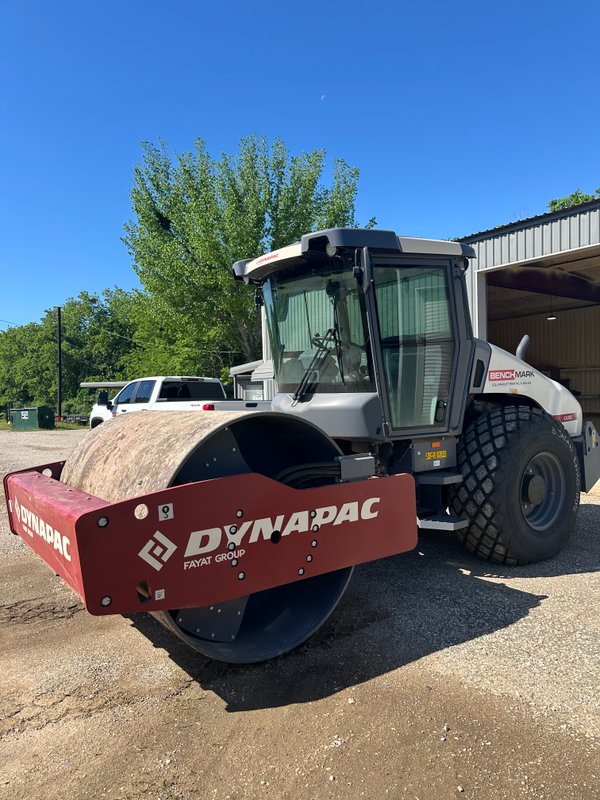
We stock Dynapac and CAT rollers that meet every TxDOT compaction specification. When a contractor calls us for a DOT project, we confirm the specific item numbers in their contract and match equipment accordingly — because showing up with a 7-ton roller on a project that specs a 10-ton minimum means you're going home to get the right machine.
What Emissions Standards Apply to Government-Funded Construction Projects?
This is the compliance requirement that eliminates older equipment from government work. The EPA's Tier 4 Final emissions standards apply to all non-road diesel engines manufactured after 2014-2015 (depending on horsepower class). On federally funded projects — which includes most TxDOT highway work and many municipal infrastructure projects that receive federal grants — contractors must demonstrate that equipment meets current emissions standards.
What this means practically: if you're running a 2010 CAT 320D excavator on a privately funded subdivision in Celina, nobody checks your emissions tier. But bring that same machine to a federally funded highway improvement on US 380, and you'll be asked to remove it. Late-model CAT equipment (2015 and newer) meets Tier 4 Final with diesel particulate filter (DPF) and selective catalytic reduction (SCR) systems. Our entire Benchmark fleet qualifies for government work because we maintain late-model iron exclusively.
What Safety Certifications Must Equipment Have for Public Works?
OSHA Standard 1926 Subpart W requires rollover protective structures (ROPS) and falling object protective structures (FOPS) on virtually all earthmoving equipment used on construction sites. For DOT and municipal projects, inspectors actively verify these certifications. Every cab must have a legible ROPS/FOPS certification plate, and any structural modifications to the cab or frame require re-certification.
Beyond ROPS/FOPS, public works projects typically require: functional backup alarms (meeting SAE J994 standards at 97+ decibels), operational fire extinguishers mounted to every machine, reflective markings for equipment operating near traffic, and documented pre-operation inspection records. We supply inspection checklists with every rental that align with both OSHA and TxDOT requirements.
Ground-engaging equipment like excavators and dozers on TxDOT projects must also comply with traffic control requirements when working within highway right-of-way. This means proper equipment lighting, high-visibility markings, and in some cases, automated machine guidance systems for work within active travel lanes.
How Do North Texas Municipal Projects Differ from TxDOT Work?
Municipal projects in North Texas cities like Denton, McKinney, Frisco, and Fort Worth operate under city-specific standards that can be more restrictive than TxDOT in certain areas. The City of Frisco, for example, requires specific trench shoring systems for any excavation exceeding 4 feet in depth — more conservative than the OSHA 5-foot threshold — due to the unstable nature of local expansive clay soils.
The City of Denton has noise ordinances that restrict equipment operation before 7 AM and after 7 PM on projects within 300 feet of residential areas. McKinney requires erosion and sediment control plans with specific equipment for compliance — typically water trucks for dust suppression and tracked equipment to minimize ground disturbance. Fort Worth's public works department requires weekly equipment inspection reports submitted to the project engineer.
Each city also has unique permitting requirements for equipment transport on local roads. Oversize/overweight permits are required when moving equipment on lowboys that exceed standard dimensions. The Texas DMV Oversize/Overweight Permit Office handles state highway permits, but individual cities may require additional local permits for equipment movement on city streets.
What Equipment Is Most Commonly Required for Municipal Infrastructure?
Municipal infrastructure projects in North Texas typically fall into four categories, each with specific equipment needs:
Water and sewer line installation dominates municipal work in the fast-growing cities north of Dallas. These projects require excavators in the 20-30 ton class (CAT 320 through 336) for trench excavation, along with compaction equipment for backfill. Trench depth in North Texas often reaches 10-15 feet for sanitary sewer, which means you're cutting through black gumbo clay and hitting caliche layers. A hydraulic breaker attachment is standard equipment for these projects.
Road construction and rehabilitation requires a full equipment spread: dozers for subgrade preparation, rollers for compaction (both padfoot for subgrade and smooth drum for base and surface), wheel loaders for material handling, and water trucks for moisture conditioning. TxDOT specifications for road base typically require a minimum of 8 roller passes with a 12-ton minimum vibratory roller.
Drainage and stormwater projects are increasingly common as North Texas cities manage growth-related flooding. These projects need excavators with long-reach configurations for channel work, articulated trucks for spoil hauling, and rollers for embankment compaction. The Texas Commission on Environmental Quality (TCEQ) requires stormwater pollution prevention plans (SWPPP) on all sites disturbing more than one acre.
Park and public facility construction in growing cities like Prosper, Aubrey, and Gunter involves site grading, utility installation, and parking lot construction. These projects typically use mid-size equipment (15-25 ton excavators, compact track loaders, and small rollers) due to tighter working areas and proximity to existing structures.
What Documentation Should Contractors Prepare for Government Projects?
Documentation requirements on DOT and municipal projects go far beyond what private sector work demands. At minimum, contractors should have ready: equipment specification sheets confirming weight, capacity, and emissions compliance; current maintenance records showing service history; ROPS/FOPS certification plates and documentation; operator certification records (particularly for crane operations under OSHA 1926 Subpart CC); and insurance certificates listing the public entity as additional insured.
When you rent from Benchmark Equipment, we provide a complete documentation package with every machine deployed to a government project. This includes the equipment spec sheet, emissions compliance documentation, maintenance history, and ROPS/FOPS certification — everything you need to pass an inspector's review without scrambling for paperwork.
Get Compliant Equipment for Your Next Government Project
Government and municipal projects in North Texas represent some of the best-paying work available, but only if you can meet the compliance requirements. Benchmark Equipment in Denton, TX maintains a fleet of late-model, Tier 4 Final compliant CAT equipment ready for DOT and municipal work across the entire North Texas corridor. Whether you're bidding a TxDOT highway project on I-35, a water line installation in McKinney, or a road reconstruction in Crowley, call us at (817) 403-4334 to discuss equipment specs, documentation requirements, and delivery timelines.