.png)
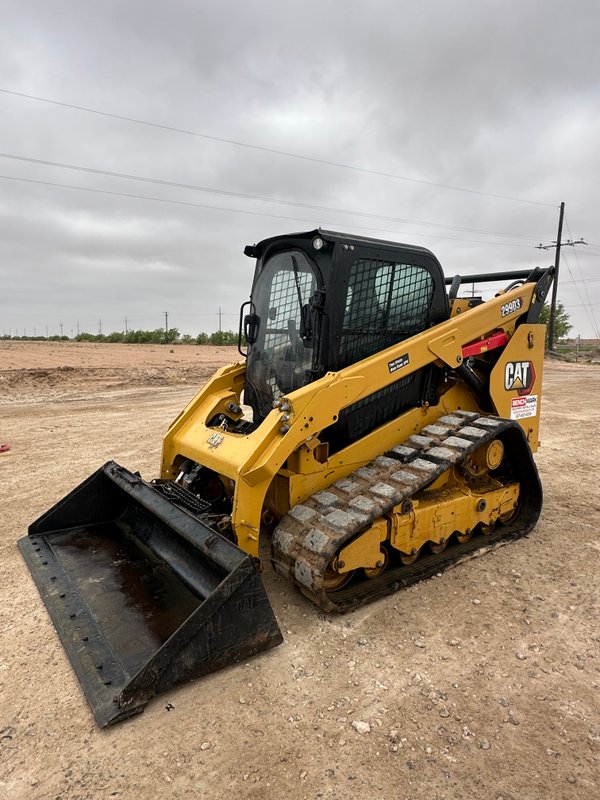
Ask any site foreman running residential development in Prosper or Celina what their most-used piece of equipment is, and more often than not, they'll point to the compact track loader. It's not hard to understand why. In North Texas, where projects regularly demand land clearing one week and finish grading the next, versatility isn't a luxury — it's a budget line item. A single CAT CTL with the right attachment lineup can eliminate the need for three or four specialty machines on a mid-size job site, and that math changes everything when you're managing equipment costs across a tight build schedule.
We've watched this play out in our rental fleet for years. Contractors who understand the attachment ecosystem get dramatically more value from their CTL rental than those who treat it purely as a bucket machine. This guide breaks down the most impactful attachments, how to match them to your machine's hydraulic capabilities, and what North Texas job site conditions specifically demand from your equipment choices.
Key Takeaways
- CAT CTL high-flow hydraulic systems deliver 30-40 GPM, enabling attachments like hydraulic mulchers and cold planers that standard-flow machines cannot power effectively
- Matching attachment weight to CTL rated operating capacity (ROC) is critical — overloading beyond 50% ROC significantly reduces stability and machine longevity
- North Texas expansive clay soils and caliche formations require specific bucket and tooth configurations that differ from sandy or loam-dominant regions
- Quick-attach coupler systems allow experienced operators to swap attachments in under 5 minutes, making a single CTL rental cost-effective across multiple trade scopes
- Renting attachments separately from your CTL is often the most cost-efficient approach for contractors who only need specialty tools for one or two project phases
What CTL Attachments Give You the Most Versatility Across a Full Project Lifecycle?
The general-purpose bucket remains the foundation of any CTL attachment strategy, but calling it a commodity undersells its importance. For North Texas work specifically, bucket selection matters more than most contractors realize. Our customers working in the Denton, Argyle, and Trophy Club corridor deal with expansive black gumbo clay that can pack into a standard bucket like concrete. Smooth-lip buckets designed for loose materials become nearly useless when you're fighting that soil's cohesive properties. Tooth buckets with aggressive cutting edges penetrate the clay's surface crust far more efficiently, and the extra bite is essential when you're working ground that has baked solid through a 100-degree July.
Beyond the bucket, the attachments that consistently deliver the highest cross-project utility in our rental experience include augers, trenchers, brush cutters, hydraulic breakers, and grading blades. Each serves a distinct phase of construction, and together they cover the majority of what a compact track loader gets asked to do on Texas residential, commercial, and infrastructure jobs.
Augers are arguably the single attachment with the widest application range. Foundation pier drilling, fence post installation, tree planting for HOA landscaping requirements, and soil sampling all come back to the auger. A 12-inch auger on a CAT 279D3 can drill through typical North Texas soil at roughly 3-5 feet per minute in favorable conditions — that rate drops significantly once you hit caliche, which is why understanding your soil profile before you start matters.
How Do High-Flow Hydraulics Change What Attachments You Can Run on a CAT CTL?
Standard hydraulic flow on most mid-size CTLs runs in the 20-25 GPM range. That's sufficient for buckets, forks, and light-duty augers, but it's a hard ceiling on attachment performance. CAT's high-flow hydraulic option — available on machines like the 279D3 and 299D3 — pushes output to 34-40 GPM at pressures up to 3,500 PSI. That difference is the line between a mulcher that nibbles at brush and one that actually eats through 6-inch cedar at a productive rate.
We see this misunderstanding create real problems on job sites in the Denton County growth corridor. A contractor will rent a CTL for land clearing out near Gunter or Aubrey — typical cedar and mesquite country — grab a hydraulic mulcher from a supplier, and then discover on day one that their machine's standard-flow system can't drive the mulcher at rated capacity. The attachment runs hot, the hydraulic system is stressed, and productivity is maybe 40% of what they expected. Confirming high-flow capability before the rental is a five-minute conversation that saves an entire day.
According to Caterpillar's CTL product specifications, the CAT 299D3 XE delivers up to 40.2 GPM at high flow, making it one of the most attachment-capable compact track loaders in its class. Cold planers, stump grinders, and high-output trenchers all require that upper range to operate efficiently.
What Attachments Are Best for North Texas Land Clearing and Site Prep?
Land clearing in North Texas is not a generic task. The cedar, mesquite, and native scrub common across Wise County, Denton County, and areas around Decatur and Bowie have root systems that anchor aggressively in clay soil. A brush cutter handles above-ground material efficiently, but if you're doing a full land clearing for residential development or a commercial pad, you need a mulcher that processes root crowns along with the top growth — otherwise you're setting yourself up for settling issues later.
For site prep specifically, the combination we most often recommend to customers preparing ground in areas like Van Alstyne, Sherman, or Denison is a forestry mulcher for initial clearing followed by a land plane attachment for finish grading. The land plane is underutilized in North Texas work, but it's exceptional for establishing drainage grades on expansive clay sites where blade work alone leaves too much surface variation. Research from Texas A&M AgriLife Extension documents how improper grading on clay-dominant soils accelerates foundation movement — a detail that matters when you're prepping lots in fast-growing suburbs where builder liability is scrutinized.
Hydraulic breakers earn their place on North Texas site prep jobs the moment caliche enters the picture. The caliche layer in DFW and surrounding areas typically runs from 4 to 8 feet deep but can appear at 18 inches in some Denton County locations. No bucket, regardless of its cutting edge, is going to move cemented caliche effectively. A 500-600 foot-pound class breaker on a CAT 259D3 or 279D3 fractures caliche efficiently, turning a day-long hand-digging nightmare into a manageable two-hour operation. OSHA's trenching and excavation standards (29 CFR 1926 Subpart P) also apply when breaker work creates trench conditions, so keeping your competent person on-site for any breaking operation near existing utilities is non-negotiable.
How Do You Match Attachment Weight and Size to Your CTL's Rated Operating Capacity?
Rated operating capacity is the number that governs everything about safe CTL attachment use. The National Safety Council and equipment manufacturers consistently emphasize that operating a CTL beyond its rated tipping load margin creates serious tip-over risk, particularly on the uneven terrain common to active construction sites. As a general rule, your loaded attachment — bucket plus material — should not exceed 50% of the machine's rated tipping load for stable operation on level ground. On slopes or uneven surfaces, that margin shrinks further.
For the CAT 259D3, the rated operating capacity at 35% tipping load is approximately 1,650 lbs. That sounds like plenty until you factor in a fully loaded dirt bucket. A cubic yard of North Texas clay soil weighs roughly 2,700 lbs — meaning a contractor trying to load out wet clay with an oversized bucket on a 259 is working outside safe parameters before the bucket is even half full. Matching machine to task isn't just about performance; it's about keeping your operator and everyone around the machine safe.
We counsel customers renting for tasks that involve heavy material handling — demo debris, wet clay, aggregate — to look seriously at the CAT 279D3 or 299D3 instead of defaulting to the smallest available machine. The size step-up costs modestly more per day but the productivity difference and safety margin are substantial.
What Should Contractors Know About Running CTL Attachments in Extreme Heat?
North Texas summers are not gentle on hydraulic systems. When ambient temperatures climb above 100°F — a regular occurrence from June through September across Frisco, McKinney, Irving, and the broader DFW area — hydraulic fluid operating temperatures in a hard-working CTL can push into ranges where viscosity breakdown accelerates wear. Attachments with high hydraulic demand, like mulchers and cold planers, compound this stress because they're continuously cycling full hydraulic flow through the system.
The practical guidance we give our summer rental customers is straightforward: check hydraulic fluid level and condition before every shift, monitor the machine's temperature warning indicators proactively rather than reactively, and schedule the most hydraulically intensive attachment work for morning hours when ambient temperatures are lower. According to SAE International's hydraulic fluid standards, every 18°F increase in hydraulic fluid temperature above the optimal operating range roughly halves fluid service life — a statistic that translates directly into maintenance costs and attachment performance degradation mid-job.
Our fleet maintenance team also ensures all returning CTLs receive hydraulic filter inspection before high-flow attachments are used in subsequent rentals. Debris introduced by an improperly maintained attachment can contaminate the entire hydraulic circuit, and that's a repair cost that affects both the equipment owner and the next customer's project timeline.
How Can Rental Customers Maximize ROI When Renting CTL Attachments?
The highest-ROI approach for most contractors is a bundled strategy: rent the CTL as the base machine, then layer in attachment rentals only for the phases where specialty tools are needed. A framing contractor in Mansfield or Crowley building a custom home doesn't need a hydraulic breaker for the whole project — they need it for two days when the foundation trenches hit caliche. Renting the breaker for those two days costs a fraction of owning or renting it for the full project duration.
Planning attachment sequences in advance also reduces machine idle time dramatically. We've seen customers on larger Collin County projects — commercial pads in Prosper or McKinney where multiple phases overlap — cut their effective equipment cost per productive hour by 30% simply by scheduling attachment swaps to coincide with natural crew transitions rather than stopping work to reconfigure mid-task.
If you're planning a project in the Denton area or anywhere across our North Texas service territory and want to talk through the right CTL and attachment combination for your specific scope, call us at (817) 403-4334. We'd rather spend 15 minutes on the phone helping you spec the right setup than have you show up to a job with equipment that doesn't match the work. That conversation is free; a lost day of productivity isn't.
For additional guidance on compact equipment safety and operational best practices, the Associated General Contractors of America publishes operator training resources that cover attachment safety protocols applicable to all major CTL platforms.
Frequently Asked Questions
How many attachments can a compact track loader use?
A modern CAT compact track loader can run 15-20 different attachment types using a universal quick-attach coupler system, including buckets, augers, trenchers, hydraulic breakers, brush cutters, mulchers, cold planers, grading blades, pallet forks, and more. The actual number of attachments a specific machine can operate effectively depends on its hydraulic flow rating — standard flow (20-25 GPM) covers most attachments, while high-flow machines (30-40 GPM) unlock demanding tools like forestry mulchers and stump grinders.
What is the difference between standard flow and high flow on a compact track loader?
Standard hydraulic flow on most CTLs runs 20-25 GPM, sufficient for buckets, forks, and basic augers. High-flow systems, like those on the CAT 279D3 and 299D3, deliver 34-40 GPM at pressures up to 3,500 PSI, enabling high-demand attachments like hydraulic mulchers, cold planers, and large-diameter augers to operate at full rated capacity. Running a high-demand attachment on a standard-flow machine results in reduced performance, excess heat buildup, and accelerated hydraulic system wear.
What CTL attachments work best for breaking through caliche in Texas?
A hydraulic breaker is the most effective attachment for breaking through caliche, which is common at 4-8 foot depths across the DFW and North Texas area. A 500-600 foot-pound class hydraulic breaker mounted on a CAT 259D3 or 279D3 can fracture cemented caliche efficiently, turning a multi-day hand-digging operation into a 2-3 hour task. Following initial breaking, a tooth bucket with an aggressive cutting edge is recommended to load out the fractured material effectively.
How do I know if my compact track loader can handle a specific attachment?
Check three things: your machine's hydraulic flow rating (standard vs. high flow), the rated operating capacity (ROC) relative to the attachment's weight plus anticipated material load, and the attachment's coupler compatibility. As a safety guideline, your loaded attachment should not exceed 50% of the machine's rated tipping load on level ground. For high-flow attachments like mulchers, verify your CTL's GPM output matches the attachment manufacturer's minimum flow requirement before committing to the rental.
Is it cheaper to rent CTL attachments separately or get them bundled with the machine?
For most contractors, renting attachments separately for only the project phases where they're needed is the most cost-efficient approach. A hydraulic breaker or forestry mulcher may only be needed for 1-3 days of a 2-week project — paying for specialty attachment rental only during those days is significantly cheaper than bundling for the full rental period. Bundled packages make more sense when you'll be rotating through multiple attachments consistently across the project timeline.