.png)
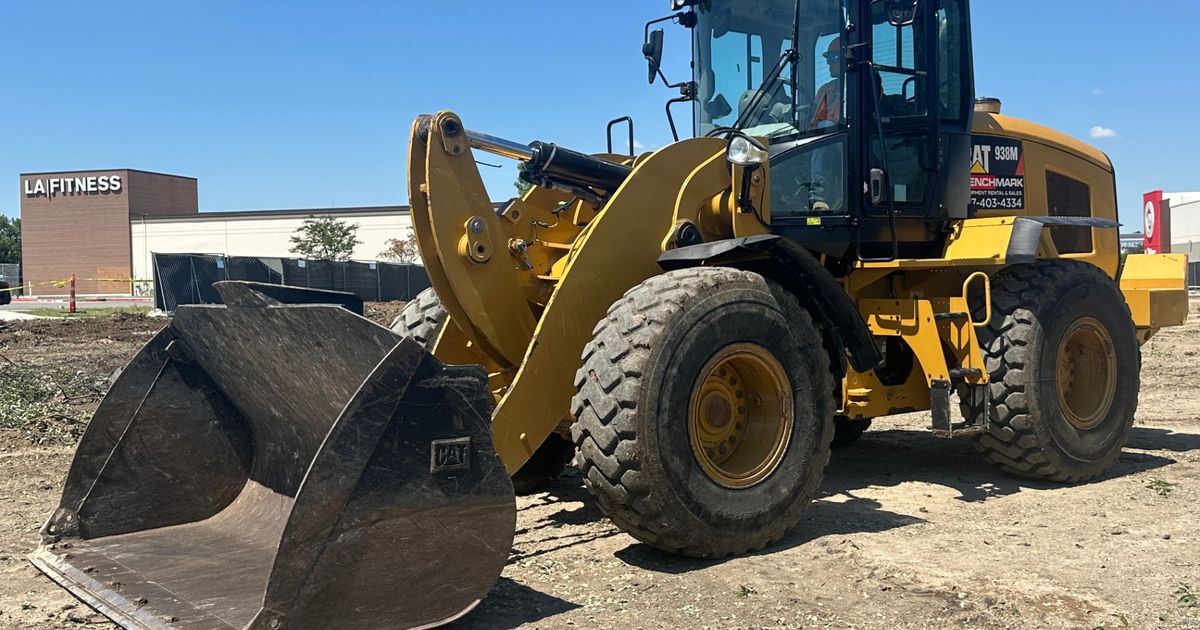
Last week, a contractor called our Denton yard asking whether to rent a Cat 950M wheel loader or Cat 323 excavator for a commercial development in Prosper. "Both can move dirt," he said, "but which one saves me money?" After 15 years managing our rental fleet across North Texas, we've seen this decision play out hundreds of times. The wrong choice typically costs contractors 20-30% more in total project expenses - not just rental rates, but fuel, operator time, and project delays.
We track detailed performance data on our Cat 938M, 950M, 320, and 323 models because contractors need real-world cost comparisons, not just spec sheets. The decision between wheel loaders and excavators depends heavily on North Texas soil conditions, site layout, and project timeline. Here's what our rental data reveals about making the right choice for your next project.
Understanding the Fundamental Differences
Wheel loaders excel at horizontal material movement with high travel speeds, while excavators dominate vertical reach and precision digging. Our customers working on the massive Celina development projects typically start with excavators for initial earthwork, then switch to wheel loaders for material handling and site prep. This isn't just about capability - it's about hourly productivity rates that directly impact your bottom line.
The Cat 950M in our fleet moves 4.2 cubic yards per bucket at travel speeds up to 24 mph, making it ideal for loading trucks and stockpile management. Meanwhile, our Cat 323 excavator reaches 32 feet horizontally and digs 21 feet deep, perfect for utility trenches and foundation work. Most contractors underestimate how site layout affects these productivity differences until they're paying for extra hours.
Real-World Performance Analysis: Cat 938M and 950M Wheel Loaders
Our Cat 938M handles 3.4 cubic yards per cycle with a 174-horsepower engine, while the 950M moves 4.2 cubic yards with 268 horsepower. On a recent McKinney subdivision project, contractors used our 950M to load 47 trucks per hour during the caliche removal phase. The same work with smaller equipment would have required two additional rental days at $850 per day each.
Wheel loaders shine in North Texas clay conditions because they maintain traction and stability while pushing through sticky soil. The OSHA earthmoving equipment guidelines emphasize proper equipment selection for soil types, and our experience confirms wheel loaders handle expansive clay better than track machines during wet conditions.
Fuel consumption runs 6-8 gallons per hour for the 938M and 8-11 gallons for the 950M, depending on operator technique and load factors. We've tracked fuel costs on similar projects - wheel loaders typically consume 15-20% more fuel than excavators due to higher engine loads during material handling, but they complete loading tasks 40% faster.
Excavator Performance Deep Dive: Cat 320 and 323 Models
The Cat 320 excavator in our fleet delivers 174 horsepower with a 1.3 cubic yard bucket, ideal for utility work and residential construction. Our Cat 323 steps up to 268 horsepower and handles buckets up to 1.8 cubic yards for larger commercial projects. Last month, contractors used our 323 to excavate foundation footings on a Denton industrial project, reaching 21 feet deep without repositioning - something impossible with wheel loaders.
Excavators excel at precise digging in North Texas caliche formations. The hydraulic breakout force on our 323 reaches 35,500 pounds, enough to crack through the limestone layers common around Argyle and Trophy Club. We've seen contractors attempt this work with wheel loaders and damage equipment trying to push through rock that requires hydraulic precision.
Track mobility becomes crucial on soft North Texas clay sites after rain. The 320's ground pressure of 6.8 psi and the 323's 7.2 psi distribute weight effectively, preventing the stuck equipment situations we see with wheeled machines. According to AGC earthwork best practices, proper ground pressure selection prevents site damage and reduces remediation costs.
Comprehensive Cost Analysis: Beyond Daily Rental Rates
Daily rental rates only tell part of the cost story. Our 938M wheel loader rents for $485 per day, while the Cat 320 excavator costs $515 daily. However, total project costs depend on productivity rates, fuel consumption, operator efficiency, and project timeline impact. We've analyzed dozens of similar North Texas projects to understand real cost differences.
For material loading and stockpile work, wheel loaders typically complete tasks 35-50% faster than excavators. On a recent Sherman commercial project, our 950M loaded 340 cubic yards of material in 4.2 hours. The same work with a Cat 323 excavator took 6.8 hours due to slower cycle times and repositioning requirements. The time savings offset the higher fuel costs and rental rate difference.
Excavators become more cost-effective for precision work and confined spaces. Foundation digging, utility installation, and drainage work require accuracy that wheel loaders cannot provide. The Federal Highway Administration construction quality guidelines specify excavator use for precise grade work, and our customers report 60% fewer callbacks when using appropriate equipment for the task.
Site Conditions That Determine Equipment Choice
North Texas clay soil creates unique challenges that affect equipment selection. During dry periods, hardpan clay requires significant breakout force to penetrate. Wet conditions turn the same soil into sticky mud that clogs equipment. We track weather patterns and soil moisture because it directly impacts which machines work effectively on specific days.
Caliche formations throughout Denton County typically appear 4-8 feet below surface level. Contractors hitting these limestone layers need excavator digging force and precision. Our 323 excavator handles caliche removal efficiently with proper bucket selection, while wheel loaders risk drivetrain damage attempting to push through solid rock formations.
Site access and working space significantly influence equipment choice. Confined residential sites in established neighborhoods like those around Frisco often require excavator maneuverability. Open commercial developments in areas like Prosper or Celina favor wheel loader productivity for material movement across longer distances.
Productivity Metrics from Our Rental Fleet Data
We track detailed productivity metrics on every rental to help contractors make informed decisions. Our Cat 950M wheel loader averages 180 cubic yards per hour for loading trucks, compared to 115 cubic yards per hour for the Cat 323 excavator in similar applications. However, excavators maintain consistent productivity regardless of reach distance, while wheel loader efficiency drops significantly when working beyond optimal bucket positions.
Operator fatigue affects productivity differently between machine types. Wheel loader operators report less physical strain during long shifts due to smoother hydraulics and better cab isolation. Excavator operators excel at precision work but fatigue faster during repetitive loading tasks. The NIOSH criteria for occupational exposure to vibration supports selecting appropriate equipment to minimize operator fatigue and maintain productivity.
Maintenance downtime varies significantly between equipment types. Our wheel loaders average 2.3 hours of maintenance per 100 operating hours, primarily tire and drivetrain service. Excavators require 3.7 hours per 100 operating hours, focusing on track and hydraulic system maintenance. This difference affects equipment availability and total project costs.
Specific Application Recommendations
Material loading and truck spotting strongly favor wheel loaders. Our customers working on the massive developments around Van Alstyne consistently choose the Cat 950M for its speed and loading capacity. The machine's 24 mph travel speed allows operators to service multiple loading areas efficiently, reducing truck wait times and improving overall project flow.
Foundation and utility work requires excavator precision and reach. Recent projects in established Carrollton neighborhoods needed careful digging around existing utilities and structures. The Cat 320's precise hydraulic control prevents costly damage to underground infrastructure, while wheel loaders lack the finesse for close-quarters excavation work.
Stockpile management and material placement benefit from wheel loader mobility and speed. Large commercial sites in areas like Weatherford require moving materials across significant distances. Wheel loaders maintain productivity over longer haul distances, while excavators become inefficient when moving materials beyond their working radius.
Making the Right Choice for Your Next Project
The decision between Cat wheel loaders and excavators ultimately depends on primary task requirements, site conditions, and project timeline. Our rental data shows that contractors achieve lowest total costs when matching equipment capabilities to specific applications rather than choosing based on daily rental rates alone.
Projects requiring material loading, stockpile management, and long-distance material movement typically benefit from wheel loader productivity. Sites with confined working areas, precision digging requirements, or significant vertical reach needs favor excavator capabilities. Many successful North Texas projects use both machine types in sequence, optimizing productivity for each construction phase.
Summer heat affects both machine types differently in our climate. The National Weather Service heat safety guidelines recommend monitoring equipment operating temperatures during extreme conditions. Our wheel loaders typically handle North Texas summers better due to improved airflow around hydraulic components, while excavators may require more frequent cooling system maintenance.
Planning your next Denton County project and wondering whether a Cat wheel loader or excavator makes more sense for your site conditions? We've probably rented for a similar application and can walk you through what actually works in North Texas clay and caliche. Our fleet includes low-hour Cat 938M, 950M, 320, and 323 models ready for same-day delivery throughout our service area. Call us at (817) 403-4334 to discuss your specific requirements - we'll help you choose the right equipment to minimize total project costs, not just rental rates.