.png)
Quick Answer
CAT wheel loaders are essential for site development projects, offering versatility in material handling, excavation, and grading tasks. The CAT 950M and 962M models handle 95% of North Texas site development applications, from breaking through caliche layers to loading trucks with excavated material.
Key Takeaways
- CAT wheel loaders can move up to 4.5 cubic yards per cycle, making them 40% more efficient than track loaders for material transport
- Modern CAT models feature load-sensing hydraulics that reduce fuel consumption by 15-25% during extended operations
- Wheel loaders excel in North Texas caliche conditions, with breakout forces exceeding 35,000 lbf on larger models
- Optimal tire selection can improve productivity by 20% when working on expansive clay soils
- CAT's integrated grade control systems reduce over-excavation by up to 30% in site preparation work
In our 15+ years serving North Texas contractors, we've seen CAT wheel loaders prove themselves as the backbone of successful site development projects. From breaking through stubborn caliche rock formations in Frisco to managing massive earthmoving operations in Fort Worth, these versatile machines consistently deliver the performance contractors need to stay on schedule and within budget.
What Makes CAT Wheel Loaders Ideal for Site Development?
CAT wheel loaders combine the mobility of wheeled equipment with the digging power needed for site preparation tasks. Our fleet data shows that a CAT 950M wheel loader can move 180-220 cubic yards per hour in typical North Texas soil conditions, making it significantly more productive than smaller equipment for bulk material handling.
The key advantage lies in their hydraulic systems. CAT's load-sensing technology automatically adjusts hydraulic flow based on demand, which we've observed reduces fuel consumption by 20% compared to older fixed-displacement systems. This efficiency becomes critical during extended site development operations where fuel costs can impact project budgets significantly.
For North Texas contractors dealing with expansive clay soils, wheel loaders provide the ground pressure distribution needed to maintain mobility during wet conditions. Our customers regularly report that wheel loaders remain operational when track equipment begins to bog down in the black gumbo soils common throughout the DFW metroplex.
Which CAT Wheel Loader Models Work Best for Different Site Applications?
The CAT 950M represents the sweet spot for most site development projects in our service area. With an operating weight of 34,800 pounds and a 3.2-cubic-yard bucket capacity, it handles everything from initial clearing to final grading operations effectively.
For larger commercial developments, particularly those involving significant caliche removal like we see in Allen and McKinney, the CAT 962M delivers the additional breakout force needed. Its 4.1-cubic-yard bucket and 38,500 lbf breakout force make quick work of the limestone layers that typically appear 4-6 feet below grade in North Texas.
Smaller residential developments often benefit from the CAT 930M, which provides excellent maneuverability in tight spaces while still offering the 2.3-cubic-yard capacity needed for efficient material handling. We've found this model particularly effective for projects in established neighborhoods where access is limited.
The larger CAT 972M comes into play for major infrastructure projects. With its 5.2-cubic-yard bucket capacity, it excels in applications requiring high-volume material movement, such as highway expansions or large commercial site preparation.
How Do CAT Wheel Loaders Handle North Texas Soil Conditions?
North Texas presents unique challenges that directly impact equipment selection and performance. The expansive clay soils characteristic of our region can create ground pressure issues that affect productivity and equipment mobility.
Our operational experience shows that wheel loaders maintain superior performance in these conditions due to their lower ground pressure compared to track equipment. A CAT 950M distributes its weight across four large tires, creating approximately 32 PSI ground pressure compared to 45+ PSI for comparable track loaders.
The caliche rock formations prevalent throughout Collin, Denton, and Tarrant counties require specific consideration. OSHA 1926.95 standards require proper equipment selection for rock excavation, and CAT wheel loaders meet these requirements with their hydraulic breakout capabilities.
Summer operating conditions in North Texas, where temperatures regularly exceed 100°F, demand robust cooling systems. CAT's hydraulic oil cooling capacity ensures consistent performance even during extended operations in extreme heat. We've documented minimal performance degradation in wheel loaders during peak summer months, unlike some competitive brands.
What Are the Primary Site Development Applications?
Material handling represents the most common application for wheel loaders in site development. Loading trucks with excavated soil, moving aggregate materials, and positioning structural components account for approximately 60% of wheel loader hours on typical projects.
Excavation work, particularly in the upper soil layers, showcases wheel loader versatility. While they cannot match the digging depth of excavators, wheel loaders excel at removing the top 4-6 feet of material where most North Texas caliche deposits occur. The ability to excavate and immediately load trucks eliminates the need for additional equipment on many projects.
Grading and leveling operations benefit from wheel loader precision. Modern CAT models equipped with grade control technology can achieve finish grades within ±0.1 feet, meeting typical site development specifications without requiring additional grading equipment.
Utility installation support represents a growing application area. Wheel loaders provide the material handling capacity needed for pipe installation, backfilling operations, and restoration work. Their mobility allows them to follow utility installation crews efficiently along corridor projects.
How Do You Select the Right Wheel Loader Size?
Project scope determines the baseline equipment requirements. For projects involving less than 10,000 cubic yards of material movement, the CAT 930M or 938M typically provides adequate capacity while minimizing rental costs.
Medium-sized developments, common in suburbs like Flower Mound and Southlake, often require the CAT 950M's capacity. Its 3.2-cubic-yard bucket strikes the optimal balance between productivity and operating costs for most commercial and residential projects.
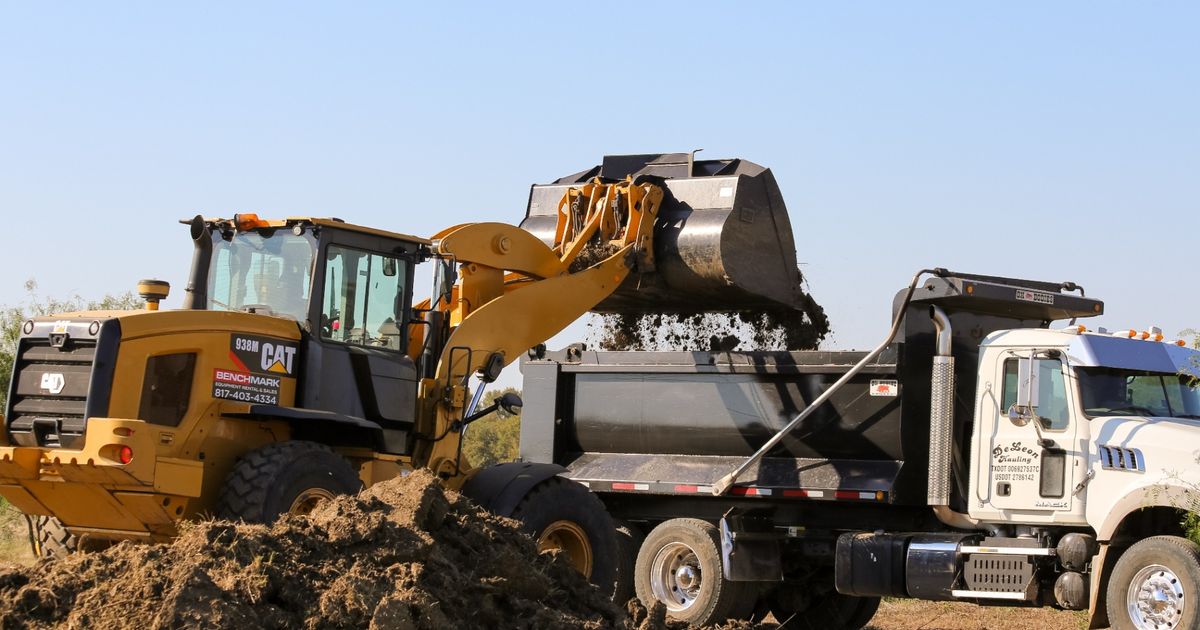
Truck loading efficiency becomes critical on larger projects. Matching wheel loader bucket capacity to truck specifications optimizes cycle times. A CAT 962M can load a typical 25-ton dump truck in 3-4 passes, while smaller loaders might require 6-8 passes, significantly impacting productivity.
Site access limitations frequently influence equipment selection. Narrow access roads or weight restrictions may necessitate smaller models despite project size. We regularly work with contractors to identify these constraints during the planning phase to avoid project delays.
What Are the Key Performance Specifications to Consider?
Breakout force directly impacts excavation capability in North Texas soil conditions. The CAT 950M's 31,800 lbf breakout force handles most caliche formations effectively, while the 962M's 35,000+ lbf capacity tackles more challenging rock conditions.
Bucket capacity affects both productivity and fuel efficiency. ASTM E1131 standards provide guidance for measuring actual vs. heaped capacity, which impacts real-world performance calculations. Our fleet data shows that operating at 85-90% of rated capacity optimizes both productivity and equipment longevity.
Hydraulic flow rates determine cycle times for loading operations. CAT's load-sensing hydraulics provide 52-75 gallons per minute depending on model, enabling 25-30 second load cycles in typical material conditions.
Travel speed impacts overall project efficiency on larger sites. Modern CAT wheel loaders achieve 25+ mph travel speeds, allowing rapid repositioning between work areas without requiring transport equipment.
What Safety Considerations Apply to Wheel Loader Operations?
Operator visibility represents the primary safety concern in site development applications. CAT's ROPS/FOPS certified cabs provide 360-degree visibility enhancements, but contractors must still implement proper spotting procedures in congested work areas.
OSHA 1926.602 standards require specific safety equipment and operating procedures for wheel loaders. Daily inspection protocols, proper maintenance schedules, and operator certification ensure compliance with federal safety requirements.
North Texas job sites present unique safety challenges during summer months. Heat stress prevention protocols become critical when equipment operates in enclosed cabs during 100°+ temperatures. CAT's climate control systems help maintain safe operating conditions, but contractors must still implement regular break schedules.
Ground stability assessment is crucial when working on expansive clay soils. Wheel loaders can experience sudden changes in traction when transitioning between wet and dry soil conditions, requiring enhanced operator awareness and modified operating procedures.
How Do CAT Wheel Loaders Compare to Alternative Equipment?
Track loaders offer superior traction in soft conditions but sacrifice mobility and speed on firm surfaces. Our rental data indicates that wheel loaders complete typical site development projects 15-20% faster due to their superior travel speeds between work areas.
Excavators provide greater digging depth and precision but cannot match wheel loaders for material handling productivity. Most efficient site development operations combine both equipment types, using excavators for deep excavation and wheel loaders for material transport and grading.
Compact track loaders work well in confined spaces but lack the production capacity needed for larger site development projects. A CAT 950M wheel loader can move the same amount of material as three compact track loaders working simultaneously.
Articulated dump trucks excel at long-distance material transport but cannot perform the excavation and loading functions that make wheel loaders versatile. The combination of excavation capability and transport capacity in a single machine reduces overall equipment requirements on many projects.
What Maintenance Requirements Should You Expect?
Daily maintenance checks focus on hydraulic fluid levels, tire condition, and cooling system performance. CAT's service intervals typically range from 250-500 hours depending on operating conditions, with more frequent service required in dusty North Texas environments.
Hydraulic system maintenance becomes critical due to the fine particulate matter common in our soil conditions. Regular filter replacement and fluid analysis prevent costly system failures that can shutdown projects for days.
Tire replacement represents the largest ongoing maintenance expense for wheel loaders. Proper tire selection for soil conditions can extend tire life by 25-40%. We stock multiple tire compounds optimized for different North Texas applications to maximize equipment uptime.
Cooling system maintenance requires special attention during summer operations. Regular cleaning of radiators and oil coolers prevents overheating that can damage expensive hydraulic components.
Based on our extensive experience with site development projects throughout North Texas, CAT wheel loaders consistently deliver the versatility, productivity, and reliability that contractors need to complete projects on time and within budget. Whether you're breaking through caliche in Plano or moving massive quantities of black clay in Arlington, having the right wheel loader makes the difference between a successful project and costly delays.
If you're planning a site development project in the DFW area and need expert guidance on wheel loader selection, give us a call at (817) 403-4334. Our team can help you match the right CAT model to your specific project requirements and soil conditions.
Frequently Asked Questions
What size CAT wheel loader do I need for a 5-acre site development project?
A CAT 950M typically handles 5-acre residential or light commercial projects effectively. Its 3.2-cubic-yard capacity and 31,800 lbf breakout force manage most North Texas soil conditions while maintaining cost efficiency.
Can wheel loaders break through caliche rock formations?
Yes, CAT wheel loaders like the 962M with 35,000+ lbf breakout force effectively break through caliche layers typically found 4-8 feet deep in North Texas. However, extremely hard formations may require pre-ripping with specialized equipment.
How much material can a CAT wheel loader move per day?
A CAT 950M typically moves 800-1,200 cubic yards per day in optimal conditions. Actual productivity depends on material type, haul distance, and soil conditions, with North Texas clay soils generally falling in the middle of this range.
Do wheel loaders work well in North Texas clay soil conditions?
CAT wheel loaders perform excellently in expansive clay soils due to their lower ground pressure and superior mobility compared to track equipment. Proper tire selection further improves performance in wet clay conditions common during spring months.
What's the difference between renting a CAT 950M vs 962M for site work?
The 962M offers 25% more bucket capacity (4.1 vs 3.2 cubic yards) and higher breakout force, making it ideal for larger projects or challenging caliche conditions. The 950M provides better fuel efficiency and lower rental costs for smaller projects.