.png)
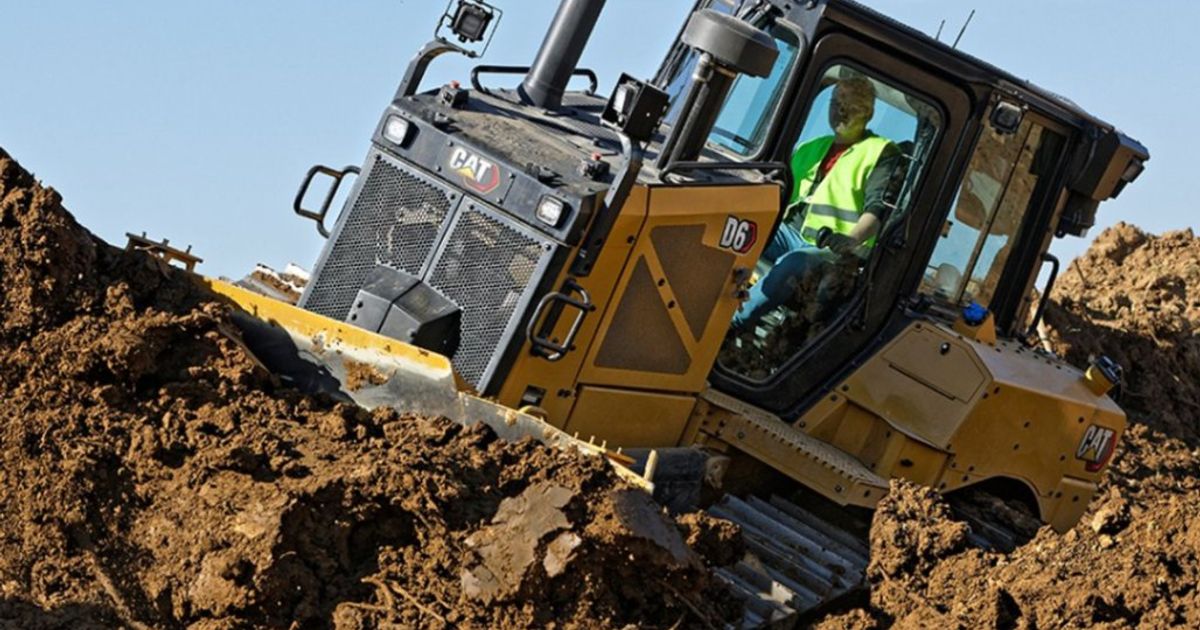
If you've graded dirt in North Texas for any length of time, you already know the CAT D6 by reputation. Across our service area — from Denton down through Frisco, out to Weatherford, and north into Gainesville and Sherman — the D6 sits at the center of more site prep work than any other crawler dozer class. It's not the biggest machine we rent, and it's not the smallest, but it hits a capability and cost-of-operation sweet spot that keeps it in near-constant demand across both residential and commercial projects.
In this guide, we're sharing what our customers and our own operational experience have taught us about getting the most from a CAT D6 on North Texas job sites — from blade selection and soil-specific technique to GPS integration and heat-season maintenance practices.
Key Takeaways
- The CAT D6 produces 215 HP and moves up to 5.4 cubic yards per blade pass, making it ideal for grading pads from 1 to 50+ acres
- GPS-assisted grade control reduces rework by up to 50%, a major advantage on large residential developments in Celina, Prosper, and Frisco
- North Texas black gumbo clay and caliche layers (typically 4–8 feet deep) require specific blade and track configurations
- Operating in 100°F+ Texas summers demands stricter coolant and hydraulic fluid monitoring than standard manufacturer schedules
- Renting a D6 for projects under 6 months is almost always more cost-effective than ownership when you factor in the $500K+ purchase price and maintenance overhead
What Can a CAT D6 Dozer Actually Do on a Job Site?
The CAT D6 handles a wider range of tasks than most contractors initially expect from a single machine. At its core, it's a grading and earthmoving platform — but that translates to a lot of real-world applications once you're on the ground.
Site clearing and initial rough grading are the obvious starting points. The D6's 215 horsepower and 45,000-pound operating weight give it enough push to take down light brush, stumble small trees, and begin establishing rough grade across raw land. We regularly see D6s as the first machine on residential subdivision lots across Aubrey, Van Alstyne, and Gunter, where large tracts need to be cleared and broken down before scrapers or motor graders can move in.
Final grading is where the D6 really earns its reputation. With proper blade control — and especially with integrated GPS grade control — operators can hold tolerances tight enough to satisfy most OSHA 1926-compliant construction site requirements without a secondary pass from a motor grader. That matters on commercial pad construction in Frisco or McKinney, where every hour of machine time is scrutinized against budget.
Beyond grading, the D6 handles spreading base material, backfilling large utility trenches, compacting lift sequences with its own track weight, and pushing material long distances in ripping applications. A D6 equipped with a single-shank ripper attachment is an effective first-pass tool against the caliche rock formations that show up consistently at 4–8 feet across the DFW area — something we've had many customers discover the hard way after sending an undersized machine.
What Blade Configuration Is Best for North Texas Soil Conditions?
Blade selection is one of the most consequential decisions you'll make before a D6 rolls off the trailer, and it's heavily dependent on the soil conditions you're working in — which vary significantly across our service territory.
The Semi-Universal (SU) blade is the configuration we recommend most often for general North Texas site work. It carries more material than a straight blade and handles the transition from rough clearing to finish grading without requiring a blade swap. In the expansive black gumbo clay common across Denton County, Wise County, and into Collin County, the SU blade's moldboard curvature helps roll material cleanly without excessive sticking — a real problem when clay moisture content is high after a rain event.
The straight blade (S-blade) excels in finish grading scenarios where you're working at tighter tolerances and not trying to carry large volumes. Contractors doing final subgrade preparation for commercial concrete pads in Trophy Club or Crowley often prefer the straight blade in combination with GPS control for this reason.
The Universal (U) blade has the largest capacity and works well for bulk pushing across large agricultural conversions or initial rough grading of large tracts. We see it used heavily on the larger residential development projects coming online around Celina and Prosper, where operators need to move significant volume quickly before transitioning to finish work.
One practical note from our fleet: when you're working in sticky clay conditions after rain — particularly that black gumbo soil in the Denton and Argyle areas — have your operator check for material buildup on the blade cutting edge and end bits at regular intervals. Accumulated clay reduces blade efficiency significantly and accelerates wear on the cutting edge. Associated General Contractors (AGC) earthmoving guidelines recommend inspecting blade wear components every 100 operating hours, but in North Texas clay, we'd suggest tightening that interval to 75 hours or less during wet conditions.
How Does GPS Grade Control Change Productivity on a CAT D6?
GPS-integrated grade control on a CAT D6 is no longer a luxury — on most commercial projects in North Texas, it's effectively a baseline expectation. According to Caterpillar's own production data, contractors using factory-integrated grade control systems on D6-class dozers reduce grading rework by 40–50% compared to conventional staking methods. In practice, what that means for a contractor grading a 10-acre commercial pad in Frisco is potentially a full day of saved machine time per project phase.
The CAT D6 is available with Cat Grade with Cross Slope as a baseline option and upgrades to full Cat Grade with 3D for projects requiring precise design surface matching. For residential subdivision grading — the bread and butter of our rental customers in Little Elm, Aubrey, and Celina — Cross Slope control handles the majority of grading scenarios effectively. When you're grading a commercial development with specific drainage design surfaces or ADA-compliant parking lot grades, the full 3D system pays for itself quickly.
We've watched the adoption of GPS-controlled D6 rentals accelerate over the past several years in our market. Contractors who used to request a conventional D6 are now asking specifically for GPS-equipped units on any project over 5 acres — not because they're required to, but because the time savings are too significant to ignore.
What Are the Best Practices for Operating a CAT D6 in North Texas Summer Heat?
North Texas summer heat is a legitimate equipment management challenge. When ambient temperatures consistently hit 100°F or above — which happens across Denton, Fort Worth, Wichita Falls, and the entire region from June through September — machine performance and longevity depend on staying ahead of thermal management.
The CAT D6's cooling system is engineered for demanding environments, but high ambient temperatures combined with heavy-duty grading cycles compress the margin between operating range and thermal overload. Our practical recommendation: operators should check coolant levels at the start of every shift (not just daily), monitor the cab-displayed hydraulic temperature gauge actively during sustained push cycles, and allow for a 10–15 minute cool-down period before shutdown after heavy workloads. Shutting a hot machine down immediately traps heat in the turbocharger and accelerates wear on turbo bearings — a repair that's expensive and avoidable.
Hydraulic fluid viscosity degrades faster in sustained high-heat operation. The SAE International standards for hydraulic fluid performance ratings assume a baseline operating environment — when you're grading in 105°F heat in July near Weatherford or Wichita Falls, that baseline shifts. We recommend confirming with your rental provider that the machine has been filled with the appropriate high-temp viscosity hydraulic fluid specification before taking delivery in summer months. That's something we handle proactively in our fleet before summer season rental preparation.
Track tension also requires more frequent attention in extreme heat. Steel tracks expand with temperature, and a properly tensioned track in 70°F weather may run loose enough in 105°F conditions to increase the risk of de-tracking on uneven terrain. A quick tension check during mid-day fuel stops costs nothing and prevents an unnecessary service call.
When Should You Choose a CAT D6 Over a Smaller or Larger Dozer?
Machine selection is where we probably spend the most time advising customers who call us before a project. The D6 is the right choice more often than people expect, but it's not always the right choice — and sending the wrong machine costs time and money in both directions.
The CAT D6 is the appropriate selection for projects roughly between 1 and 50 acres requiring site grading, clearing, or earthmoving. Below 1 acre — a single residential lot, a utility repair, a landscape grading project — a CAT D5 or even a compact track loader with a blade attachment handles the work with less mobilization cost and better maneuverability. Above 50 acres with significant earthmoving volumes, stepping up to a CAT D8 or pairing a D6 with a scraper dramatically improves production rates.
The North Texas context matters here specifically. Black gumbo clay soil in its dry state is hard — nearly caliche-hard at the surface in drought conditions. We've had customers request a smaller D4 or D5 for what appeared to be light grading work in Denton County, only to discover the dried clay required significantly more push force than anticipated. The D6's 215 HP and weight class handle that scenario without strain. When caliche rock is involved, neither a D5 nor D6 alone is sufficient without ripper attachments — and for heavy caliche, a D8 with rippers is the right conversation to have before you start breaking ground.
For contractors working on the residential growth corridors north of Dallas — Celina, Prosper, McKinney, Sherman, Denison — the D6 is the dominant platform in use for a reason. It scales to the typical 5–25 acre subdivision section development cycle, fits on a standard lowboy trailer for site-to-site moves, and operates efficiently enough that fuel costs don't overwhelm smaller project budgets.
How Does Renting a CAT D6 Compare to Ownership for North Texas Contractors?
The financial math on dozer ownership versus rental is straightforward, even if contractors sometimes convince themselves otherwise. A new CAT D6 carries a purchase price in the range of $500,000–$600,000 depending on configuration. Add annual maintenance costs that typically run 2–4% of purchase price, insurance, storage, and the full-time operator management requirement, and you're looking at a significant overhead commitment that only makes sense if the machine operates 1,500+ hours per year on your own projects.
For most contractors in our service area — including residential site developers, utility contractors, and commercial builders operating across Denton, Carrollton, Irving, Mansfield, and Decatur — project workflows don't produce that utilization rate consistently. They need a D6 for 6 weeks during site prep, then they need something different. Rental eliminates the carrying cost during idle periods and gives you access to a well-maintained, current-generation machine without the capital exposure.
According to the American Rental Association (ARA), equipment rental adoption in construction has grown consistently over the past decade precisely because contractors have recognized the total cost of ownership comparison. We're not suggesting that ownership never makes sense — it absolutely does for high-utilization specialty contractors. But for the majority of North Texas contractors calling us for D6 rentals, the decision to rent versus buy is clearly favorable financially.
When you rent a CAT D6 from us at Benchmark Equipment, you're also getting a machine that's been through our pre-rental inspection process, outfitted with the correct fluid specifications for current conditions, and backed by our team's knowledge of what to expect on North Texas job sites. That has real value beyond the hourly rate.
If you're planning a grading project and want to talk through the right equipment configuration for your site conditions, give us a call at (817) 403-4334. We're in Denton and serve contractors across the entire North Texas region — from Waco and Fort Worth north through Gainesville and up into Wichita Falls, Sherman, and Denison. We've seen your soil conditions before, and we can help you put the right machine on the job from day one.
Additional resources that inform our operational practices: OSHA Earthmoving Equipment Standards and ASCE site preparation guidelines provide the regulatory and engineering framework we reference when advising customers on safe and compliant site grading practices.
Frequently Asked Questions
What is the CAT D6 dozer used for on construction sites?
The CAT D6 is a 215-horsepower mid-size crawler dozer used primarily for site grading, land clearing, bulk earthmoving, and final subgrade preparation on projects ranging from 1 to 50+ acres. It's particularly effective for residential subdivision development, commercial pad grading, and utility corridor preparation. With an optional single-shank ripper attachment, the D6 also handles initial breaking of caliche rock and hardpan clay formations common across North Texas.
How much does it cost to rent a CAT D6 dozer?
CAT D6 dozer rental rates vary by region, configuration, and rental duration, but daily rates typically range from $1,200 to $1,800, with weekly rates offering meaningful discounts over daily pricing. Compared to purchasing a new D6 at $500,000–$600,000 plus 2–4% annual maintenance costs, rental is significantly more cost-effective for contractors whose projects don't generate 1,500+ hours of annual machine utilization. Contact your local rental provider for current pricing based on your project duration and GPS control requirements.
Does the CAT D6 work well in clay soil conditions?
Yes, the CAT D6 is well-suited for clay soil conditions when configured with the right blade and track setup. In North Texas black gumbo expansive clay, a Semi-Universal (SU) blade performs best because its moldboard curvature rolls material cleanly with less sticking compared to straight blades. Wide track pads (24-inch or wider) are recommended in wet clay conditions to reduce ground pressure and prevent excessive track sinkage. Operators should inspect blade cutting edges frequently in sticky clay, as material buildup reduces efficiency and accelerates wear.
What's the difference between a CAT D6 and D8 dozer, and which one do I need?
The CAT D6 produces 215 HP with a blade capacity of approximately 5.4 cubic yards, while the CAT D8 produces 310+ HP with blade capacities exceeding 9 cubic yards — making the D8 roughly 40–50% more productive in heavy earthmoving applications. The D6 is the right choice for projects from 1–50 acres requiring site grading, clearing, and moderate earthmoving. The D8 makes sense for projects over 50 acres, heavy caliche or rock ripping, large cut-and-fill operations, or any application where maximum push force and blade capacity are critical to production targets.
How does GPS grade control on a CAT D6 improve productivity?
GPS grade control on a CAT D6 reduces grading rework by 40–50% compared to conventional staking methods, according to Caterpillar production data. The system allows operators to maintain precise design grades automatically, eliminating the need for grade checkers and reducing the number of blade passes required to achieve finish tolerance. On commercial pad grading projects, GPS-equipped D6 operators routinely eliminate 20–30% of total grading hours compared to non-GPS operation — savings that compound significantly on large residential subdivision developments.