.png)
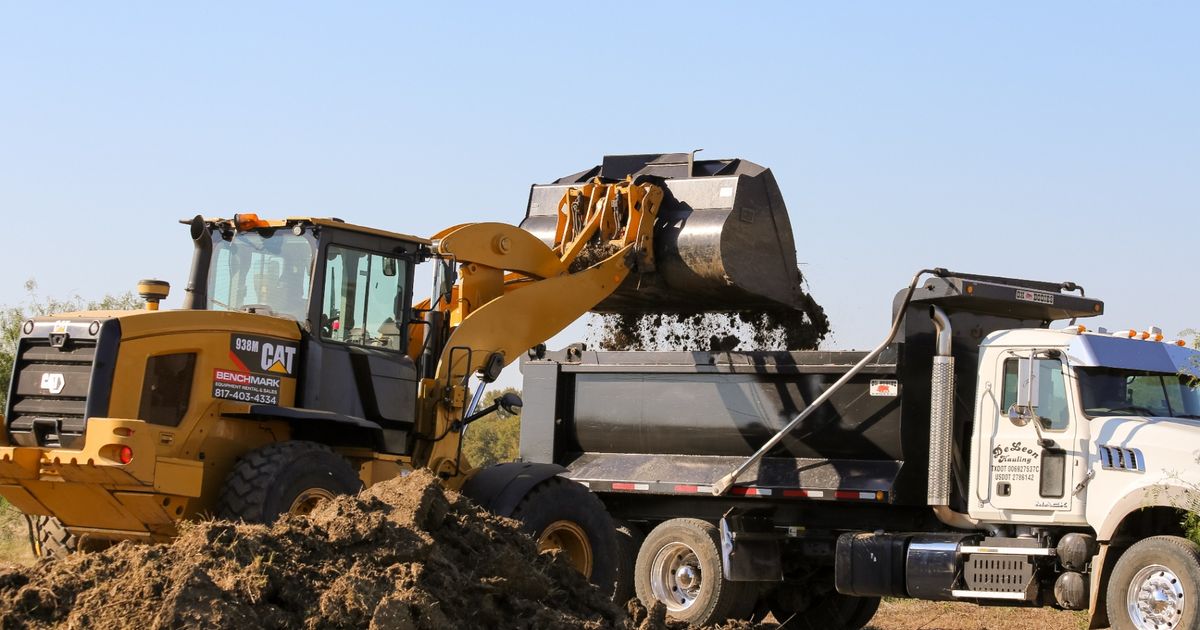
We get this question almost daily at our Denton yard: should contractors rent the CAT 938 or step up to the 950 wheel loader? After running both models in our fleet for years across North Texas job sites, the answer depends on your specific application and site conditions. The wrong choice costs time and money - especially when you're dealing with our notorious black clay or hitting caliche layers around McKinney and Prosper.
Most contractors underestimate how much difference 20,000 pounds of operating weight makes when you're pushing through sticky Denton County clay or loading trucks with dense caliche rock. We've seen projects where the "smaller is cheaper" mentality backfired spectacularly, and others where operators rented too much machine for their actual needs.
Operating Weight and Power: The Foundation Difference
The CAT 938 tips the scales at 28,200 pounds with a 3.8-liter engine producing 156 horsepower. The 950 jumps to 35,800 pounds with a 6.6-liter engine pushing 203 horsepower. That extra 7,600 pounds and 47 horsepower translate directly to productivity in our challenging North Texas conditions.
Last summer, we had a contractor working on a residential development in Celina who initially rented a 938 for loading caliche. Within two days, he called asking to swap for the 950. The 938 kept spinning tires when the bucket loaded heavy, and cycle times stretched from the expected 35 seconds to over a minute. The 950's additional weight provided the traction needed, and horsepower reserves kept the engine from bogging down in dense material.
According to OSHA construction equipment standards, proper equipment sizing affects both productivity and safety outcomes on job sites.
Bucket Capacity and Loading Performance
The 938 comes standard with a 2.3-yard bucket, while the 950 handles a 3.2-yard bucket. In our experience, that extra 0.9 yards makes or breaks efficiency on larger projects. When contractors are loading 30-yard trucks all day, those additional cubic yards per cycle add up fast.
We tracked productivity data from a Fort Worth commercial site where both machines worked simultaneously. The 950 consistently loaded trucks in 3-4 passes versus 4-6 passes for the 938. Over a 10-hour day, that translated to roughly 15% more material moved with the larger machine. The rental rate difference was only 8%, making the 950 the clear winner for bulk loading operations.
The hydraulic systems tell a similar story. The 938's 29 GPM main pump handles lighter work efficiently, but the 950's 39 GPM pump maintains consistent cycle times under load. When you're working in sticky clay around Sherman or Denison, that extra hydraulic flow prevents the sluggish operation that kills productivity.
Maneuverability vs. Stability Trade-offs
The 938's compact dimensions shine in confined spaces. With an overall length of 23.5 feet and width of 8.7 feet, it navigates tight residential lots and narrow commercial sites better than the 950's 25.9-foot length and 9.2-foot width. We've rented dozens of 938s for infill projects around downtown Denton where maneuvering room is limited.
However, that compact size comes with stability compromises. The 938's shorter wheelbase and lighter weight make it less stable on slopes or when handling off-center loads. Texas clay becomes slick when wet, and we've seen operators get nervous working on even modest grades with fully loaded buckets on the smaller machine.
The 950's additional weight and longer wheelbase provide superior stability, especially important when working around the uneven terrain common to North Texas developments. Contractors working the rolling hills around Wichita Falls consistently choose the 950 for its planted feel, even when space allows either machine.
Fuel Consumption and Operating Costs
The 938 burns approximately 6-8 gallons per hour under normal conditions, while the 950 consumes 8-11 gallons hourly. For contractors running single shifts, that 2-3 gallon difference might seem manageable. But multiply across multiple machines or extended projects, and fuel costs become significant.
We analyzed fuel consumption data from our fleet across various North Texas applications. In loose material like sand or topsoil, the gap stays around 2 gallons per hour. When both machines work hard in dense clay or caliche, consumption increases, but the 950's efficiency advantage often narrows the gap to 1-2 gallons per hour because it completes work faster.
The EPA's nonroad emissions regulations have driven improvements in both engines, with Tier 4 Final compliance ensuring cleaner operation regardless of size choice.
North Texas Specific Performance Considerations
Our expansive clay soil creates unique challenges that influence loader selection. When that black gumbo gets sticky after rain, it clings to bucket sides and builds up on machine undercarriages. The 938's smaller hydraulic system struggles to generate enough force for effective bucket cleaning, while the 950's additional hydraulic capacity helps shed sticky material.
Caliche rock, typically encountered 4-8 feet down across the DFW metroplex, presents different challenges. The 950's extra weight helps bite into these hard layers, and additional horsepower prevents engine bog-down when buckets load heavy with rock fragments. We've had contractors switching from 938s to 950s specifically after hitting unexpected caliche on Argyle and Trophy Club projects.
Summer heat affects both machines, but the 950's larger cooling system handles sustained operation better during those brutal July and August stretches when temperatures hit 105°+. The National Weather Service data for North Texas shows we average 15-20 days above 100° annually, making cooling system capacity a real consideration for equipment selection.
Application-Specific Recommendations
For residential site work, utility trenching, and landscaping projects under 5,000 square yards, the 938 typically provides sufficient capacity while offering better fuel economy and maneuverability. Most contractors rent these machines for 3-5 days when doing foundation prep or final grading on smaller lots.
Commercial and industrial projects, road construction, and large-scale earthmoving favor the 950. When contractors need to move serious volumes of material or work consistently in challenging conditions, the productivity gains from the larger machine justify the higher operating costs. We see typical rental periods of 1-2 weeks for these applications.
Snow removal operations, which occasionally matter during North Texas ice storms, actually favor the 938's maneuverability over the 950's power. However, contractors doing regular snow pusher work represent less than 1% of our North Texas rental base.
Maintenance and Reliability Factors
Both machines share CAT's proven drivetrain components, but the larger 950 includes heavier-duty axles, transmission, and hydraulic components designed for higher stress levels. In our rental fleet experience, both models deliver excellent reliability when properly maintained, though the 950's components typically handle abuse better.
Service intervals run similar between models - 250 hours for engine oil, 500 hours for hydraulic filters, and 1,000 hours for transmission service. However, the 950's larger fluid capacities mean slightly higher service costs. For rental operations, this difference is minimal, but contractors considering purchase should factor these ongoing expenses.
The Associated General Contractors' construction data shows that proper equipment sizing reduces overall project costs more significantly than choosing cheaper, undersized equipment.
Real-World Performance Data
We tracked both machines across similar applications throughout 2023. On a typical Gainesville commercial site moving mixed clay and caliche, the 950 averaged 180 cubic yards per hour versus 135 for the 938 - a 33% productivity advantage. Factor in the rental rate difference, and the 950 delivered 22% better value per cubic yard moved.
However, on confined residential work in older Mesquite neighborhoods, the 938's maneuverability became the deciding factor. Contractors consistently chose it over the 950 despite slightly lower productivity because accessing work areas trumped raw capacity.
Fuel costs averaged $2.80 per cubic yard for the 938 versus $2.65 for the 950 when both machines worked at capacity. The larger machine's efficiency at full load offset its higher consumption rate, surprising contractors who expected the opposite result.
Technology and Operator Comfort
Both loaders feature CAT's Product Link telematics and similar cab environments, though the 950 includes slightly more premium features. The larger machine's enhanced HVAC system becomes noticeable during long summer days, and improved visibility aids make a difference when working around other equipment or personnel.
Operator fatigue matters on extended projects. We've had multiple operators comment that the 950's smoother hydraulics and better ride quality reduce end-of-day fatigue compared to the 938. For contractors running two shifts or extended hours, this comfort advantage translates to maintained productivity throughout the day.
The CDC's construction safety research emphasizes how equipment comfort and visibility impact accident rates, making these seemingly minor differences important safety considerations.
Making the Right Choice for Your Project
Choose the 938 when working confined sites, handling lighter materials, or prioritizing fuel economy over raw productivity. Residential developers, landscapers, and utility contractors typically find this size optimal for their applications. The lower rental rates and reduced fuel consumption help project economics on smaller jobs.
Select the 950 for commercial projects, heavy earthmoving, or when material density demands extra power. Road contractors, commercial developers, and large residential builders consistently achieve better overall economics with the larger machine despite higher hourly costs. The productivity gains usually justify the expense within the first few hours of operation.
Consider site access, material types, loading requirements, and project duration when making your decision. We've found that contractors who honestly assess their actual needs - not just immediate costs - make better equipment choices and achieve superior project results.
Uncertain which loader makes sense for your specific North Texas conditions? We've probably rented equipment for similar projects around Denton County and can walk you through what actually works in our clay and caliche. Call us at (817) 403-4334, and let's match the right machine to your job requirements. Both the 938 and 950 models in our fleet are low-hour, well-maintained units ready for immediate deployment across the areas we serve.