.png)
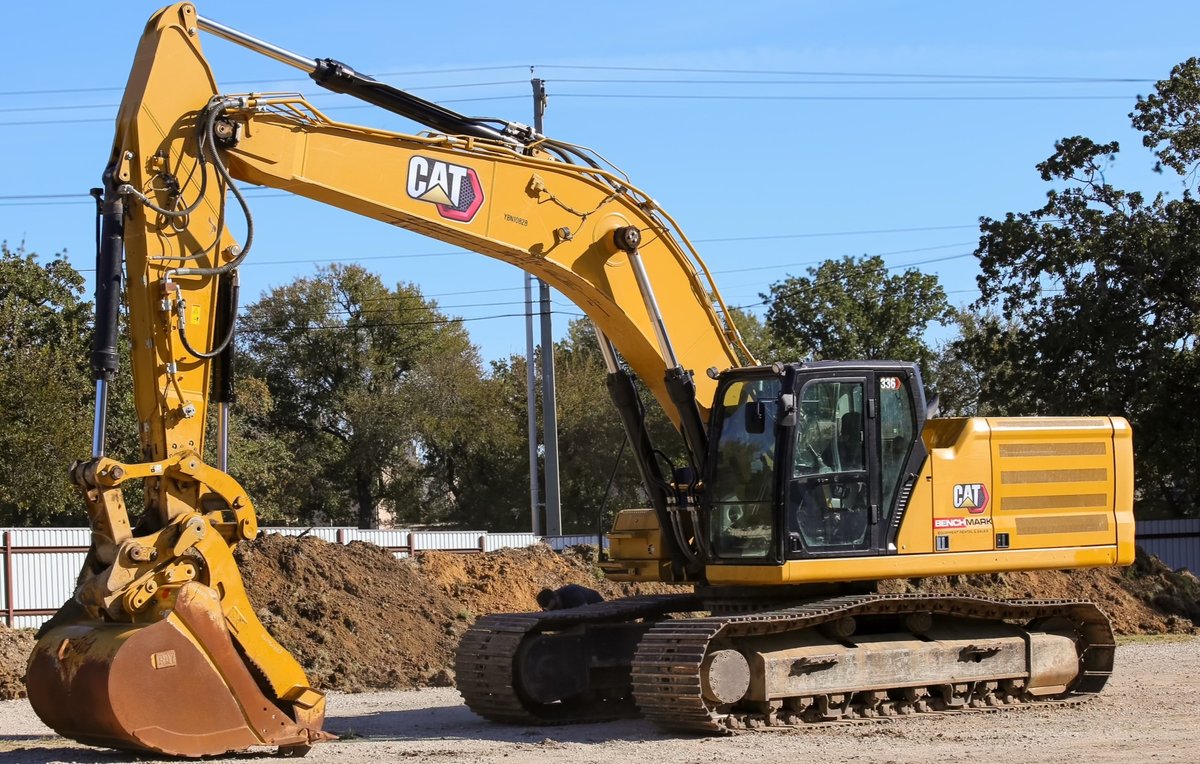
Mid-size excavators move more dirt in North Texas than any other equipment class. They're the machines that trench waterlines in Frisco, dig foundations in McKinney, load trucks on highway projects along I-35, and strip topsoil for subdivisions in Celina. But "mid-size" covers a significant range — from the 22-ton CAT 320 to the 28-ton CAT 326, you're looking at a 27% increase in operating weight and proportional jumps in breakout force, bucket capacity, and rental cost. Choosing the right one for your project means matching machine capability to the actual work, not just grabbing the biggest excavator available.
Key Takeaways
- The CAT 320 at 22 tons is ideal for utility trenching and residential work where transport weight restrictions apply
- The CAT 323 at 24 tons delivers the best power-to-weight ratio for general North Texas site work, handling 70% of typical projects
- The CAT 326 at 28 tons provides 15-20% more breakout force than the 323, critical for heavy clay and caliche excavation in DFW
- Fuel consumption increases roughly 12-15% with each step up in size — right-sizing saves $200-400 per week in fuel costs
- All three models meet Tier 4 Final emissions and share similar operator interfaces, reducing training time when switching between machines
How Do the CAT 320, 323, and 326 Compare on Paper?
Before we get into real-world application differences, here are the spec comparisons that matter most for North Texas earthwork:
The CAT 320 runs a C4.4 ACERT engine producing 162 net horsepower. Operating weight comes in at approximately 48,500 pounds (22 metric tons) with standard configuration. Maximum dig depth reaches 22 feet 4 inches, and bucket breakout force tops out at 31,100 pounds. Standard bucket capacity ranges from 0.76 to 1.54 cubic yards depending on bucket selection.
The CAT 323 uses the same C4.4 engine platform but tuned to 177 net horsepower — a 9% increase over the 320. Operating weight runs approximately 52,900 pounds (24 metric tons). Maximum dig depth extends to 22 feet 11 inches, and bucket breakout force reaches 33,700 pounds. The 323 accepts buckets from 0.76 to 1.78 cubic yards.
The CAT 326 steps up to a C7.1 engine platform producing 204 net horsepower — a 26% power increase over the 320. Operating weight jumps to approximately 61,700 pounds (28 metric tons). Maximum dig depth reaches 23 feet 5 inches, and bucket breakout force climbs to 38,700 pounds — a 24% advantage over the 320. Bucket capacity ranges from 0.98 to 2.12 cubic yards. These specifications come from Caterpillar's published product data.
When Is the CAT 320 the Right Choice for North Texas Projects?
The 320 earns its place on projects where machine weight is a constraint and the digging demand is moderate. In North Texas, that means residential utility trenching, small foundation excavation, and site work in developed areas where you're operating near existing structures or on engineered surfaces that can't handle heavier ground pressure.
Transport is another factor where the 320 wins. At 48,500 pounds, the 320 sits comfortably under the 50,000-pound practical threshold for standard lowboy transport without overweight permits on most North Texas roads. The 326 at 61,700 pounds requires careful route planning and sometimes overweight permits, especially on local city streets in Prosper, Gunter, and other growing communities where road infrastructure may have weight restrictions.
For utility contractors working waterline and storm sewer installations in the Denton and Sherman corridors, the 320 handles 8-12 foot trenches in typical North Texas soil with enough breakout force to get through clay and moderate caliche layers. It burns approximately 5-7 gallons per hour under normal working conditions, which keeps daily fuel costs in the $150-250 range at current diesel prices.
Why Do Most North Texas Contractors Prefer the CAT 323?
The 323 is our most-requested mid-size excavator at Benchmark Equipment, and there's a practical reason: it handles about 70% of the excavation work in North Texas without being oversized for any of it. The additional 15 net horsepower and 2,600 pounds of breakout force over the 320 make a measurable difference when digging in the heavy clay that dominates sites from Fort Worth through the I-35 corridor to Gainesville.
We had a site development contractor working a 40-lot residential subdivision in Aubrey who started with a 320 and switched to a 323 after the first week. The native clay on that site had a plasticity index above 45, and the 320 was bogging down in the deeper utility cuts. The 323's additional power and the ability to run a 1.5 cubic yard bucket instead of a 1.25 yard bucket improved his daily production by approximately 18%. That translates to real money — at 250 cubic yards per day versus 210 cubic yards, the project finished 4 days ahead of schedule.
The 323 also hits a sweet spot for loading operations. Paired with a 1.5 cubic yard bucket, it fills a standard 14-yard dump truck in 9-10 passes. The 320 with a smaller bucket takes 11-12 passes for the same load. Over a full day of load-and-haul operations, that difference adds up to 4-6 additional truck loads — significant production value for the modest increase in rental cost.
When Does the CAT 326 Make Sense Over the 323?
The 326 is the machine you bring when the soil fights back. In North Texas, that means heavy caliche excavation (typically found at 4-8 foot depths across Denton County and Collin County), deep sanitary sewer installations exceeding 15 feet, and commercial pad excavation where you're moving thousands of cubic yards of high-PI clay.
The 24% advantage in bucket breakout force (38,700 lbs vs 31,100 lbs compared to the 320) is the spec that matters most in these applications. When an excavator bucket hits a caliche layer and needs to rip through it rather than bounce off, that extra 7,600 pounds of breakout force is the difference between continuous production and stopping to bring in a hydraulic breaker. We estimate that approximately 40% of excavation projects in the McKinney-to-Sherman corridor encounter caliche layers that benefit from the 326's additional force.
The 326 also excels at mass excavation for commercial building pads. A contractor building a 50,000-square-foot commercial pad in Trophy Club will move 8,000-12,000 cubic yards of material. The 326 running a 2.0 cubic yard bucket produces roughly 300-350 cubic yards per day in North Texas clay — about 25% more than a 323 with a 1.5 yard bucket on the same material. On a project that large, the 326 can save an entire week of excavation time.
How Do Operating Costs Compare Across the Three Models?
Operating cost is where right-sizing pays for itself. Fuel is the largest variable cost, and it scales with engine size and workload:
The CAT 320 burns 5-7 gallons per hour under typical North Texas working conditions, putting daily fuel cost at approximately $150-250 for a 10-hour shift. The CAT 323 consumes 6-8 gallons per hour, running $180-290 daily. The CAT 326 with its larger C7.1 engine burns 7-10 gallons per hour, costing $210-360 per day. Over a 4-week rental period, the fuel cost difference between a 320 and 326 can reach $2,000-$3,000.
However, fuel cost per cubic yard tells the real story. If the 326 moves 25% more material per day than the 323, its higher hourly fuel consumption is offset by the increased production. The most expensive machine is always the one that's too small for the work — it burns fuel all day without hitting production targets, extending the rental period and total project cost.
The Associated General Contractors of America estimates that equipment operating costs account for 40-50% of total earthwork project costs. Getting the excavator size right isn't a minor detail — it's a primary driver of project profitability.
What Attachments Work Best with Each Model?
All three models use the same CAT pin-on or quick coupler attachment systems within their weight class, but hydraulic flow rates determine which attachments perform best on each machine:
The 320 provides adequate flow for standard attachments: digging buckets, hydraulic thumbs, and small hydraulic breakers (under 3,000 ft-lb class). For contractors doing utility work in Denton, Carrollton, or Irving, the 320 with a thumb attachment handles pipe installation efficiently.
The 323 supports the same attachments plus medium-class hydraulic breakers (3,000-5,000 ft-lb) and compaction wheels. The additional hydraulic pressure makes the 323 a better platform for rock breaking in North Texas caliche — a common requirement on sites throughout Collin and Denton counties.
The 326 runs large hydraulic breakers (5,000-7,000 ft-lb class), demolition shears, and heavy-duty rippers. For contractors doing demolition work or excavating through thick caliche formations near Decatur, Bowie, or Wichita Falls, the 326 provides the hydraulic power to run these demanding attachments at full production.
Let Us Help You Choose the Right Mid-Size Excavator
The best excavator for your project depends on what you're digging, how deep you're going, and what soil conditions you'll encounter. At Benchmark Equipment in Denton, TX, we keep all three models in our rental fleet and we'll help you match the right machine to your specific project requirements. We know North Texas soil conditions across our entire service area — from the heavy black gumbo clay in Fort Worth to the caliche formations in Sherman — and we'll make sure you get the machine that maximizes your production without paying for capacity you don't need. Call us at (817) 403-4334 to discuss your next excavation project.