.png)
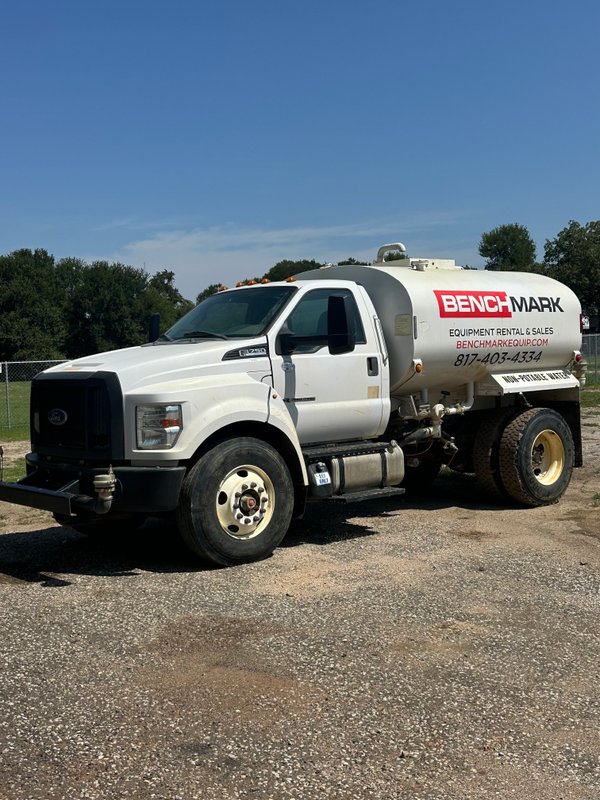
That call comes in almost daily at our Denton yard: "Do I need the 2000 or 4000 gallon water truck?" The answer depends on your specific North Texas job site conditions, but we've learned some clear patterns after renting water trucks across hundreds of projects from Sherman down to Fort Worth.
The capacity decision affects everything from your dust control effectiveness to fuel costs to how often you're refilling. Get it wrong, and you're either burning diesel running back and forth to water sources, or you're paying for capacity you can't use on tight sites.
Understanding Water Truck Capacity for Dust Suppression
Water trucks serve primarily for dust suppression and soil compaction on construction sites. The OSHA silica dust standards require effective engineering controls, making water application critical for compliance on most earthwork projects.
Our 2000 gallon trucks typically spray for 45-60 minutes of continuous operation, while the 4000 gallon units run 90-120 minutes before needing refills. That difference becomes crucial when you factor in North Texas conditions like the expansive clay soils around Prosper and McKinney that generate fine dust particles when dry, or the caliche formations in Denton County that create significant airborne silica during excavation.
When 2000 Gallon Capacity Makes Sense
Most contractors choose our 2000 gallon trucks for smaller residential developments and utility work. These units work well when water sources are readily available and you're covering limited acreage per day.
We see 2000 gallon rentals succeed on projects like the residential subdivisions going up around Celina and Gunter. The sites typically have city water hookups available, making frequent refills manageable. The smaller truck also navigates tight residential streets better than our larger units.
Budget considerations favor the 2000 gallon option when rental periods extend beyond two weeks. Daily rates run about 30% less than 4000 gallon trucks, and fuel consumption averages 15-20% lower. For longer projects where consistent dust control matters more than operational efficiency, the cost savings add up significantly.
The weight factor becomes critical on questionable ground conditions. A loaded 2000 gallon truck weighs approximately 24,000 pounds compared to 40,000+ pounds for the larger capacity units. We've had contractors working on storm-damaged sites around the Gainesville area specifically request the smaller units to avoid ground pressure issues on saturated soils.
Why 4000 Gallon Trucks Deliver Better Value
Large commercial and infrastructure projects almost always justify 4000 gallon capacity. The extended runtime reduces labor costs and keeps operations moving when water sources are distant or limited.
Highway projects along I-35 through Denton County exemplify where 4000 gallon trucks excel. Water access requires coordination with municipalities or trucking from remote sources. The additional capacity means operators spend productive time spraying rather than searching for refill locations. We've tracked job sites where the larger trucks reduced total water truck hours by 40% compared to running multiple smaller units.
The spray pressure and coverage width on our 4000 gallon fleet typically exceed what smaller trucks deliver. Larger pumps and more sophisticated spray bar systems mean better dust suppression per pass. For projects disturbing significant acreage daily, like the commercial developments expanding around Frisco and Little Elm, that coverage efficiency translates to real labor savings.
Summer heat conditions in North Texas create additional demand for water truck capacity. When temperatures hit 105°F like they frequently do in July and August, dust control requirements can double compared to spring conditions. The EPA air quality management guidelines recognize that dust generation increases exponentially with temperature and wind speed, both common in our summer climate.
Site Access and Operational Constraints
Truck dimensions affect site access as much as capacity. Our 4000 gallon units require 12-14 foot lane width for comfortable maneuvering, while 2000 gallon trucks work in 10-12 foot spaces. Urban infill projects in areas like downtown McKinney or older sections of Sherman often dictate smaller equipment purely based on access constraints.
Bridge load ratings create another limiting factor. Many older bridges and culverts throughout rural Collin and Denton counties post weight restrictions around 26,000-30,000 pounds. A loaded 4000 gallon truck exceeds those limits, forcing longer routes or requiring special permitting that delays project schedules.
Grade climbing ability separates the two capacity classes significantly. The undulating terrain around Argyle and Trophy Club challenges fully loaded water trucks. Our 2000 gallon units maintain better performance on grades exceeding 8%, while 4000 gallon trucks may struggle with traction and power, particularly when the clay base becomes slick after rainfall.
Water Source Availability and Logistics
Water procurement strategy should drive your capacity decision as much as site requirements. Municipal water departments in growing areas like Prosper and Celina often restrict construction water usage during drought conditions, making every gallon count toward productive dust suppression rather than transportation.
Projects requiring trucked water from commercial suppliers benefit dramatically from 4000 gallon capacity. Water delivery costs typically run $0.03-0.05 per gallon, meaning each refill run saves $60-100 in procurement costs alone. The USGS irrigation water use data shows that construction dust suppression averages 2000-3000 gallons per acre per application, making larger capacity trucks essential for efficient coverage.
Contractors working multiple small sites simultaneously often prefer 2000 gallon trucks for flexibility. We've rented to utility contractors serving the Wichita Falls to Denison corridor who need water trucks at three or four locations daily. The smaller units allow distributing equipment across sites rather than concentrating capacity in one location.
Soil Conditions and Application Requirements
North Texas clay soils create unique challenges for water truck operations. The expansive clays common from Fort Worth through Denton County require specific application techniques to achieve effective dust suppression without creating mud conditions that halt earthwork operations.
That black gumbo clay around Argyle and Aubrey becomes sticky and unworkable when over-watered. Our customers learn quickly that multiple light applications work better than heavy soaking. The 2000 gallon trucks with adjustable spray patterns excel at this controlled application approach, while larger trucks sometimes apply too much water per pass.
Caliche excavation projects need sustained water application to control silica dust effectively. The hard rock layers typical throughout Denton County generate fine particles that remain airborne longer than organic soil dust. Mine Safety and Health Administration studies demonstrate that consistent moisture application reduces respirable silica exposure by 60-80%, making continuous operation more important than maximum capacity.
Cost Analysis and Rental Economics
Daily rental rates favor 2000 gallon trucks for projects extending beyond 10 days. The cost difference compounds over longer rental periods, potentially saving $2000-3000 monthly on extended projects. However, operational efficiency often outweighs daily rate savings when labor costs factor into the equation.
Fuel consumption patterns show 4000 gallon trucks consuming 25-35% more diesel per day, but they typically cover 50-75% more area effectively. The net fuel cost per square foot of dust suppression actually favors larger capacity trucks on projects exceeding 5 acres daily coverage.
Operator wages represent the largest variable cost in water truck operations. Bureau of Labor Statistics data shows heavy truck operators averaging $47,000 annually in the Dallas-Fort Worth area. Maximizing productive spraying time versus refill and travel time directly impacts project profitability.
Seasonal Considerations for North Texas Operations
Summer operations demand different capacity strategies than spring and fall work. July and August temperatures routinely exceed 100°F across our service area, increasing dust generation and evaporation rates significantly. What works for dust suppression in April may prove inadequate during peak summer conditions.
Wind patterns compound summer challenges. Southerly winds averaging 15-25 mph during afternoon hours carry dust particles much farther than calm morning conditions. The increased coverage area requirements often push projects from 2000 to 4000 gallon capacity purely based on seasonal weather patterns.
Winter freeze events, though infrequent, create unique operational challenges. The clay soils around Sherman and Gainesville become extremely hard when frozen, generating more dust during excavation. Simultaneously, equipment hydraulic systems operate less efficiently in cold temperatures, reducing spray pressure and coverage effectiveness.
Making the Right Choice for Your Project
The capacity decision ultimately depends on balancing operational efficiency against site constraints and project economics. Most contractors underestimate the labor cost of frequent refills when water sources require travel time exceeding 20 minutes round-trip.
We track utilization data across our fleet and consistently see 4000 gallon trucks achieving 20-30% better productivity on projects disturbing more than 3 acres daily. The operational efficiency translates to shorter project schedules and reduced total equipment costs, even when daily rental rates run higher.
Environmental compliance considerations increasingly favor larger capacity trucks capable of sustained operation. The Texas Commission on Environmental Quality PM2.5 standards require consistent dust suppression throughout active work periods, making intermittent water application inadequate for regulatory compliance.
Consider starting with 4000 gallon capacity if your project timeline is tight and dust control requirements are strict. The additional daily cost often represents less than 2% of total project expenses while significantly improving operational flexibility. For longer-term projects with flexible schedules and nearby water sources, 2000 gallon trucks provide adequate performance with lower operating costs.
Need help sizing water truck capacity for your North Texas project? We've supplied water trucks for everything from small residential sites in Celina to major highway projects through Denton County. Call us at (817) 403-4334 and we'll walk through your specific site conditions, water access, and project timeline to recommend the right capacity. Our local experience with clay soils and caliche formations helps contractors avoid costly capacity mistakes that delay project schedules.